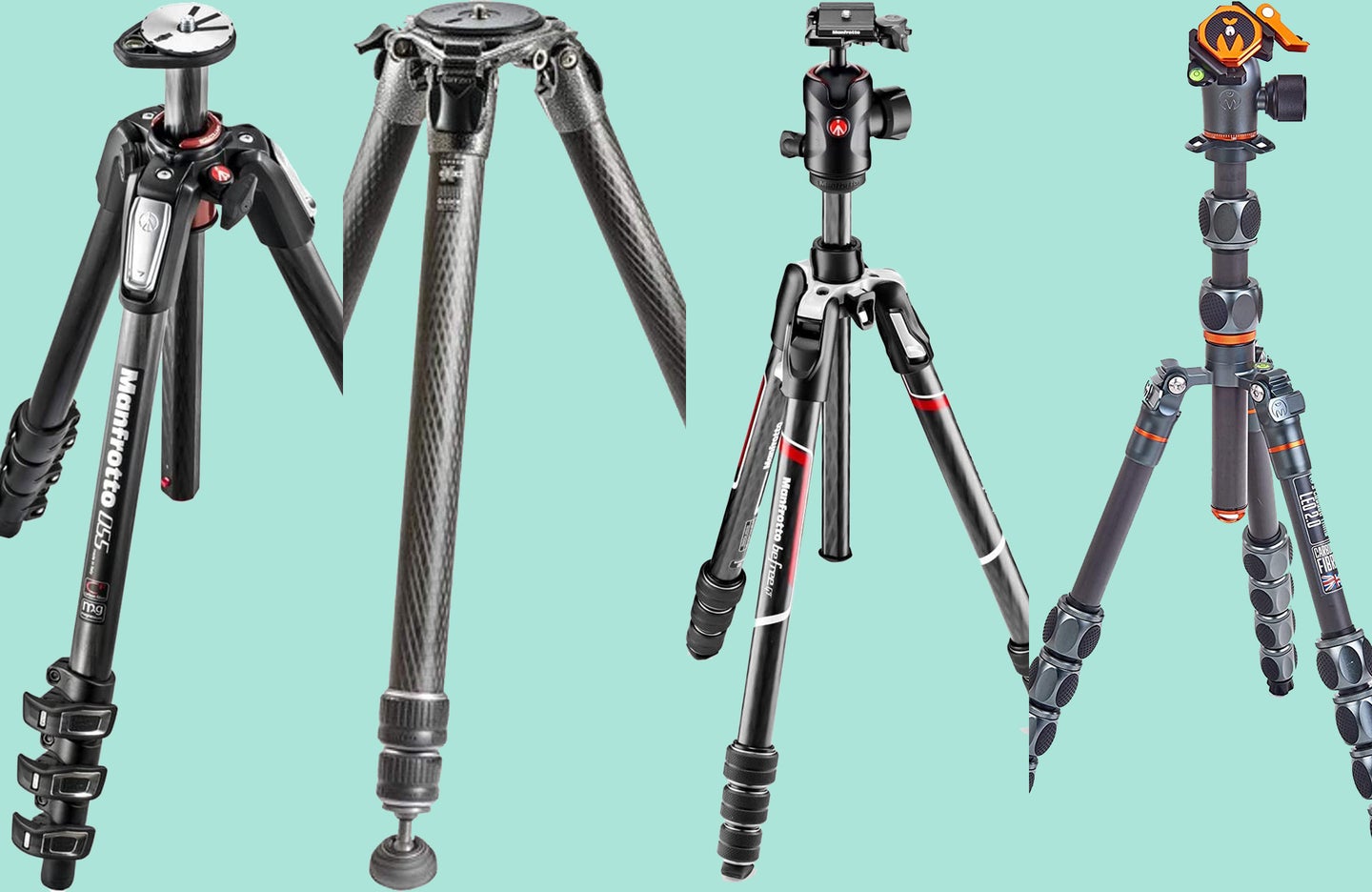
Carbon fiber tripods offer strength, stability, and durability, and yet are the most lightweight material available.
The post The best carbon fiber tripods for 2023, tested and reviewed appeared first on Popular Photography.
]]>We may earn revenue from the products available on this page and participate in affiliate programs. Learn more ›
| Best overall |
|
Peak Design Travel Tripod | SEE IT |
The Peak Design tripod folds down incredibly small to save you space when traveling. |
|
| Best for hiking |
|
Manfrotto Befree Advanced | SEE IT |
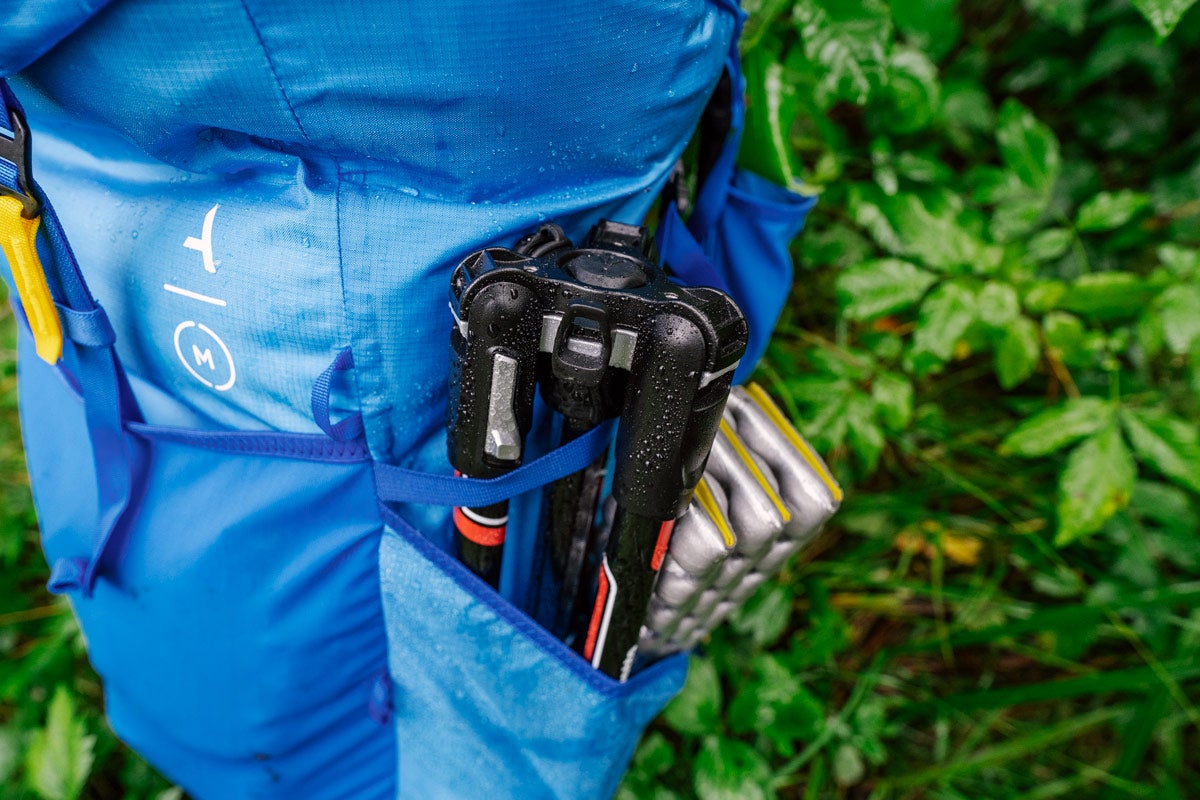
This lightweight tripod fits well in the side pocket of backpacks to easily bring on your hikes. |
|
| Best rugged |
|
3Pod Everest T3 | SEE IT |
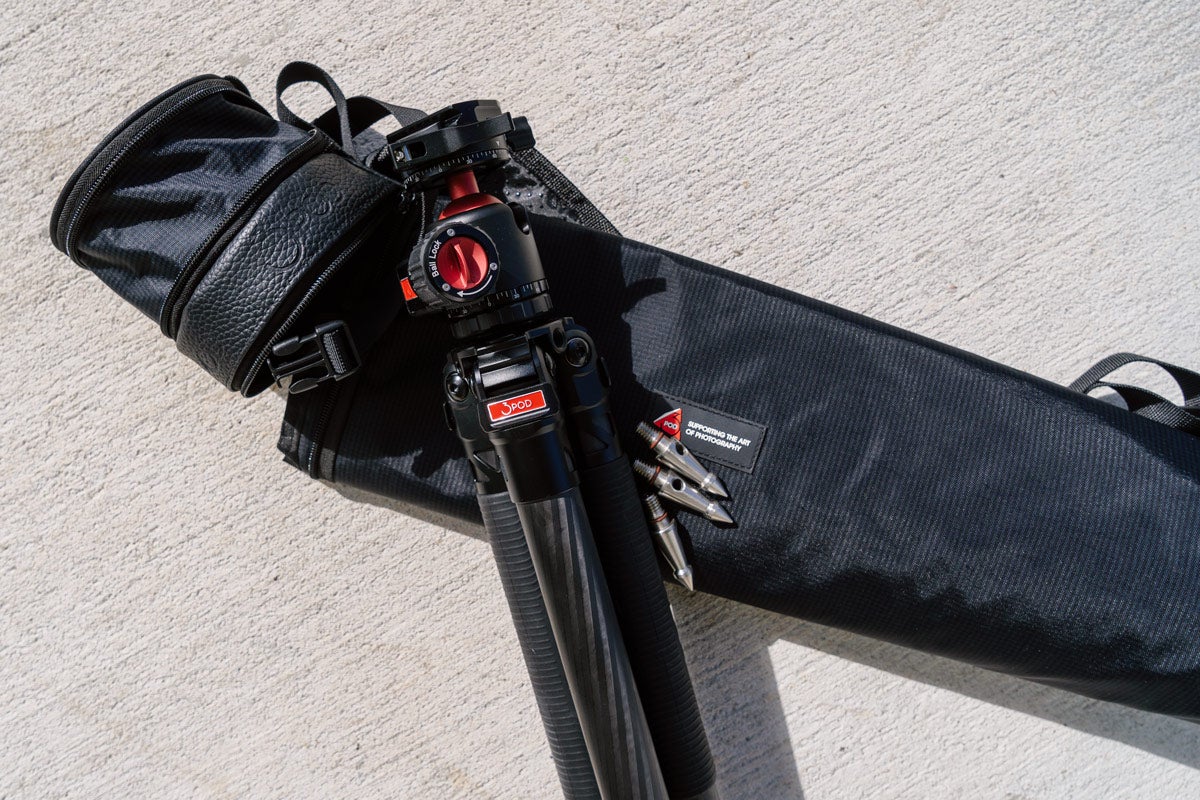
The 3Pod Everest T3 offers grips on the legs and comes with spike feet for traction on different surfaces. |
Carbon fiber tripods offer several very tangible advantages over their metal counterparts. They are stiffer, stronger, and more durable than aluminum. Despite those things, they also weigh significantly less than aluminum, making them a popular choice for travel and landscape photography. Of course, they also will cost you more than an aluminum tripod, but for many, it is worth it. The best carbon fiber tripods will help you get stable shots while making it easier to bring a tripod along.
- Best overall: Peak Design Travel Tripod
- Best for hiking: Manfrotto Befree Advanced
- Best rugged: 3Pod Everest T3
- Best for versatility: Manfrotto MT055CXPRO4
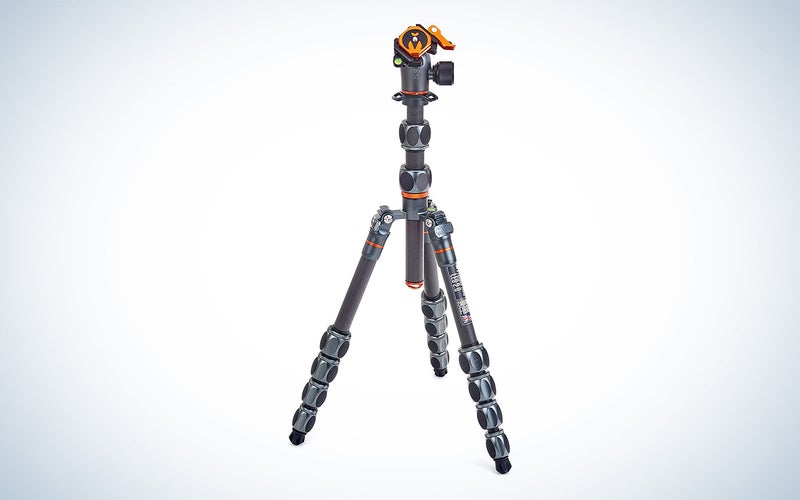
- Best for landscape photography: 3 Legged Thing Leo 2.0
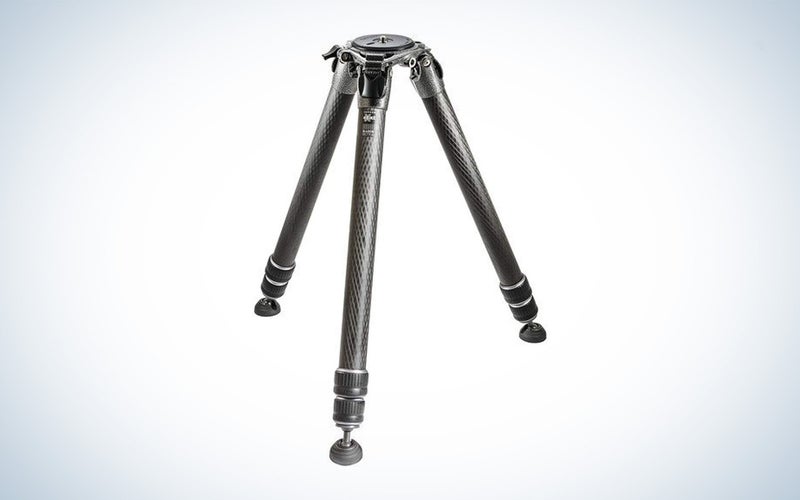
- Best heavy-duty: Gitzo GT5533S Systematic Series 5
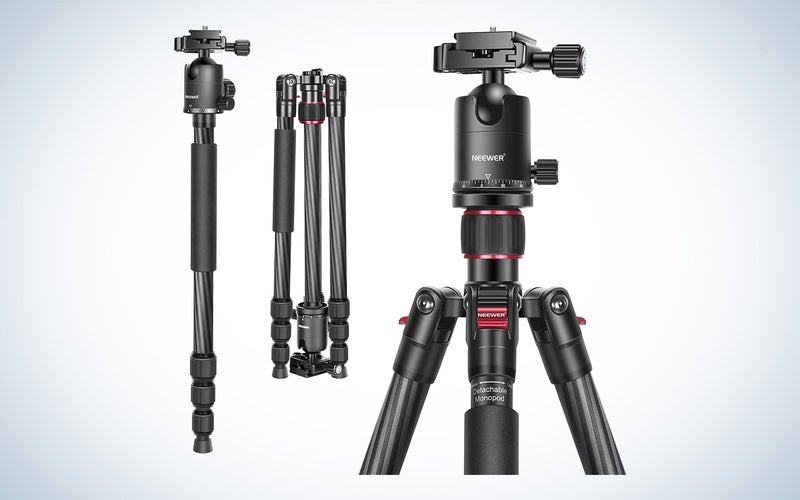
- Best budget: Neewer Carbon Fiber
How we chose the best carbon fiber tripods
The writers and editors at Pop Photo have decades of photography experience across the full spectrum of photographic genres and equipment. We’ve used our fair share of tripods in a wide variety of situations, from cheap plastic and heavy aluminum to more advanced carbon fiber models.
When selecting the carbon fiber tripods on this list, we aimed to choose options suitable for different pursuits, from travel to studio work. And while carbon fiber tripods are pricier than aluminum, we looked for products at various price points to suit different budgets. In addition, durability, sturdiness, and ease of use were all part of our decision-making process. Lastly, though tripods aren’t exactly feature-rich, we looked for options with enough features to make them versatile and usable in different–even challenging–situations.
The best carbon fiber tripods: Reviews & Recommendations
There is certainly no shortage of carbon fiber tripods available. Below you’ll find our favorite options for a variety of situations and use cases, so you’re sure to find one that fits your needs.
Best overall: Peak Design Travel Tripod
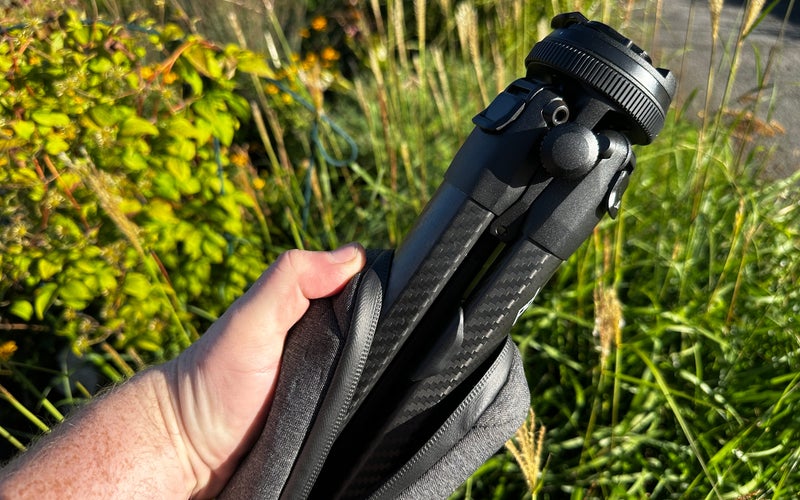
Stan Horaczek
Why it made the cut: Peak Design’s Travel Tripod weighs only 2.8 pounds and folds down to the width of a water bottle while still being able to support up to 20 pounds.
Specs
- Maximum height: 60 inches
- Minimum height: 5.5 inches
- Weight: 2.8 pounds
- Weight capacity: 20 pounds
- Folded length: 15.5 inches
Pros
- Includes a ball head
- Compact and lightweight
- Good height range
- Excellent strength-to-weight ratio
Cons
- Expensive
- Only two leg angles
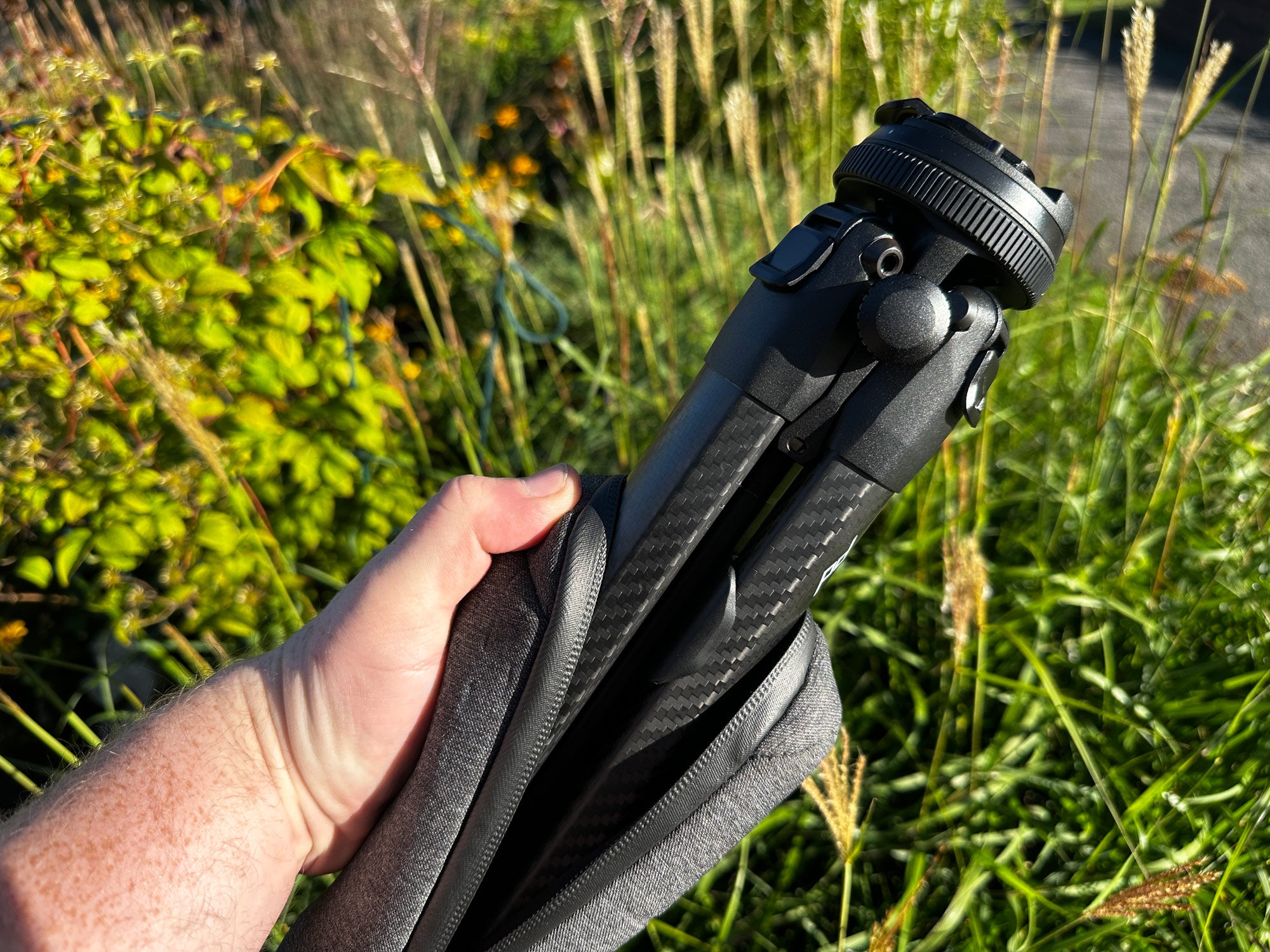
Originally released through a Kickstarter campaign in 2019, the Peak Design Travel Tripod made waves thanks to the unique leg design. When folded down, it is just 15.5 inches tall and about the diameter of a water bottle. That makes it very easy to throw in a backpack‘s side pocket instead of fumbling with attachment points and straps.
The five-section legs can all be deployed at once with the aluminum lever locks to save time–and to look really dramatic. It can support up to 20 pounds and is very sturdy, considering its small size. The included ball head is minimal and aids in the tripod’s compact design. Instead of levers and knobs like normal tripod heads, there are simple locking and adjustment rings.
The Peak Design carbon fiber tripod can extend to 60 inches with the center column or 51.25 inches without that extended. For low angles, the center column reverses and hangs underneath the legs. There is also a removable hook on the center column, so you can easily hang weight to add stability. And this tripod comes with a slick travel bag, mobile mount, and hex wrenches. The mobile mount is a nice touch and makes this tripod excellent for all sorts of creators.
Best for hiking: Manfrotto Befree Advanced
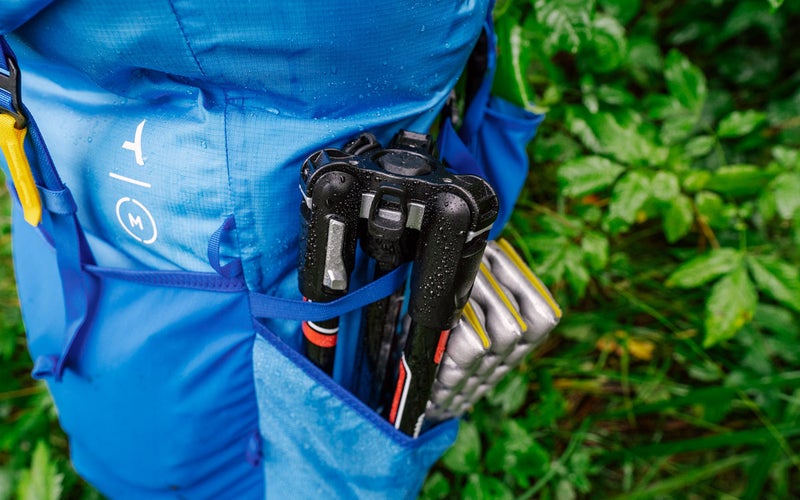
Abby Ferguson
Why it made the cut: Its lightweight form factor but very adjustable height and 20-pound weight capacity make this a great option to take backpacking.
Specs
- Maximum height: 59.1 inches
- Minimum height: 16 inches
- Weight: 2.8 pounds
- Weight capacity: 19.8 pounds
- Folded length: 16.1 inches
Pros
- Includes a ball head
- Lightweight and compact
- Three leg positions
- Well-designed twist lock legs
Cons
- Center column doesn’t move as smooth as the legs
Manfrotto’s Befree line has been a popular choice for travel and adventure photographers for years. The Advanced version brings a higher weight capacity to the line, able to support nearly 20 pounds. It weighs the same amount as the Peak Design tripod mentioned above, though it is slightly larger when folded down. However, it still fits nicely into a side water bottle pocket on a hiking backpack. And the extra space between the legs makes it easier to secure with a strap for peace of mind while hiking.
The Befree Advanced tripod comes with a ball head, or you can also get it with a fluid head if you need smoother movements for shooting video. The ball head offers 360 degrees of swivel and can tilt 90 degrees for portrait orientation as well. It’s easily controlled via the large knob, even if you have gloves on. The center dial in the control knob allows you to adjust the tension and get more precise positioning.
The legs are made up of four sections and are locked into place using twist locks. Unlike other tripods I’ve used, the leg sections don’t automatically extend when untwisting the locks, which is good and bad. It takes a little more time to set up but is less of a pain when putting the tripod away or if you forget to lock one down all the way. The legs lock at three different angles, giving you lots of flexibility.
Best rugged: 3Pod Everest T3
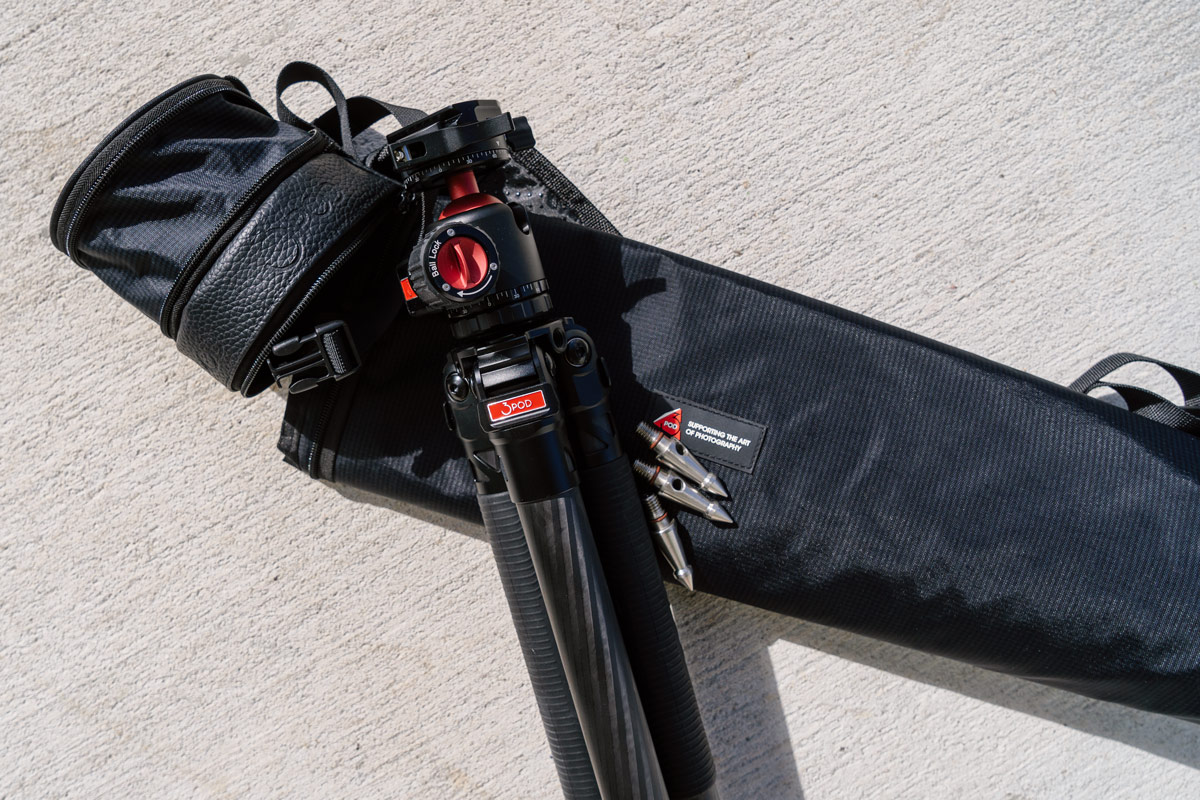
Why it made the cut: As the name suggests, the Everest T3 is built for harsh conditions. It is cold weather resistant, features CNC machined dust-proof construction, offers anti-corrosion faces, and comes with spiked feet for better traction.
Specs
- Maximum working height: 64.17 inches
- Minimum working height: 13.4 inches
- Weight: 3.2 pounds (without ball head)
- Weight capacity: 33 pounds
- Folded length: 19.7 inches
Pros
- Sturdy, heavy-duty build
- Built for harsh environments
- Comes with spiked feet for added grip
- Available with or without a ball head
Cons
- A bit bulky
Photography can take us to some wild, rugged places. The 3Pod Everest T3 is up for the challenge, thanks to a seriously rugged build. 3Pod made this tripod with CNC precision for a dust-proof design. It’s also cold weather resistant, meaning the joints will keep moving even in extreme cold. The grippy material on two of the legs makes it easier and more comfortable to hold in the cold, even if you have gloves on.
The legs of the Everest use a twist lock design for quick assembly and breakdown. It comes with 3Pod’s H4 ball head (or you can opt for a version without a head) and Arca-Type quick-release plate. The ball rotates very smoothly with just enough resistance. Two bubble levels help you ensure your shots are level in-camera. This carbon fiber tripod can extend to 5.3 feet with the center column extended or 4.4 feet without the extra extension when you need extra sturdiness. Should you need a low-angle shot, you can remove the center column to get shots as low as 13.4 inches. You can invert the center column for creative angles as well.
The main downside to the Everest T3 is that it’s a fairly bulky tripod. It weighs 3.2 pounds and is pretty long, even when folded down. But, the heavy-duty design results in a 33-pound weight capacity. Should you want something more robust, 3Pod also makes a larger version—the Everest T5—which offers a 55-pound load capacity and 6.6-foot maximum height.
Even more carbon fiber tripods to consider
If one of the three above doesn’t tick all the boxes for you, check out these additional options.
Best for versatility: Manfrotto MT055CXPRO4
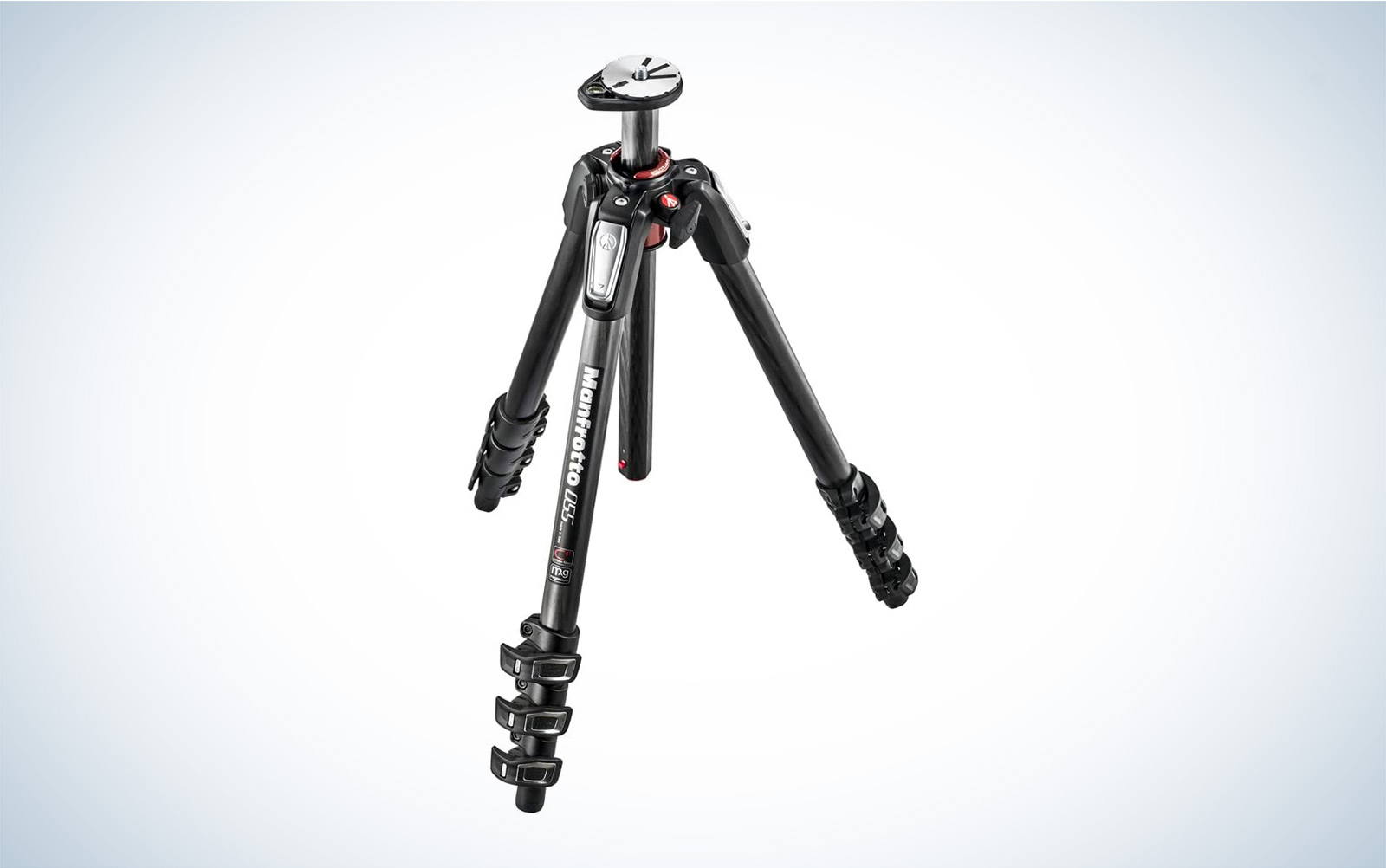
Manfrotto
Why it made the cut: This versatile Manfrotto tripod can go from 3.5 inches to 66.9 inches, thanks to the angle selectors on the legs and sturdy center column. Plus, it has a convenient attachment point for arms to hold accessories like reflectors.
Specs
- Maximum height: 66.9 inches
- Minimum height: 3.5 inches
- Weight: 4.6 pounds
- Weight capacity: 19.8 pounds
- Folded length: 21.3 inches
Pros
- Ample height range
- Sturdy and durable
- Center column bends 90 degrees
- Includes attachment point for accessories
Cons
- Tripod head must be purchased separately
Manfrotto has long been one of the top tripod producers. Its MT055CXPRO4 is an extremely popular tripod, and for good reason. At 4.6 pounds, it weighs a bit more than some of the other models on this list. But it is very sturdy and supports nearly 20 pounds, which is more than enough for a full-frame camera and hefty telephoto.
Each leg features Manfrotto’s Quick Power Locks (a type of lever lock), which are easy to use but extremely sturdy. The legs can be set to multiple angles, allowing you to set the tripod as low as 3.5 inches. You’ll be able to get some really dramatic and unique angles for landscapes while still getting stability from a tripod.
With the center column extended, you’ll get 66.9 inches of height. Manfrotto redesigned the center column on this carbon fiber tripod to enable one-finger operation, so you’ll be able to raise it with much less fuss. And the center column can bend 90 degrees for better versatility or more unique angles. There is an Easy Link attachment point for adding accessories like a LED light or reflector with a compatible arm.
At the top of the tripod is a bubble level that swivels 360 degrees so you can see it no matter how you have your tripod set up. But, you will need to purchase a head for this tripod separately. For most people, we’d suggest Manfrotto’s XPRO Ball Head.
Best for landscape photography: 3 Legged Thing Leo 2.0
3 Legged Thing
Why it made the cut: It can hold up to 66 pounds, so even if you use a large camera and bulky lens, you won’t have to worry about stability. And yet, the tripod only weighs 4.8 pounds, so it will still be feasible to pack on a trip.
Specs
- Maximum height: 54.3 inches
- Minimum height: 4.9 inches
- Weight: 4.8 pounds
- Weight capacity: 66 pounds
- Folded length: 14.7 inches
Pros
- Heavy weight capacity
- Good height range
- Lightweight and compact
- Highly modifiable
Cons
- Not as tall as other options
3 Legged Thing is a small British company that was launched in 2010. The Leo 2.0 has a surprising weight capacity, supporting up to 66 pounds. So even if you use a large DSLR or medium format camera with a heavy lens, this tripod will be able to handle it. And yet, the tripod only weighs 4.8 pounds with the head attached, which is only slightly heavier than the Manfrotto 055.
One of the best things about the Leo carbon fiber tripod is that it is very modifiable. Each leg can be removed and acts as a monopod. The center column can either be removed entirely or inverted to get lower to the ground. And you can purchase tripod feet for better stability on different types of surfaces.
This tripod comes with a carrying case and also the 3 Legged Thing Toolz multi-tool for adjusting various parts of the tripod. It can’t extend quite as high as other options, but the ability to modify it so much and the large weight capacity are huge benefits.
Best heavy-duty: Gitzo GT5533S Systematic Series 5
Gitzo
Why it made the cut: The Gitzo Systematic Series 5 holds a whopping 88 pounds, making it the ideal choice for those shooting with large cameras and lenses.
Specs
- Maximum working height: 52.8 inches
- Minimum working height: 3.9 inches
- Weight: 6.2 pounds
- Weight capacity: 88 pounds
- Folded length: 24.4 inches
Pros
- Very heavy duty
- Available in different heights and configurations
- Exceptionally sturdy
- Feet are articulating for better stability
Cons
- Center column or head must be purchased separately
If the 3 Legged Thing doesn’t provide enough stability for you, the Gitzo Systematic Series 5 will. It supports up to 88 pounds, which is ideal for those using large lenses or cameras. Even if you use a large format camera, you’ll get enough support from this carbon fiber tripod. Even when the legs’ three sections are extended, the tripod is extremely sturdy with limited flex.
The Systematic Series is unique in that they do not include center columns, unlike other tripods. Center columns are not very sturdy when extended, so it makes sense to leave that out if you want the most stability. It does, of course, limit the height you can get from the tripod, but luckily Gitzo makes different heights in this line.
Like the 3 Legged Thing, Gitzo sells lots of accessories compatible with this tripod line. For example, should you want a center column, you can add a compatible one, as found on Gitzo’s website. You’ll also need to purchase a tripod head if you want more than the flat top plate. And there are also alternative types of feet available for better stability on different surfaces.
Best budget: Neewer 66 Inch Carbon Fiber Tripod
Neewer
Why it made the cut: At a much more affordable price, this budget carbon fiber tripod still offers support for up to 26.5 pounds and can convert into a monopod.
Specs
- Maximum height: 66 inches
- Minimum height: 23.2 inches
- Weight: 3.40 pounds
- Weight capacity: 26.5 pounds
- Folded length: 19.3 inches
Pros
- Can be broken down into a monopod
- Affordable
- Comes with a ball head
- Center column can be inverted
Cons
- Does not go very low
- Not as durable as other options
Neewar is fairly well known for its affordable lighting and accessories. Like its other gear, its carbon fiber tripod is much more affordable than other brands but still offers a good amount of quality and features. Unlike more expensive options, it comes with a ball head, so you don’t need to purchase it separately.
It supports up to 26.5 pounds, so even somewhat heavy cameras and lenses will work. And it only weighs 3.4 pounds, so it won’t be too much trouble to pack with you on trips. You can break it down into a monopod, so it is multifunctional. And the center column can be inverted if you want low to the ground shots. The legs have three sections and are controlled via twist locks.
Of course, with the budget price comes some downsides, though they are luckily minor. The included ball head isn’t all that stable, so you may want to invest in a better tripod head if you will be pushing the weight limit of this tripod. And some have had issues with pieces breaking after not all that much use. It may not last as long as more expensive options, but if you want to get started with a tripod without breaking the bank, this still is a great option.
Things to consider before buying the best carbon fiber tripods
Tripods, in general, aren’t exactly feature-packed, as they are pretty basic, straightforward pieces of equipment. But, that said, there are still some vital things to pay attention to before purchasing to ensure that it will fit your needs and work with your camera setup.
Weight
Though carbon fiber tripods weigh less than their aluminum counterparts, their weight still varies across different brands and models. And while you may assume you need to find the lightest option, that won’t always be the best. Lightweight tripods lose stability unless you add weight to them. That could be via sandbags or a backpack hung from the center column. Without added weight, the tripod may be prone to getting blown over by strong winds or tipped over if bumped. So, if you are looking for a sturdy option and don’t want to fuss with adding weight, go with a heavier tripod.
On the flip side, if you travel or like to have a tripod while hiking, be sure to go with a lightweight option. Tripods are never all that convenient to carry along, but if it weighs a lot, you definitely won’t want to bring it along.
Capacity
Beyond the weight of the tripod itself, tripods will be able to support different sizes of cameras and lenses. For example, some tripods are only suitable for lightweight mirrorless setups with small lenses, whereas others can hold heavy medium-format cameras.
Before purchasing a tripod, be sure to do a rough calculation of what your heaviest setup will be. Look up the weight of your camera and largest lens to ensure that the tripod and tripod head you are considering is able to support that much weight.
Maximum and minimum height
All tripods will be able to extend only so far. Some will be able to go quite high with the help of a center column, while others won’t go beyond eye level, if that. If you like to get serious height with your tripod for unique perspectives, be sure to look for a tripod with a tall maximum height.
On the other side, some tripods can’t go lower than the closed length of the tripod. Some, however, allow you to bend the legs out, resulting in the camera sitting very low, sometimes just inches off the ground. This ability is ideal for landscape photographers who want dramatic angles or like to focus on things in the foreground. If you want more flexibility with angles, be sure to look for a tripod that can get low as well as high.
FAQs
Q: Are carbon fiber tripods worth it?
Carbon fiber tripods are worth it for some people, but not all. Those who travel or hike a lot will want a compact and lightweight tripod, as heavy or bulky ones will be frustrating to carry around. Carbon fiber tripods are smaller and lighter than aluminum alternatives, and those weight savings can absolutely be worth it. But, if you need a sturdy tripod for a studio or other general-purpose setting, a carbon fiber tripod may not be worth the cost.
Q: How much do carbon fiber tripods cost?
Carbon fiber tripods will cost you anywhere from around $150 all the way up to $1,700 or so. Typically, the more expensive the tripod, the sturdier it will be and the more weight it can support.
While you may be tempted to go with the cheapest carbon fiber tripod you can find, keep in mind that all carbon fiber is not created equal. A cheap carbon fiber tripod may actually be less durable and sturdy than an aluminum tripod that costs the same amount.
Q: Which is better, carbon fiber or aluminum tripod?
Whether carbon fiber or aluminum tripods are better depends on your needs and preferences. Carbon fiber tripods are stronger, more durable, and lighter, making them the better choice for photographers who travel or use a tripod in harsh conditions. But, they are more expensive, and because they are so lightweight, they may need weight added in order to have enough stability.
Aluminum tripods are much more affordable than carbon fiber, making them better for beginners. And, for those using big, heavy cameras or needing extra stability without additional weight, aluminum may be the better choice.
Q: Can you buy refurbished carbon fiber tripods?
Yes, you can buy refurbished and used carbon fiber tripods. This can be an excellent way to get a quality carbon fiber tripod while saving some money. You’ll find plenty of options on sites like eBay or the B&H used section.
Final thoughts on the best carbon fiber tripods
- Best overall: Manfrotto MT055CXPRO4
- Best for travel: Peak Design Travel Tripod
- Best for hiking: Manfrotto Befree Advanced
- Best for landscape photography: 3 Legged Thing Leo 2.0
- Best heavy-duty: Gitzo GT5533S Systematic Series 5
- Best for height: 3Pod Everest T3
- Best budget: Neewer Carbon Fiber
Carbon fiber tripods are not cheap pieces of gear, especially good ones. They are an investment, to be sure. But for a bit of equipment that can keep your camera safe and potentially improve your images, it is worth spending a bit more to ensure you have a reliable tripod that will last for years.
Why trust us
PopPhoto has a long history of delivering the opinions of some of the sharpest and most prolific camera dorks the world has to offer. Since 1937, we’ve been reviewing cameras, providing wisdom from well-known photographers, and generally just nerding out about all that goes into making great pictures. Our current crop of writers and editors have decades of professional photography and camera writing experience among them. Collectively, we’ve probably shot with just about every camera and lens combo you can imagine—as well as some obscure stuff you may not even know about. Remember the Casio Tryx folding camera? PopPhoto does.
We also get that buying a camera is a big decision, which is why we’re dedicated to helping folks choose the right one (or, in our case “ones”) for their needs. Case in point: Handing over top dollar for an expensive rig may leave you unsatisfied if it doesn’t fit your preferred shooting style. Sure, a $6,000 sports-oriented DSLR can capture landscapes, but do you really need to do it at 30 frames-per-second? No, you don’t.
The post The best carbon fiber tripods for 2023, tested and reviewed appeared first on Popular Photography.
Articles may contain affiliate links which enable us to share in the revenue of any purchases made.
]]>
These easy to use tripod heads offer excellent stability.
The post The best tripod ball heads for 2023 appeared first on Popular Photography.
]]>We may earn revenue from the products available on this page and participate in affiliate programs. Learn more ›
| Best overall |
|
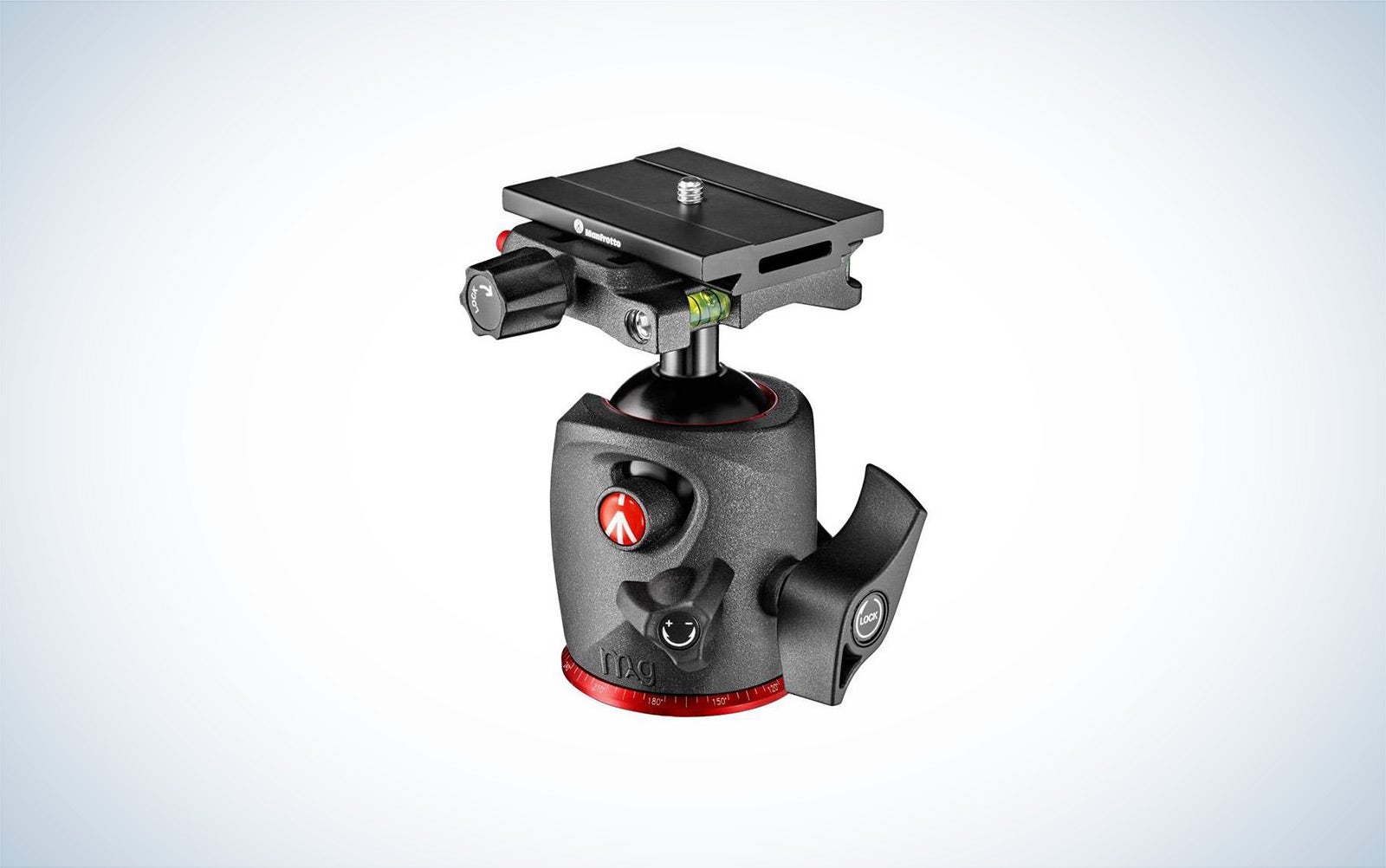
Manfrotto XPRO Ball Head | SEE IT |
With durable materials and a large load capacity, this Manfrotto ball head is the best for most. |
|
| Best for heavy equipment |
|
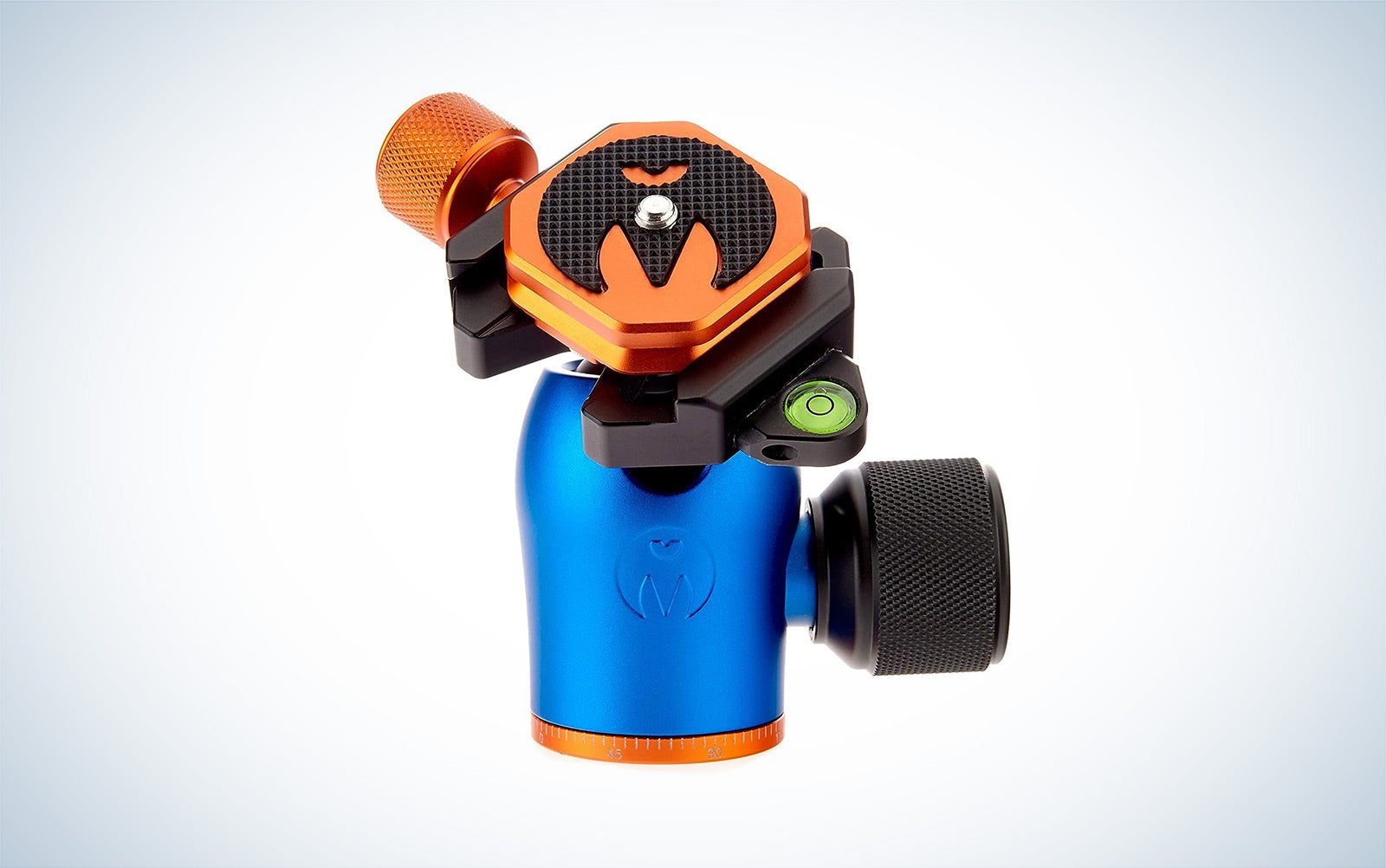
3 Legged Thing AirHed Pro Ball Head | SEE IT |
This 3 Legged Thing tripod ball head can hold up to 88 pounds. |
|
| Best budget |
|
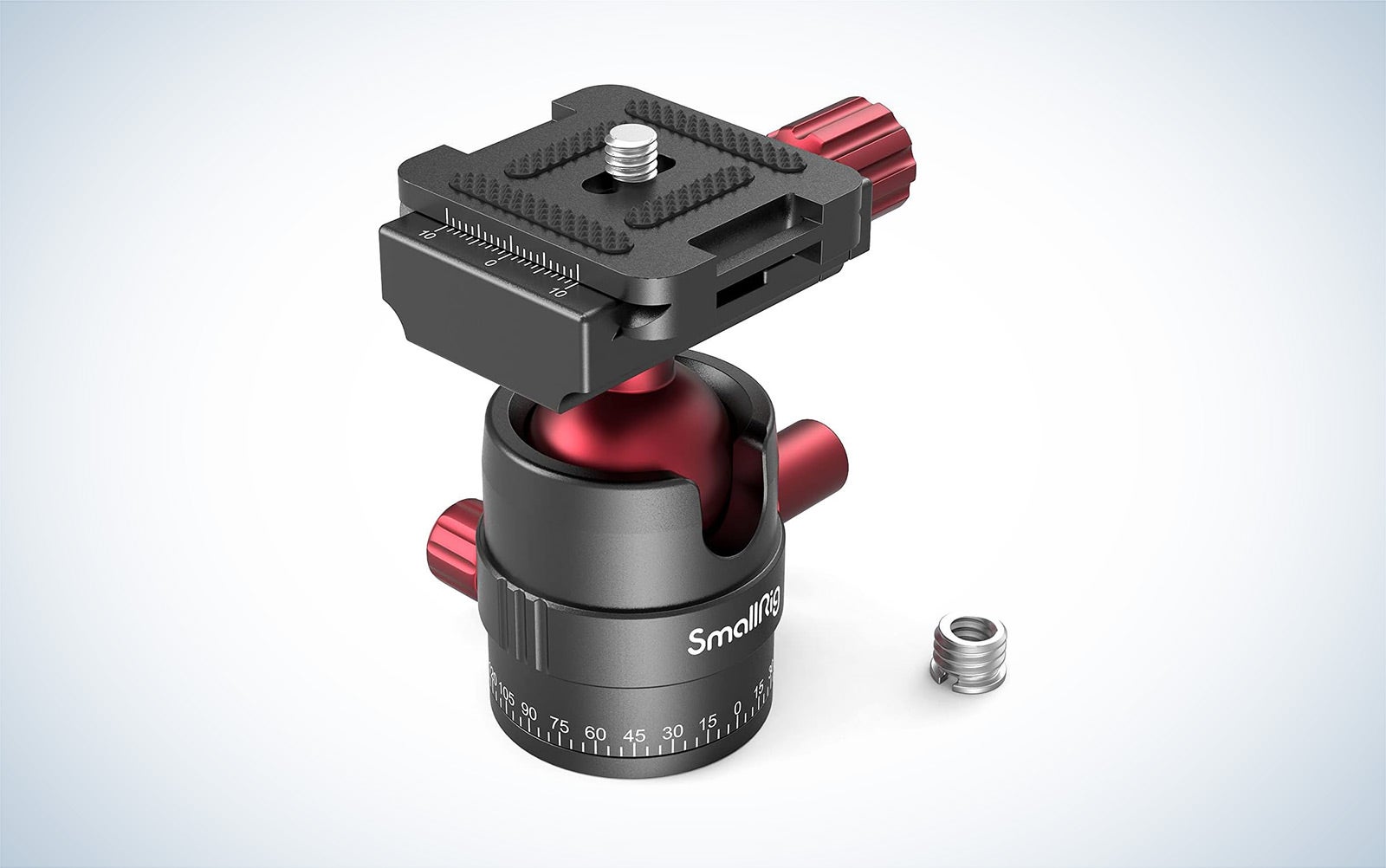
SmallRig Tripod Ball Head | SEE IT |
This affordable option will keep your lightweight gear steady. |
Tripod ball heads offer a compact way to stabilize your camera when shooting long exposures in nature, photographing products in the studio, or filming video. As the name suggests, ball heads rely on a spherical element secured in a cradle. Loosening a screw or nut releases pressure on the ball and allows it to move freely. Tightening it up locks the mechanism in place. We curated this list of the best tripod ball heads for any type of photography or video shooting.
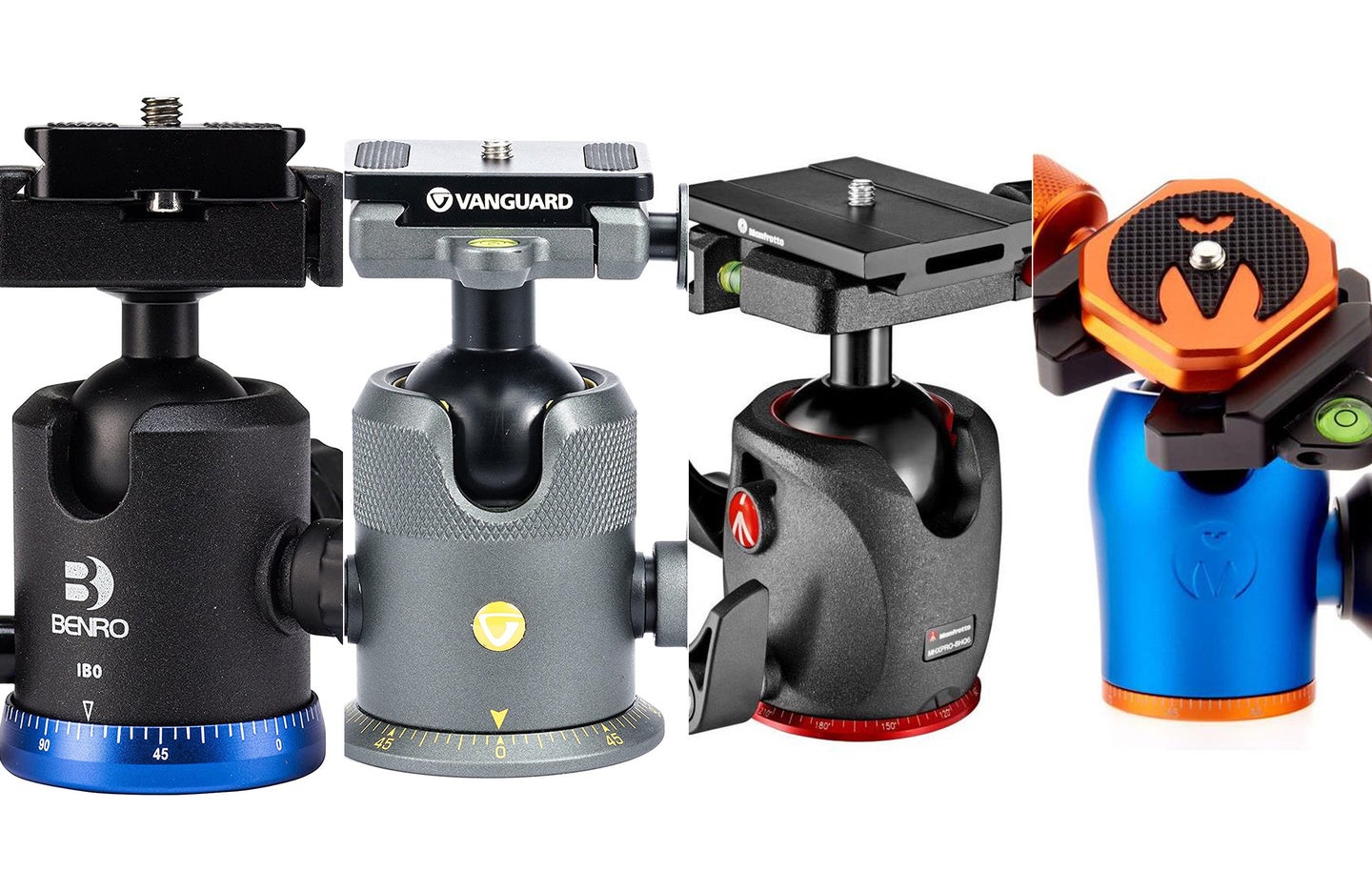
- Best overall: Manfrotto XPRO Ball Head
- Best for heavy equipment: 3 Legged Thing AirHed Pro Ball Head
- Best value for heavy gear: Vanguard Alta BH-300 Ball Head
- Best for lightweight cameras: Benro IB0 Triple Action Ball Head
- Best budget: SmallRig Tripod Ball Head
How we chose the best tripod ball heads
The ball head tripod accessories that appear in this guide were primarily selected based on price and load capacity. When selecting the gear included here, we considered items that would be useful to a wide array of photographers and video creators who work on location and in the studio. Products were selected based on a combination of hands-on experience, editorial reviews, and customer feedback.
The best tripod ball heads: Reviews & recommendations
Tripod ball heads make adjusting your camera angle easy and quick. The options below are ideal for a range of photographers and videographers, so you can get one that best suits your needs. They are a sure way to round out a quality tripod so that you are able to get stable photos and videos in all situations.
Best overall: Manfrotto XPRO Ball Head
Manfrotto
Specs
- Load capacity: 33.1 pounds
- Built-in level: Yes, 2
- Weight: 1.1 pounds
- Materials: Aluminum Magnesium
Pros
- Extremely smooth
- 360 degree panoramic rotation
- Triple locking system
Cons
- Pricey
Manfroto’s XPro Tripod Ball Head is made out of aluminum magnesium, which is lightweight and durable. It offers a load capacity of 33.1 pounds, and its triple locking system makes for extremely stable shots. A friction control knob helps you balance the weight of the camera and lens, while two leveling bubbles help keep your horizon lines straight. It utilizes a grease-free construction, which makes for smooth movement with fewer jerks—a great benefit for video shooters. It provides 360 degrees of panoramic rotation and -90/+40 degrees of lateral tilt. And it features an Arca-Swiss compatible plate, making it extremely quick to attach or remove your camera from the tripod.
Best for heavy equipment: 3 Legged Thing AirHed Pro Ball Head
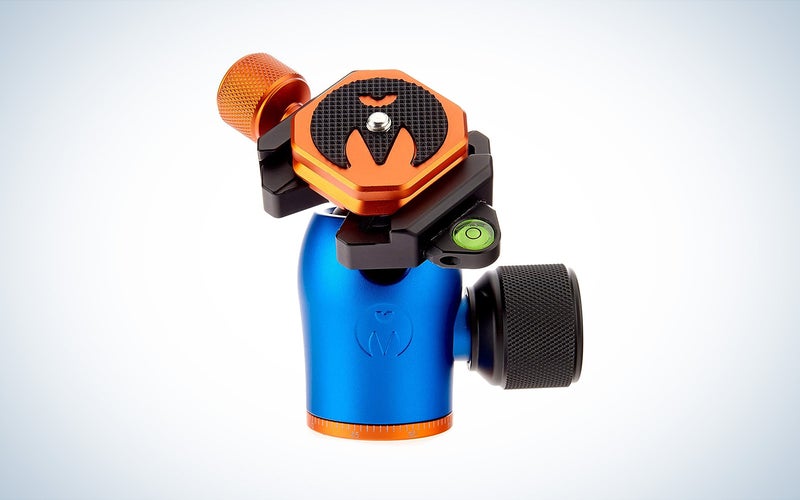
3 Legged Thing
Specs
- Load capacity: 88 pounds
- Built-in level: Yes, 1
- Weight: 11.36 ounces
- Materials: Aircraft-grade Magnesium Alloy
Pros
- Strong, lightweight construction
- 360 degree panoramic rotation
- Quick release plate
Cons
- Pricey
The 3 Legged Thing AirHed tripod ball head can hold up to 88 pounds of equipment—far more than most people will ever need. And yet it maintains a relatively lightweight profile thanks to its aircraft-grade magnesium alloy. A 360-degree clamp makes for smooth panning. It comes with an Arca-Swiss compatible quick release and has a single bubble level for keeping your shots straight.
Best value for heavy gear: Vanguard Alta BH-300 Ball Head
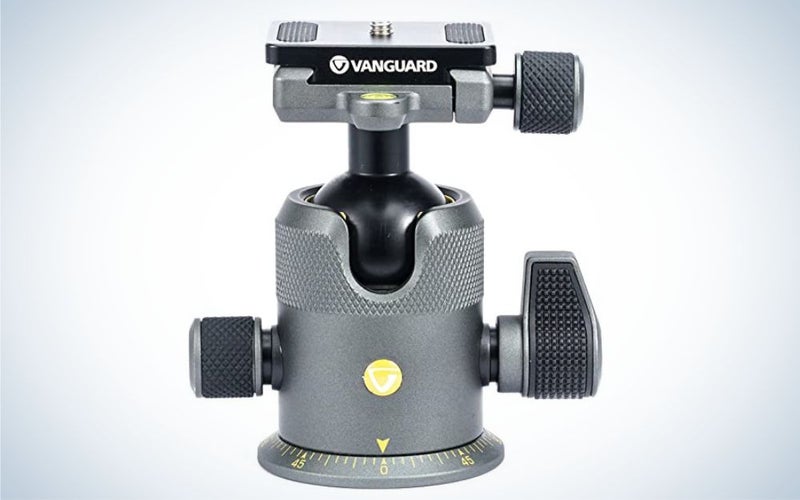
VANGUARD
Specs
- Load capacity: 66 pounds
- Built-in level: Yes, 2
- Weight: 1.3 pounds
- Materials: Aluminum
Pros
- Good value
- Two bubble levels
- 360-degree pan range
Cons
- Friction system is a bit awkward
The Vanguard Alta BH-300 can support up to 66.1 pounds of camera equipment and yet it costs a fraction of the price of ball-heads that can support similar loads. It features a clamp and safety pin that prevents the plate from sliding out and has three separate control knobs for ball movement, friction control, and pan control. A single-cut notch allows a mounted camera to pan 90 degrees vertically. It’s made of aluminum, so it’s not quite as sturdy as some of the other options in this guide, but you can’t beat the price.
Best for lightweight cameras: Benro IB0 Triple Action Ball Head
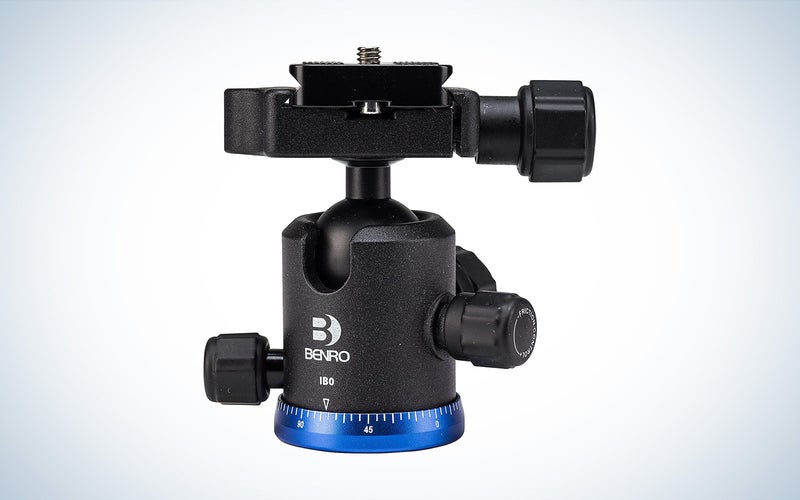
Benro
Specs
- Load capacity: 13.2 pounds
- Built-in level: Yes, 2
- Weight: 11.3 ounces
- Materials: Magnesium
Pros
- Swiss-Arca compatible
- Separate locks for pan and fiction control
- Built-in bubble level
- 90 degree cutout for vertical orientation
Cons
- Not good for supporting heavy gear
This Swiss-Arca Ball Head from Benro is a great, affordable choice for smaller profile cameras. This lightweight head is only 11.3 ounces and 3.5 inches tall. It features separate locks for ball movement, panning control, and friction control. A 90-degree notch makes it easy to switch gear into portrait orientation while the camera is mounted on the ball head. And it offers a single bull’s eye leveling bubble for ensuring level horizons when shooting.
Best budget: SmallRig Tripod Ball Head
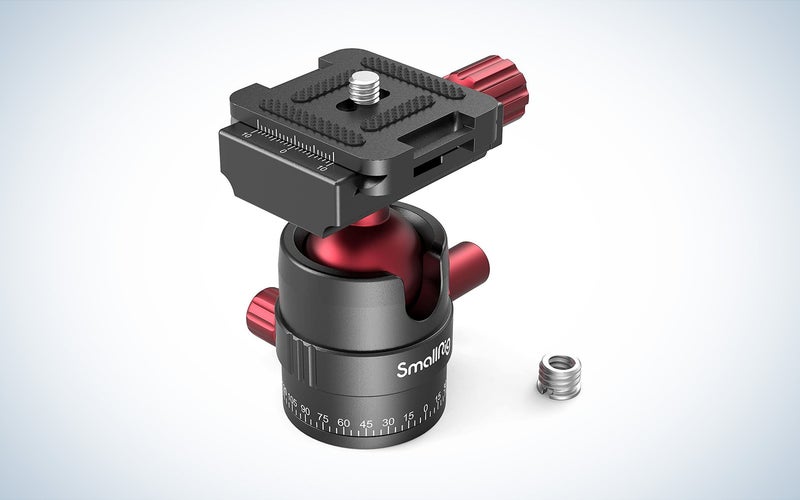
SmallRig
Specs
- Load capacity: 11.02 pounds
- Built-in level: None
- Weight: 5.67 ounces
- Materials: Aluminum Alloy
Pros
- Extremely budget friendly
- 360 degrees of rotation
- Very lightweight
- Independent pan lock
Cons
- Not built for heavy gear
Most tripod ball heads are fairly expensive, but this SmallRig option provides an affordable alternative. It’s also the most lightweight ball head on our list, weighing just 5.76 ounces. Of course, the compact design comes with downsides. It can only hold 11.02 pounds, so this tripod head isn’t meant for heavy gear. It comes with an Arca-Swiss style quick-release plate, features 360 degrees of rotation, and offers an independent pan knob for level, panoramic shots. It also supports vertical shooting with -90 / +45-degree front tilt and -50 / +50-degree lateral tilt. If you are a beginner looking for an affordable tripod ball head or have a lightweight kit, this is a great option.
What to consider before buying a tripod ball head
Ball head tripods are generally smaller, more lightweight, and easier to operate than a traditional three-way pan tilt head tripod. They are great when you are traveling with gear and are looking to lighten the load—making them an excellent tool for landscape photographers, studio shooters, and even video creators. Just don’t forget to also invest in a tripod that matches your gear and shooting style.
Load capacity and ball size
Load capacity is the number one thing to pay attention to when shopping for a ball head for your tripod. This refers to how much weight the ball head will be able to safely hold. A ball head that can support more weight will typically cost more money, but it’s a crucial thing to consider if you will be shooting with heavy camera equipment or long lenses. Generally speaking, ball head tripods that have balls with larger diameters will be able to support more weight and provide smoother pans once the camera is attached.
Quick release plates
Many of the most popular ball head tripods use an Arca-Swiss style quick-release platform—this allows you to easily attach and remove your camera from the tripod. These plates often fit the bottoms of cameras better than generic plates and have a dovetail design that makes it easy to secure onto the ball head.
FAQs
Q: How much do tripod ball heads cost?
A tripod ball head can cost anywhere between a few hundred dollars to approximately 40 dollars. Price is often dependent on the amount of weight that the ball head can support, the size of the ball, and construction materials. More expensive ball heads tend to have a sturdier construction, can support more gear, will be smoother to operate, and last longer.
Q: How do I choose a ball head for a tripod?
The most important thing to consider when shopping for a ball head for a tripod is how much gear you need to support. If you are trying to support a large full-frame camera and a long lens, you will need a ball head that can support the weight of all of that gear. You should also consider your budget. If you are shooting with a small camera setup, a low-cost option might make more sense for you.
Q: Are tripod ball heads a universal size?
Most tripod ball heads are threaded 3/ 8” -16” base mount and a 1/4″-20 camera mount. However, some low-cost tripods come with a fixed head that you won’t be able to remove.
Q: How tall should my tripod be?
This is entirely dependent on what you will be shooting and how tall the person operating the camera is, but generally speaking, a 60-inch tripod is a versatile size that will allow the tripod to be fully extended without the center column being raised.
Final thoughts on the best tripod ball heads
- Best overall: Manfrotto XPRO Ball Head
- Best for heavy equipment: 3 Legged Thing AirHed Pro Ball Head
- Best value for heavy gear: Vanguard Alta BH-300 Ball Head
- Best for lightweight cameras: Benro IB0 Triple Action Ball Head
- Best budget: SmallRig Tripod Ball Head
Ball heads are a great lightweight tripod accessory for photographers shooting in the studio or out in the field. They even work well for video shooters. The fact that they are often pocket-sized makes them much easier to travel with than a pan-tilt tripod head. Just make sure you are investing in one that can handle the weight of the camera gear that you are attaching to it.
Why trust us
PopPhoto has a long history of delivering the opinions of some of the sharpest and most prolific camera dorks the world has to offer. Since 1937, we’ve been reviewing cameras, providing wisdom from well-known photographers, and generally just nerding out about all that goes into making great pictures. Our current crop of writers and editors have decades of professional photography and camera writing experience among them. Collectively, we’ve probably shot with just about every camera and lens combo you can imagine—as well as some obscure stuff you may not even know about. Remember the Casio Tryx folding camera? PopPhoto does.
We also get that buying a camera is a big decision, which is why we’re dedicated to helping folks choose the right one (or, in our case “ones”) for their needs. Case in point: Handing over top dollar for an expensive rig may leave you unsatisfied if it doesn’t fit your preferred shooting style. Sure, a $6,000 sports-oriented DSLR can capture landscapes, but do you really need to do it at 30 frames-per-second? No, you don’t.
The post The best tripod ball heads for 2023 appeared first on Popular Photography.
Articles may contain affiliate links which enable us to share in the revenue of any purchases made.
]]>
Add some stability to your smartphone photography with the best phone tripods.
The post The best phone tripods of 2023 appeared first on Popular Photography.
]]>We may earn revenue from the products available on this page and participate in affiliate programs. Learn more ›
| Best for travel |
|
Best Tripod for travel | SEE IT |
A great all-around solution for any video or photo need. |
|
| Best for vlogging |
|
Sumcoo 53" Extendable Aluminum Tripod | SEE IT |
This full-sized support system offers a variety of heights. |
|
| Best pocket tripod |
|
Peak Design Mobile Tripod | SEE IT |
It’s roughly the size of a credit card, making it easy to keep in your pocket. |
Phone tripods allow shooters to get stabilized, professional-looking video content without the trouble of tired arms. Shooting smartphone video with a tripod also means you don’t have to worry about your finger covering the lens or the microphone while you are filming. They are an excellent tool for streamers, vloggers, TikTok creators, and even those just taking video calls. They come in a variety of sizes, and some feature the ability to attach external microphones or lights for an added level of professional content creation. When it comes to creating stabilized video content with your smartphone, these are some of the best phone tripods.
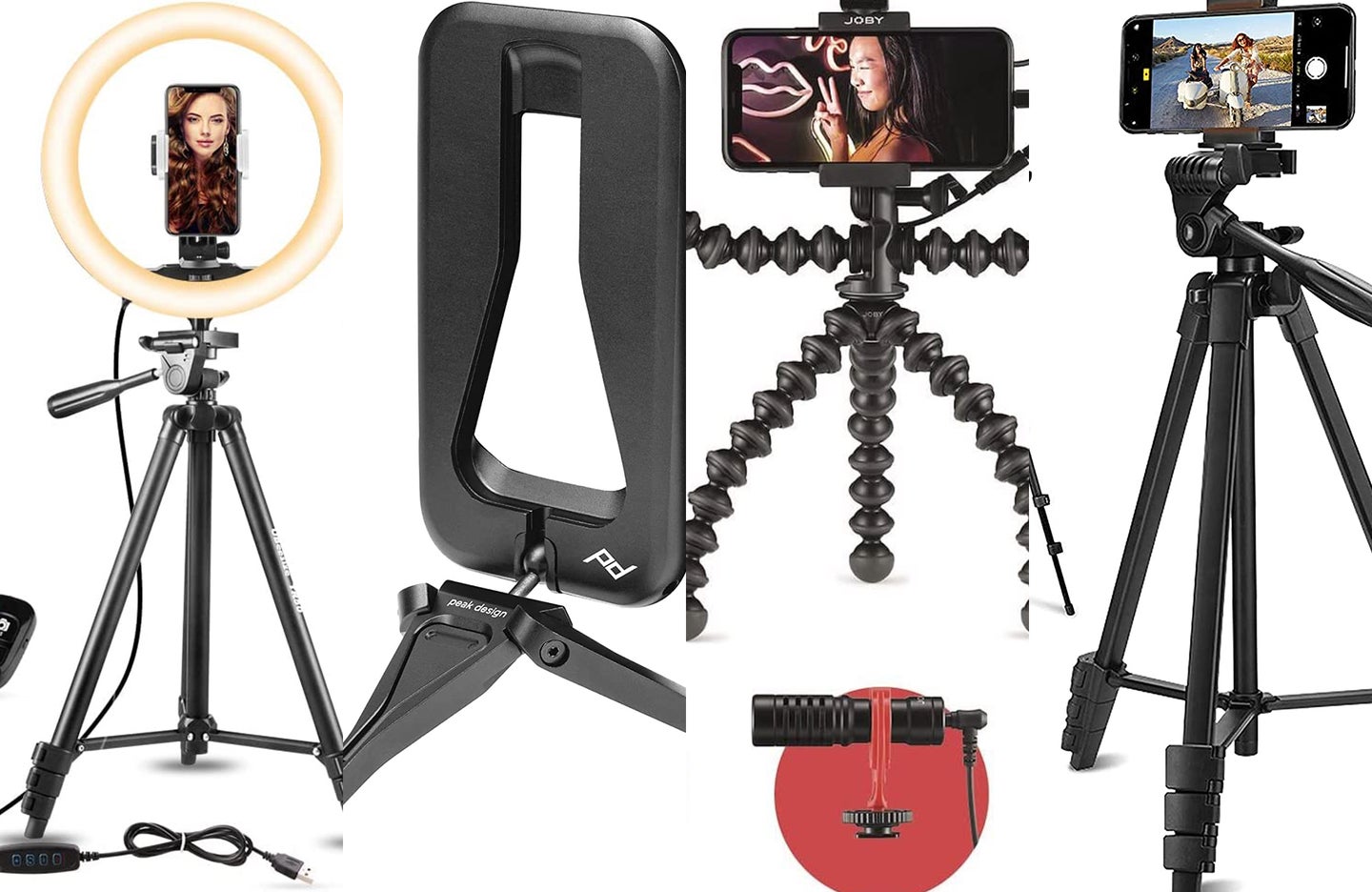
- Best overall: Joby GorillaPod
- Best for vlogging: Sumcoo 53″ Extendable Aluminum Tripod
- Best pocket tripod: Peak Design Mobile Tripod
- Best with ring light: UBeesize 10”Selfie Ringlight with Tripod
- Best budget: Flexible Universal Tripod
How we picked the best phone tripods
When selecting our picks for this article, we considered materials the product was made out of, versatility of use, and price. Although there are plenty of low-cost phone tripods on the market, if you are looking for something that will last a long time, your best bet is to purchase something made of metal rather than plastic. The PopPhoto writers and staff have decades of experience putting every type of camera on just about any tripod.
When looking at each product’s versatility, we considered how the best phone tripods would be used. A mid-cost full-sized phone tripod is better suited for taking group photos outside, while a compact flexible-leg tripod is a better option for shooters on the go. If you are trying to record a lot of video content with your smartphone, having a tripod that allows you to attach additional accessories is ideal.
The best phone tripods: Reviews & recommendations
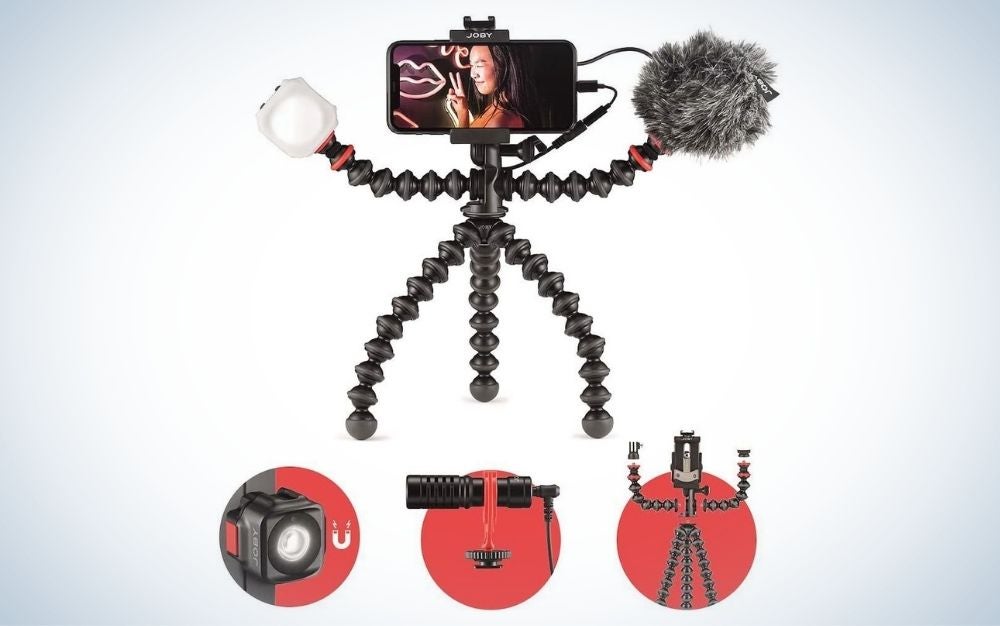
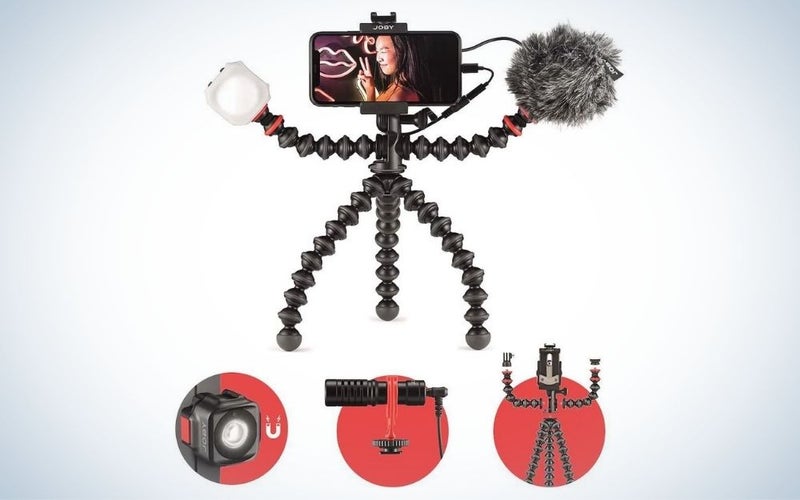
Best overall: Joby GorillaPod
Joby
Why it made the cut: Joby’s GorillaPod has been setting the standard for compact, flexible tripods for a long time, and its phone tripod is no different. This particular model allows users to attach an external microphone and light for a seamless vlogging experience.
Specs
- Weight: 1.9 pounds
- Flexible legs
- Compatible with cameras and phones
Pros
- Customizable configuration while shooting
- Sturdy build from a trusted brand
- Flexible legs make it easy to use the tripod anywhere
- All-in-one tool, lights and external mic included
Cons
- High price point
- Some assembly required
Every Joby GorillaPod has unique flexible legs that can be wrapped around virtually any surface for stable shooting—making it an extremely versatile tool for content creators. The wrap-around legs work just as well as traditional tripod legs or as a comfortable hand grip.
This version was designed with vloggers in mind and in addition to holding your phone, comes with an external mic for crisp audio and an LED light that can be controlled through your phone to keep you looking your best on camera. It’s lightweight and compact, making it a great tool for shooters who are always on the go.
Although this all-in-one rig is substantially more expensive than other phone tripods on the market, and does require some assembly when you pull it out of the box, it’s coming from a trusted tripod brand and has a much sturdier build than anything else you will find for stabilizing your phone. If your smartphone is your primary camera for content creation, you can’t go wrong with the best phone tripod for travel, the Joby GorillaPod.
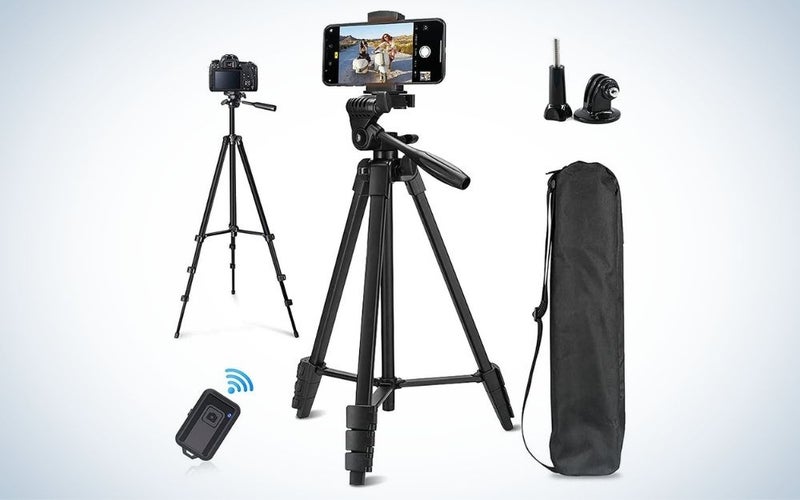
Best for vlogging: Sumcoo 53″ Extendable Aluminum Tripod
Sumcoo
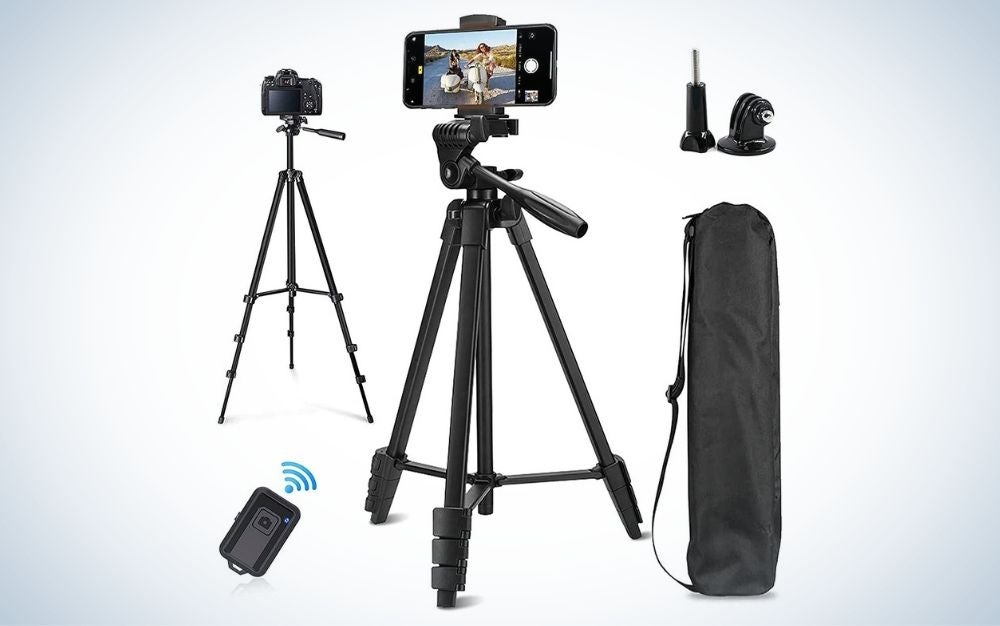
Why it made the cut: This full-sized tripod is a low-cost, lightweight full-sized option for stabilizing your smartphone when shooting photos or videos. The three-way pan head and adjustable phone holder make it compatible with a wide variety of smartphones.
Specs
- Extends up to 53” height
- Lightweight aluminum build
- Controllable with Bluetooth remote for selfies or video recording
Pros
- Extendable height from 16”-53 inches
- Bluetooth capabilities from 33 feet away
- Very affordable price point
Cons
- Not the sturdiest phone tripod
- Carrying bag feels cheaply made
Sumcoo’s full-sized smartphone tripod is made of lightweight aluminum, is compatible with a wide variety of smartphone sizes and can extend up to 53” in height. This is an extremely basic smartphone tripod, but it covers the bases and you can’t beat the inexpensive price point. This is why it’s our pick for the best phone tripods for vlogging.
It has a 360 degree 3-way pan head and you can adjust your phone to shoot horizontally or vertically. The quick-release plate makes it easy to pop your phone in and out of the phone holder. The Bluetooth-enabled remote shutter allows you to control your phone from up to 33 feet away. Although it doesn’t have the sturdiest build, and the nylon carrying bag feels cheaply made, if you are looking for a basic way to stabilize your smartphone this is a great choice. It’s light enough and folds down small enough that you can carry it around in collapsed mode if you want to shoot on the move.
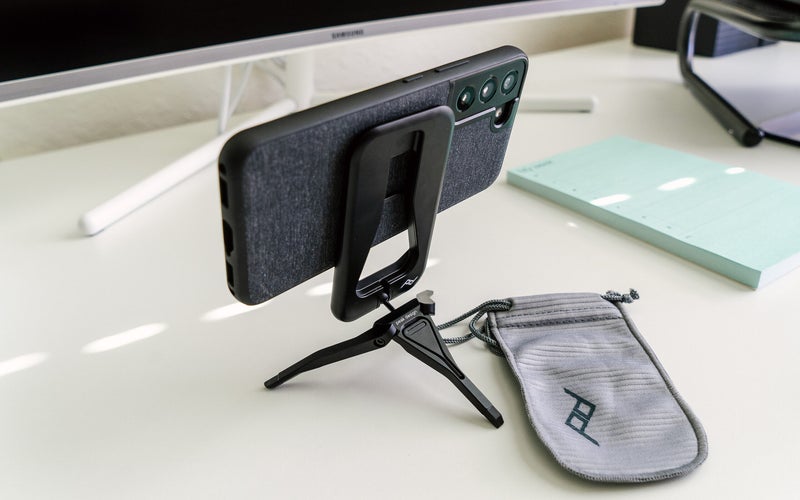
Best pocket tripod: Peak Design Mobile Tripod
Abby Ferguson
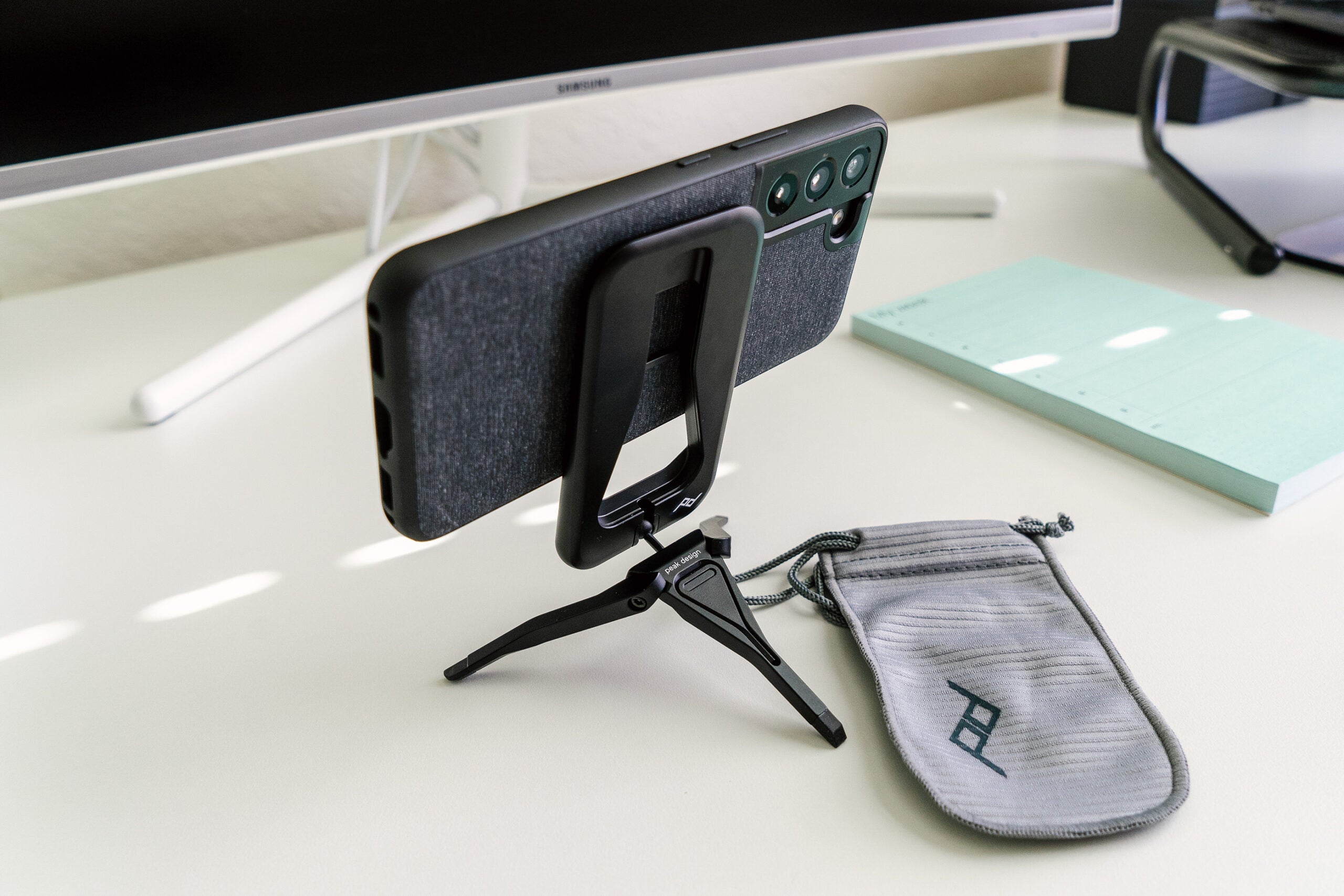
Why it made the cut: This pocket-sized phone tripod magnetically attaches to your phone and is only slightly larger than a credit card, making it easy to slide into your pocket even with the tripod attached.
Specs
- 3.8 x 2.2 inches
- Magnetic attachment
- Machined/anodized aluminum build
Pros
- Extremely compact
- Durable, metal construction
- Comes with a pin for adjusting ballhead tension
- Fast and easy to set up
Cons
- Requires the Peak Design phone case or Magsafe phones and cases
- Pricey
If you want a phone tripod that you can easily keep in your pocket, it doesn’t get much better than the Peak Design Mobile Tripod. When folded down, the tripod is roughly the size of a few credit cards stacked together. It’s incredibly slim and low profile, so you can even keep it on your phone when you’re not using it and still slide it into your pocket. It’s made of machined and anodized aluminum, so will withstand whatever you throw at it. And the feet feature grippy silicone so that they don’t slide and also dampen vibrations.
Because of the magnetic attachment, you can easily switch between landscape and portrait orientation. There’s not much height to it, and you’ll need a somewhat level surface, but the micro ballhead can help ensure you have level shots. And it comes with a magnetically embedded tool to adjust the ballhead tension if you need to.
The main downside with the Peak Design phone tripod is that you’ll either need the Peak Design phone case or a Magsafe phone or case. That’s because the tripod uses Peak Design’s SlimLink magnetic attachment technology to attach the tripod to your phone. It makes setup incredibly fast, though. And, if you go with a Peak Design case, you can also use the wide range of accessories that are designed for that.
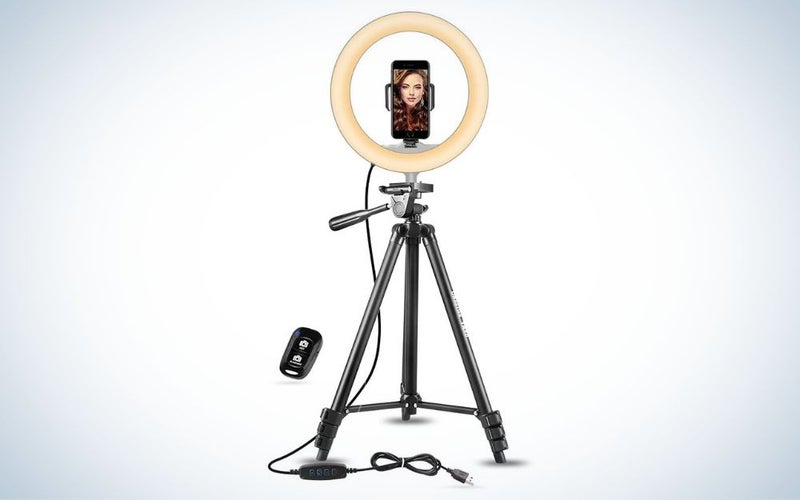
Best with ring light: UBeesize 10”Selfie Ringlight with Tripod
UBeesize
Why it made the cut: This ring light and tripod combo is an extremely convenient tool for streamers, makeup influencers, or any other content creator who wants to look their best on-camera without the hassle of additional lighting equipment.
Specs
- Dimmable ring light
- Smartphone attaches in middle of ring light
- Extendable height up to 50”
Pros
- All-in-one tool for lighting and stabilizing video
- Three light colors and 10 levels of brightness
- Phone can be placed in the middle of ring light for beautiful shadow-free shoots
- Wireless remote control allows touch-free operation
Cons
- Not the most stable tripod
- Not great for groups
This is one of the best phone tripods with a ring light for streamers, make-up artists, or any Youtuber who doesn’t want to fuss over lighting while creating content. This all-in-one ring light and tripod combo allows you to attach your phone in the middle of the ring light for beautiful shadow-free footage.
The LED ring light features three different colors: warm, cool white, and daylight, and each setting can be adjusted between 10 levels of brightness. The phone tripod is extendable between 15 inches and 50 inches making it a great tool for tabletop use while seated, or while standing. The 10-inch diameter on the ring light makes this option most suitable for lighting a single person, rather than a group, but if you are solo this ring light and tripod combo will help you look your best on camera or on video calls.
Best budget: Flexible Universal Tripod
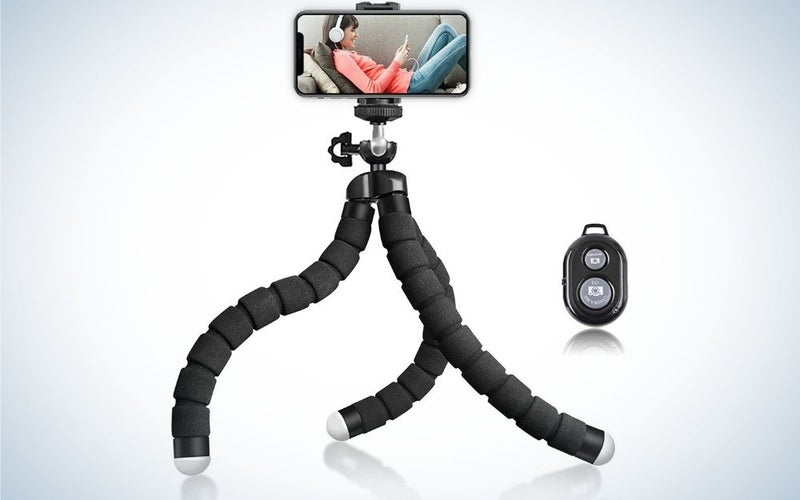
Moons
Why it made the cut: This compact phone tripod is one of the least expensive ones that can be found online. It’s flexible legs allow you to use it on a tabletop or wrap it around surfaces and can be controlled with a Bluetooth remote.
Specs
- Inexpensive
- Lightweight, only weighs 8.4 ounces
- Compact 8.85-inch height
Pros
- Extremely cheap
- Bluetooth capabilities from 30 feet away
- Flexible legs make it easy to use anywhere
Cons
- Made of plastic
- Works best with smaller smartphones
If your budget is tight, you really can’t beat this compact, lightweight phone tripod. As with any budget product though, if you are saving big, you are probably going to sacrifice things such as product materials and build quality. Although this inexpensive phone tripod is made of plastic and is best suited for smaller, lightweight phones. The flexible legs make it a bit more versatile than other low-cost phone tripods.
If you are shooting with the newest, most expensive iPhone or Android, it probably makes sense to stick with a higher-priced product, but if your phone is of a slightly older generation (and weight) this compact, inexpensive phone tripod will provide decent stability while shooting. This is the best budget phone tripod for novice shooters.
Things to consider before buying the best phone tripods
Before buying a smartphone tripod you should consider your budget and what you will primarily be shooting.
Features
If you are looking for something inexpensive to stabilize your phone for shooting videos at home or taking video calls, a low-cost compact phone tripod will probably be plenty. If you are interested in creating YouTube videos, vlogging or streaming live a more advanced phone tripod that has the option to attach external microphones or lights will be a better match for you.
Size
If you are planning to use the phone tripod to shoot TikTok videos or other content where you will be replacing original audio with something pre-recorded, a full-sized tripod that allows you to capture full-body shots is the way to go. Full-sized tripods can go over six feet in height, while tabletop tripods can stand just a few inches tall.
Shooting conditions
Consider whether you will be shooting indoors or outside—something that is made of cheap plastic materials will fare better in an indoor setting than it will outdoors. Ultimately the price of smartphone tripods tends to go up based on the materials that they are built out of. A tripod that has metal components will last a lot longer than one made of plastic, but will also cost more.
FAQs
Q: Which is the best mobile tripod?
The best mobile tripod depends a lot on what you plan to be shooting and where. If you are looking to vlog and take your phone outside of the home or office, a high-end tripod like Joby’s GorrilaPod may be your best bet. If most of the content that you are planning to film will be done from the comfort of your desk, a lower-cost desktop tripod should be plenty.
Q: Are phone tripods worth it?
A phone tripod will make it a lot easier to create stable footage and also allows you to go hands-free. If you are looking to film a lot of content with your smartphone, a reliable tripod is one of the best tools you can invest in.
Q: When should you shoot with a tripod?
Anytime you want stabilized, hands-free video footage with a smartphone, a tripod is your best bet. Shooting with a phone tripod also means you don’t have to worry about your finger covering the lens of your smartphone or the speakers. Ultimately using a tripod will give any footage shot with a smartphone a more professional feeling.
Final thoughts on the best phone tripods
- Best overall: Joby GorillaPod
- Best for vlogging: Sumcoo 53″ Extendable Aluminum Tripod
- Best pocket tripod: Peak Design Mobile Tripod
- Best with ring light: UBeesize 10”Selfie Ringlight with Tripod
- Best budget: Flexible Universal Tripod
While there are plenty of low-cost phone tripod options available online, if you are looking for something that is going to last, it’s worth spending a bit more money. Joby’s GorillaPod may be more expensive than some of the other phone tripods on this list, but it’s a well-known brand with a long history of making reliable tripods for full-sized cameras, and that’s why it’s our best overall product. We also love that the all-in-one kit features an external microphone and a little light—which means any video content captured with your phone will have an added level of professional quality.
Why trust us
PopPhoto has a long history of delivering the opinions of some of the sharpest and most prolific camera dorks the world has to offer. Since 1937, we’ve been reviewing cameras, providing wisdom from well-known photographers, and generally just nerding out about all that goes into making great pictures. Our current crop of writers and editors have decades of professional photography and camera writing experience among them. Collectively, we’ve probably shot with just about every camera and lens combo you can imagine—as well as some obscure stuff you may not even know about. Remember the Casio Tryx folding camera? PopPhoto does.
We also get that buying a camera is a big decision, which is why we’re dedicated to helping folks choose the right one (or, in our case “ones”) for their needs. Case in point: Handing over top dollar for an expensive rig may leave you unsatisfied if it doesn’t fit your preferred shooting style. Sure, a $6,000 sports-oriented DSLR can capture landscapes, but do you really need to do it at 30 frames-per-second? No, you don’t.
The post The best phone tripods of 2023 appeared first on Popular Photography.
Articles may contain affiliate links which enable us to share in the revenue of any purchases made.
]]>
Get a good tripod that maximizes your camera's potential without spending a lot of money.
The post The best budget tripods in 2023 appeared first on Popular Photography.
]]>We may earn revenue from the products available on this page and participate in affiliate programs. Learn more ›
| Best lightweight |
|
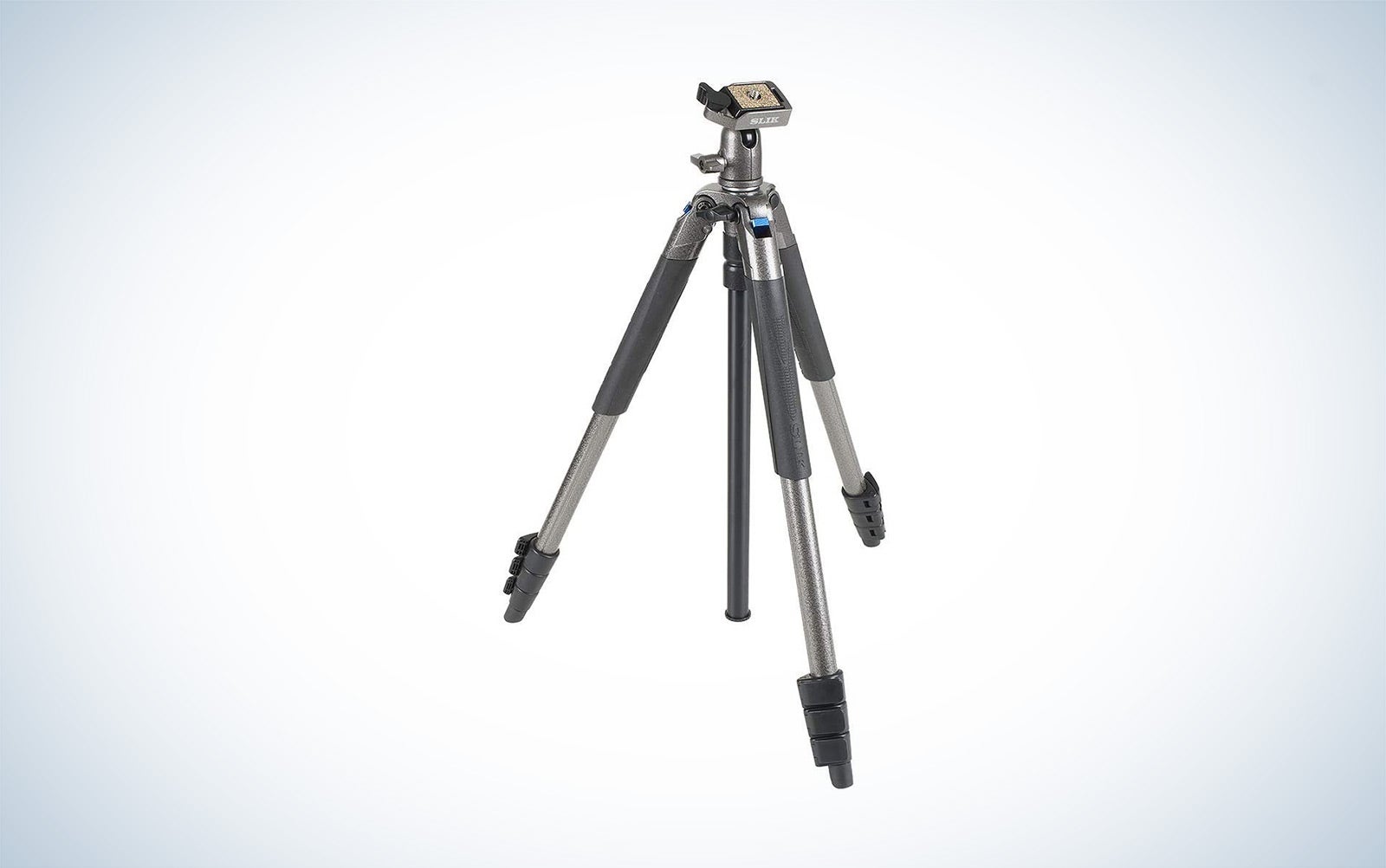
SLIK Sprint PRO III Travel Tripod w/SBH-100 Ball Head | SEE IT |
This SLIK tripod is lightweight and travel friendly. |
|
| Best for video |
|
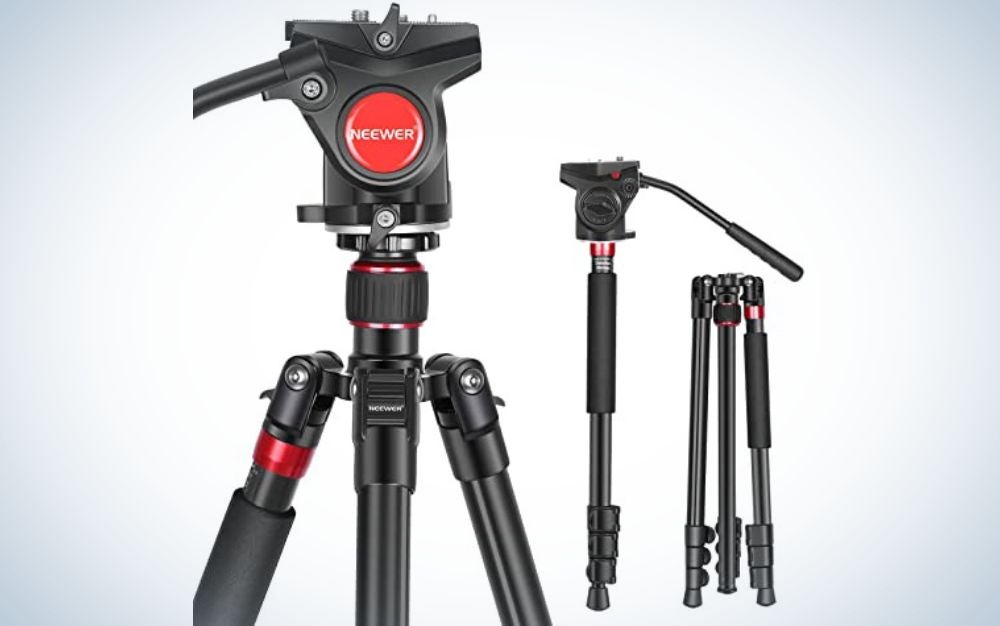
NEEWER 2-in-1 Aluminum Alloy Camera Tripod | SEE IT |
The fluid head and high max load capacity make this ideal for videographers. |
|
| Best for phones |
|
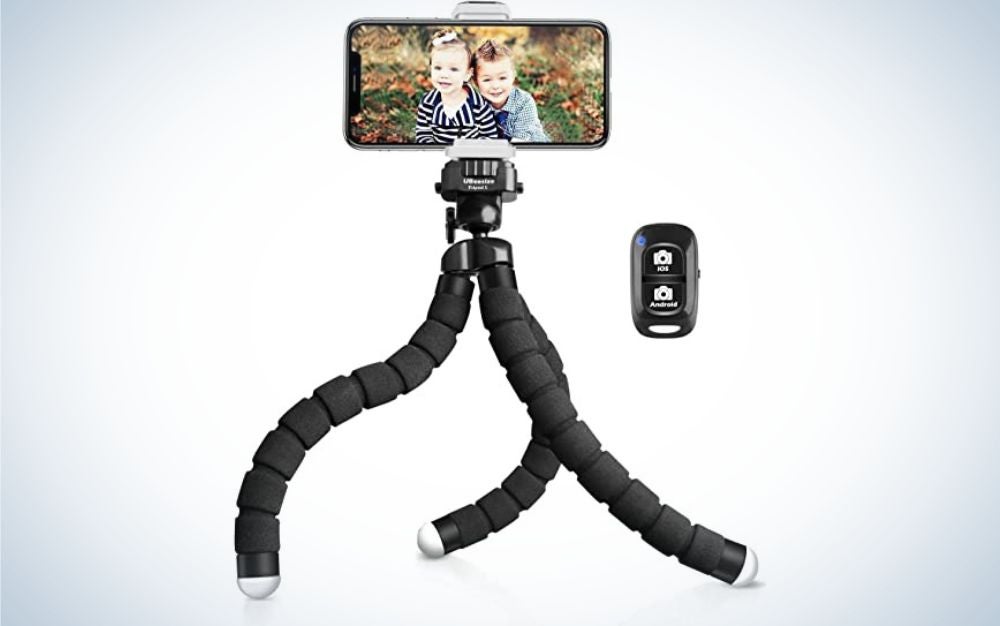
UBeesize Tripod S, Premium Flexible Phone Tripod | SEE IT |
The bendy legs allow you to put it anywhere. |
Budget tripods can help you capture tack-sharp images and crisp videos without spending too much money. But tripods aren’t all built the same, and you need to get one that gives you more bang for your buck, is easy to use, and still provides plenty of stability. Finding a good one in a market filled with thousands can be very tricky. The good news is that once you know what to look for, you’ll be able to find an affordable option that fits your needs well. The best budget tripods provide plenty of stability and features without costing an arm and a leg.
- Best overall: Amazon Basics 60-Inch Lightweight Tripod
- Best lightweight: SLIK Sprint PRO III Travel Tripod w/SBH-100 Ball Head
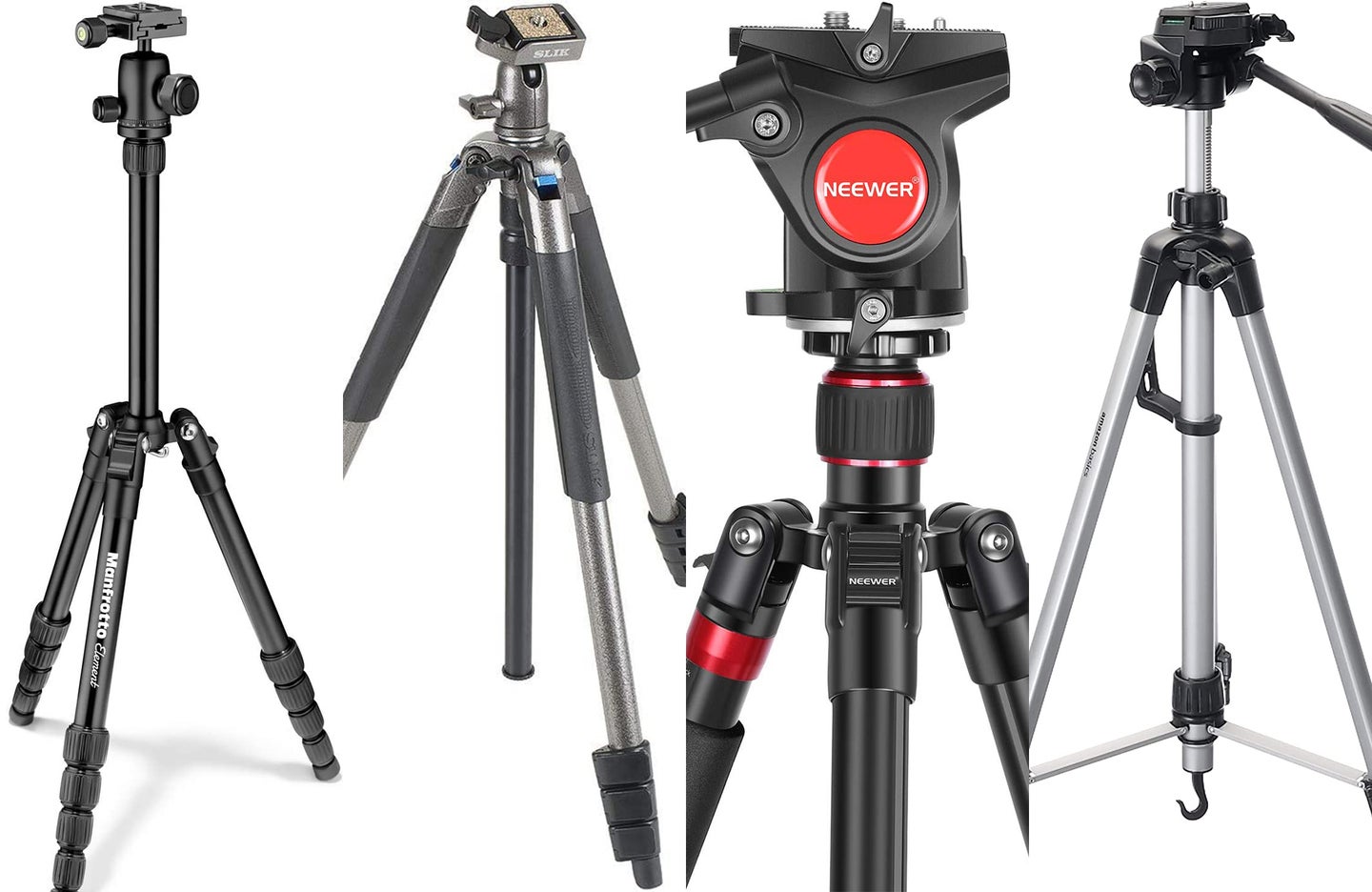
- Best for DSLR: Manfrotto Element Traveller Small Aluminum 5-Section Tripod Kit with Ball Head
- Best for phones: UBeesize Tripod S, Premium Flexible Phone Tripod
- Best for action cameras: GoPro Shorty Mini Extension Pole Tripod
- Best for video: NEEWER 2-in-1 Aluminum Alloy Camera Tripod
How we picked the best budget tripods
To prepare this roundup of the best budget tripods, we compared the best products from different manufacturers. We examined their build quality, ease of use, compatibility with different cameras, maximum weight ratings, and suitability for indoor and outdoor use. Finally, we also read buyer reviews on major e-commerce sites and reliable review sites to give a fair verdict.
The best budget tripods: Reviews & recommendations
Best overall: Amazon Basics 60-Inch Lightweight Tripod
Amazon Basics
Specs
- Collapsed height: 23.8 inches
- Extended height: 62.2 inches
- Weight: 2.72 pounds
- Maximum load: 4.4 pounds
- Materials: Aluminum
- Leg sections: 3
Pros
- Very affordable
- Lightweight
- Quick-release plate
- Easily adjustable legs and center post
- Beginner-friendly
Cons
- Build quality may not hold up over time
- Barebone features
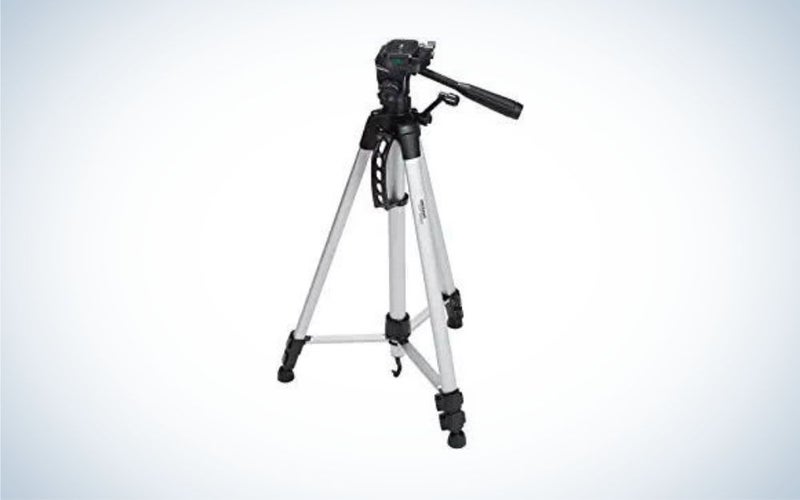
The AmazonBasics 60-inch Lightweight Tripod is perfect for beginners and hobbyist photographers. It’s one of the best mid-weight tripods on the market and has many useful features at a low price. With a simple and unassuming design, it focuses more on functionality than style. Silver-brushed aluminum makes it sturdy and durable while cross-bracings keep it steady.
It has a pan and tilt head that allows for smooth tilting and swiveling. This style of head does limit the direction of movement but is nice and stable and allows you to be more precise. Two bubble view levels show how straight the tripod is. Align them to the center to ensure the tripod head sits perpendicular to the ground. And there is a hook on the center column to easily hang weight from to improve its sturdiness.
This budget tripod works well with most cameras as long as they aren’t too heavy. However, its plastic head isn’t very sturdy and won’t last long if you’re a busy photographer. Also, the barebone features may put you off if you like feature-packed tripods.
Best lightweight: SLIK Sprint PRO III Travel Tripod w/SBH-100 Ball Head
SLIK
Specs
- Collapsed height: 18.5 inches
- Extended height: 62.9 inches
- Weight: 2.2 pounds
- Maximum load: 4.4 pounds
- Material: Aluminum
- Leg sections: 4
Pros
- Lightweight and compact design
- Can be set up as low as 6.2 inches
- Flip lock legs allow for quick adjustments
- Affordable price
Cons
- A little wobbly when fully extended
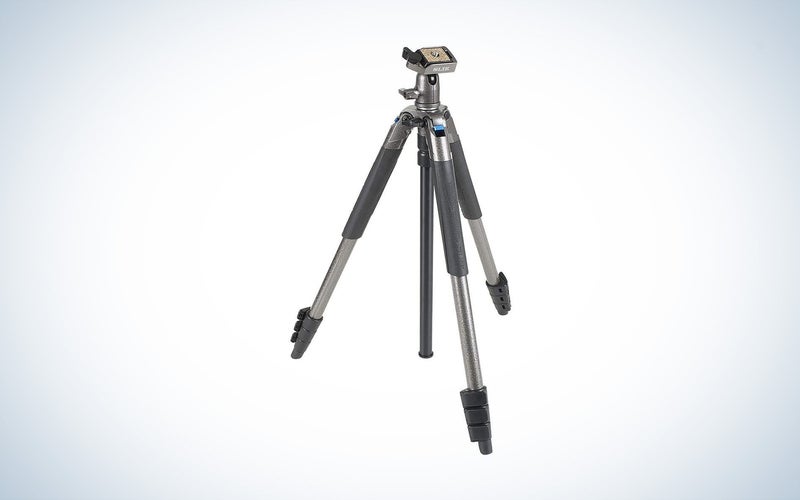
An ideal budget tripod is one that doesn’t require lots of sacrifices, and that’s the case with this SLIK Sprint PRO III Travel Tripod. It features a compact and lightweight aluminum design, even weighing less than more expensive carbon fiber tripods. It comes with a ball head, which is ideal for a range of situations. And you can even pan when the ball head is locked in place by unlocking the center column.
The SLIK tripod uses four-section legs with flip locks. The flip locks allow you to quickly and easily adjust individual sections to fine-tune your tripod height and placement. The center column uses a two-section design that is reversible, giving you more flexibility with camera height. It can be extended to as high as 62.9 inches but can also get as low as 6.2 inches.
The only real downside to the SLIK Sprint PRO III is the level of stability it offers. When the legs are extended, it is a bit wobbly. That will be more pronounced if you have heavy gear on it. You’ll want to stick well wonder the maximum load suggestion of 4.4 pounds as a result.
Best for DSLR: Manfrotto Element Traveller Small Aluminum 5-Section Tripod Kit with Ball Head
Magnus
Specs
- Collapsed height: 12.6 inches
- Extended height: 52.8 inches
- Weight: 2.5 pounds
- Maximum load: 13.2 pounds
- Material: Aluminum
- Leg sections: 5
Pros
- Independent pan lock on ball head
- Compact and lightweight
- Ideal for photo or video
- Can handle heavier DSLR cameras
Cons
- On the pricey end
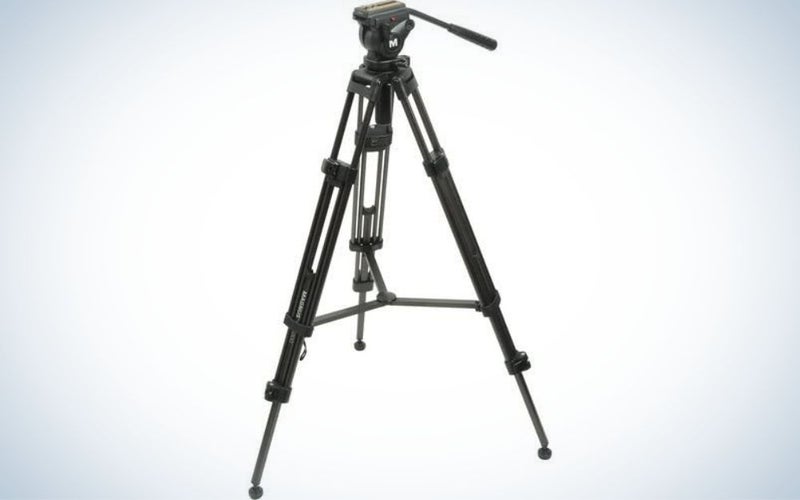
Manfrotto is well-known for its quality tripods, and the Element Traveller Small tripod is no exception. Weighing only 2.5 pounds and collapsing down to 12.6 inches, it’s relatively compact and lightweight. And despite that, it can still hold up to 13.2 pounds. That makes it ideal for even burly DSLR cameras like the Nikon D6, which weighs 2.79 pounds without a lens attached. You’ll still be able to attach a large telephoto and trust that the tripod will be sturdy.
Manfrotto’s Element Traveller can extend up to 52.8 inches. It also offers a minimum working height of 14.2 inches, so you can get shots low to the ground as well. The legs utilize rubber-coated twist locks, which provide a slim profile and make it easy to set up quickly. The center column uses a two-section design, providing more flexibility with height adjustment.
Leg positions of the Element Traveller can be adjusted independently using the spring-loaded lock. This helps with getting a level and stable tripod position, even on uneven terrain. The ball head rotates smoothly and offers an independent pan lock for panning shots. And the base features degree markings, so you can get consistent panning results. It’s on the pricey end for budget tripods, but it’s one of the cheapest options you’ll find that offers this level of load capacity and stability.
Best for phones: UBeesize Tripod S, Premium Flexible Phone Tripod
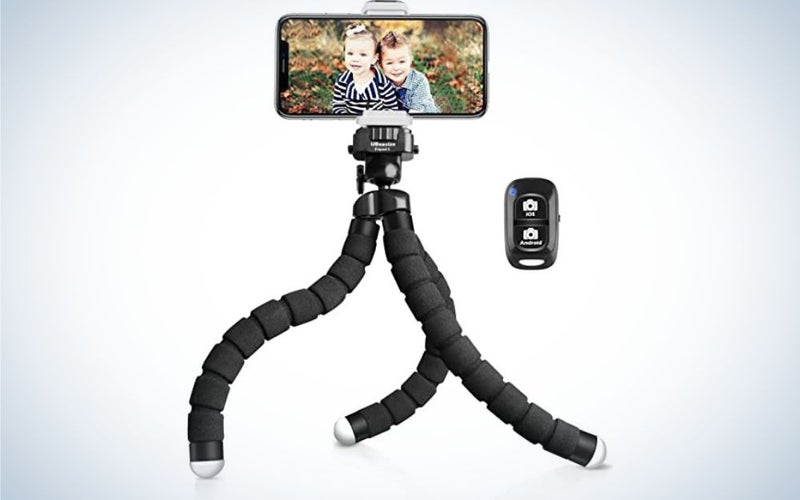
UBeesize
Specs
- Collapsed height: 7.87 inches
- Extended height: 7.87 inches
- Weight: 0.4 pounds
- Maximum load: 2.2 pounds
- Materials: Metal and rubber
- Leg sections: 1
Pros
- Compact and portable
- Features high-grade metal ball joints for better weight support
- Octopus-style legs give it excellent versatility
- Comes with a wireless remote
Cons
- Too short for professional shooting
- Low-quality phone holder
Many things make this phone tripod so popular. For starters, its body comprises metal balls with rubber reinforcements for durability. It’s also sturdy enough to handle heavy outdoor usage and boasts near-infinite adaptability. It can function as a mini tripod, a selfie stick, or ergonomic handheld support. Use it for table-top shoots or wrap its legs around railings, tree branches, or whatever can keep it stable. And the non-slip feet ensure the tripod remains stable on every surface.
Weighing a meager 0.4 pounds, it’s one of the best tripods under $50. You can fold its legs easily and put it in your backpack. It comes with a wireless remote control that lets you control a mounted phone from 30 feet away. Choose the selfie mode when taking selfies, vlogging, or shooting hands-free videos and images.
The phone tripod has a universal phone mount adapter that works with many Android and iOS smartphones. It also comes with a standard adapter screw thread that makes it compatible with digital cameras like mirrorless cameras, GoPros, and small DSLRs. But it can only hold a maximum weight of 2.2 pounds. Its height and size make it unsuitable for professional shooting, but if you want something for taking photos with your phone, this is a great choice. Plus, you can’t beat the price of this budget tripod.
Best for action cameras: GoPro Shorty Mini Extension Pole Tripod
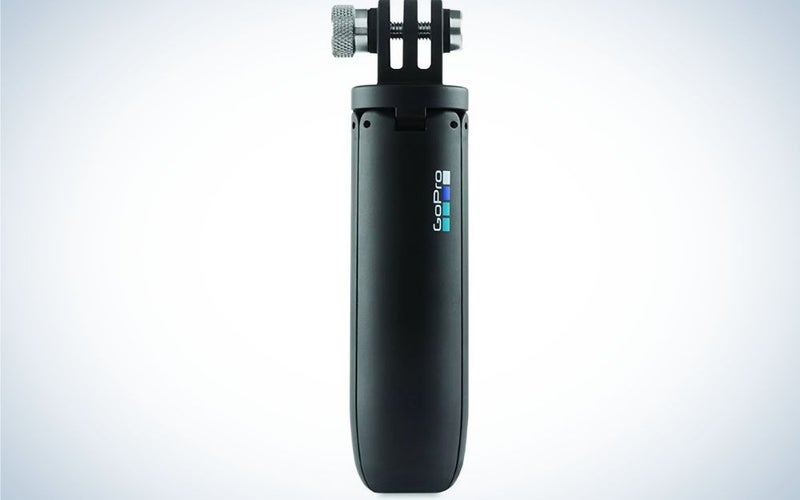
GoPro
Specs
- Collapsed height: 4.6 inches
- Extended height: 8.9 inches
- Weight: 0.14 pounds
- Maximum load: Not provided
- Materials: ABS
- Leg sections: 1
Pros
- Very compact
- Dual purpose selfie stick and tripod
- Compatible with any GoPro
- Sturdily built for durability
Cons
- Doesn’t provide much height
- The handle could use texturing for better grip
Love taking photos or shooting videos on the go but hate the bulkiness of full-size tripods and cameras? The GoPro Shorty Mini Extension Pole Tripod is for you. It’s compact, sturdy, and portable, fitting nicely in your pocket or backpack. And setup is straightforward, so you can quickly put it to use.
You can extend the tripod to its maximum height of 8.9 inches to capture group photos and selfies or collapse its legs and use it as a selfie stick. The legs remain stable on flat surfaces, allowing you to take steady shots from different angles.
Shorty is compatible with all GoPro cameras, including older models. If you love capturing your experiences at the height of the action but want some different types of shots, this will come in handy. It’s worth mentioning that it’s quite short, so don’t expect drastically different angles with this. Also, its handle is smooth plastic with no texture, making it a bit slick in wet situations. But you can add some grip tape to help.
Best for video: NEEWER 2-in-1 Aluminum Alloy Camera Tripod
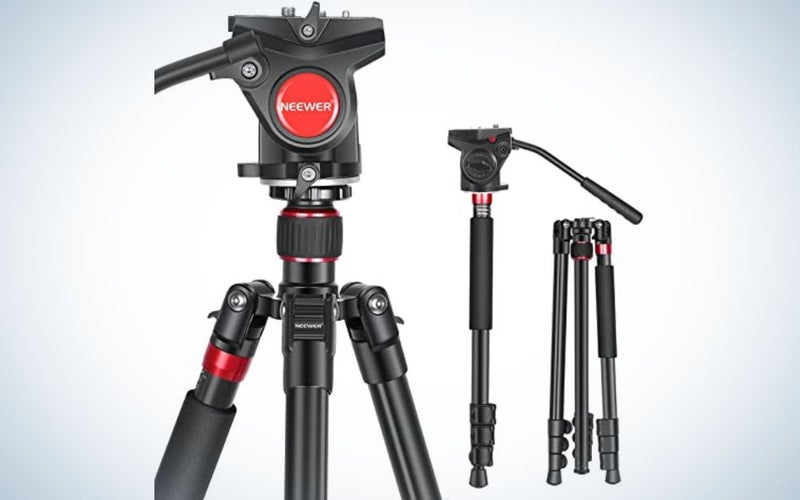
Neewer
Specs
- Collapsed height: 23.2 inches
- Extended height: 70.9 centimeters
- Weight: 2.2 pounds
- Maximum load: 26.5 pounds
- Materials: Aluminum
- Leg sections: 4
Pros
- High load capacity
- Flip locks allow for quick and easy leg adjustments
- Extra-smooth fluid head for quick tilts and pans
- Easy to set up
Cons
- No resistance adjustments on the head
The secret to creating crisp videos is having the right tripod. A good tripod allows for smooth pans and tilts and is easy to set up and pack away—like the Neewer 2-in-1 Aluminum Alloy Camera Tripod. It’s built for the avid videographer and is easy to use. Mounting and unmounting a camera is simple, thanks to the quick release plate. And a bubble level helps you keep the composition level, even on uneven ground.
What makes this tripod ideal for video is the fluid head. Fluid heads are a type of pan and tilt head and, as the name implies, allow you to pan horizontally and tilt up and down. It limits the direction of movement to those two directions, unlike a ball head, which keeps your videos more stable. And, as you might guess, fluid heads allow for smooth movements for more professional-looking videos.
This particular head has a 360-degree panning base. The head comes with ¼-⅜-inch screw adapters that make it compatible with most camera sliders and tripods. Plus, in monopod mode, it can work as a walking stick or support your videography gear. And the lip locks let you adjust and secure the legs in seconds.
The NEEWER 2-in-1 tripod is one of the best budget tripods under $150 and only weighs 2.2 pounds. Plus, it folds down to a height of 23 inches. As a result, it ranks high on our list of the best tripods to travel with.
Things to consider before buying the best budget tripods
Choosing a budget tripod can be an overwhelming experience because so many different variables come into play: How light should it be? How stable should it be? What’s the best material? How much should I spend? How much weight should it support? Here’s what you should look at before buying a new tripod.
Construction material
A tripod’s material influences its price, durability, weight, and mobility. Most tripods are made with either aluminum or carbon fiber. While both materials are highly durable, carbon fiber is lighter, stronger, and corrosion-free. However, it’s costlier than aluminum; you won’t find a budget tripod made with it. Aluminum tripods are sturdy enough to handle most photography needs and are available at a very reasonable price.
Tripod size and height
The size and height of a tripod determine how well it works for your needs. If you’re a landscape photographer, you need a compact and lightweight tripod that you can easily carry around. But portability won’t be a concern if you primarily shoot in studios. You can get a bulkier, heavier tripod if that is the case.
Certain types of photography require different tripod heights. Real estate photographers, for example, will want something tall for getting exterior shots. However, a lot of extension isn’t as crucial for traditional portrait photography. On the flip side, having a tripod that can get low to the ground may be critical for landscape photographers, so you’ll also want to check how low the tripod can go as well.
Load capacity
Load capacity is sometimes referred to as weight rating and means the maximum weight a tripod can hold safely. The best budget tripods on the market have different weight ratings; there’s no universal standard. But, to ensure sturdiness, your tripod’s load capacity should be at least three times the maximum weight of the heaviest equipment you’ll mount on it.
Tripod legs
A tripod’s legs affect its stability and sturdiness. Depending on the tripod’s maximum height, it might have legs with three to five sections. The rule of thumb is that the fewer the leg sections, the better the stability. A tripod with three leg sections should provide enough stability for most cameras.
In terms of construction, tripod legs are either tubular or non-tubular. All carbon-fiber legs are tubular and are secured by a threaded twist-lock system, while aluminum tripods have a flip-lock system.
Tripod head
The tripod head is perhaps the most important part of the tripod system. It controls the camera’s movements and securely holds your camera equipment. There are many types of tripod heads you can choose from, including fluid heads, pistol grip heads, gimbal heads, ball heads, and pan and tilt heads. The pan-tilt head is the most common and is typically built into budget tripods.
Different head styles are ideal for different genres of photography, with some better for video work, so be sure to check the type of head that a tripod has and that it is compatible with what you will be using it for. Also, when buying a tripod, make sure the head can support the same amount of weight as the legs. Otherwise, it will likely sag down if your camera setup is too heavy.
FAQs
Q: Which budget tripod is best for beginners?
According to our research, the Manfrotto Compact Action Aluminum 5-Section Tripod is the best budget tripod for beginners. It’s compact, durable, lightweight, and easy to use. In addition, it’s packed with great features like a photo-to-video mode switch, a quick-release mechanism, and an easy-to-control tripod head.
Q: What’s the cheapest tripod?
The cheapest tripod on our list is the Amazon Basics 60-inch Lightweight Tripod. It offers great value and is ideal for those looking for a cheap but functional tripod. We highly recommend it for beginners and hobbyist photographers.
Q: Are cheap tripods any good?
Some cheap tripods are good, and some aren’t. Before buying a tripod, identify your photography needs and take time to look for a tripod that meets them. Some budget tripods have a plastic plate that screws on the base of cameras, while others have more durable plates. It’s also important to check the quick-release system. Tripods with a better quick-release system cost more but allow for faster setup.
Q: Do expensive tripods make a difference?
Yes, expensive tripods make a significant difference. Most high-end tripods are reliable and feature more advanced heads that let you position the camera however you want. They also have a more durable quick release plate, not a plastic one. But perhaps the most important thing is that expensive tripods are much sturdier. Of course, it’s possible to get a budget tripod that works, but if you plan on sticking with photography, it is worth investing in a more expensive tripod.
Q: What is a good price for a tripod?
A good price for a tripod depends on your budget and specific needs. For instance, $20 is a good price for a phone tripod like the UBeesize Tripod. However, you’ll need more than $100 for a sturdy video tripod like the Neewer Camera Tripod.
Q: Will a budget tripod fit all cameras?
No, a budget tripod can’t fit all cameras. Most budget tripods have lower maximum load capacity and will not be able to support the weight of heavy cameras. Instead, they are best suited for smaller, entry-level cameras. That said, cameras are mostly standardized with a 1/4-inch female thread on the bottom, meaning most tripod mounts and quick release plates will work with any camera.
Final thoughts on the best budget tripods
- Best overall: Amazon Basics 60-Inch Lightweight Tripod
- Best lightweight: SLIK Sprint PRO III Travel Tripod w/SBH-100 Ball Head
- Best for DSLR: Manfrotto Element Traveller Small Aluminum 5-Section Tripod Kit with Ball Head
- Best for phones: UBeesize Tripod S, Premium Flexible Phone Tripod
- Best for action cameras: GoPro Shorty Mini Extension Pole Tripod
- Best for video: NEEWER 2-in-1 Aluminum Alloy Camera Tripod
The best budget tripod will enhance your photography and videography skills. But you need to find a balance between saving money and getting a quality tripod. Also, ensure the tripod can safely support your camera’s weight.
Why trust us
PopPhoto has a long history of delivering the opinions of some of the sharpest and most prolific camera dorks the world has to offer. Since 1937, we’ve been reviewing cameras, providing wisdom from well-known photographers, and generally just nerding out about all that goes into making great pictures. Our current crop of writers and editors have decades of professional photography and camera writing experience among them. Collectively, we’ve probably shot with just about every camera and lens combo you can imagine—as well as some obscure stuff you may not even know about. Remember the Casio Tryx folding camera? PopPhoto does.
We also get that buying a camera is a big decision, which is why we’re dedicated to helping folks choose the right one (or, in our case “ones”) for their needs. Case in point: Handing over top dollar for an expensive rig may leave you unsatisfied if it doesn’t fit your preferred shooting style. Sure, a $6,000 sports-oriented DSLR can capture landscapes, but do you really need to do it at 30 frames-per-second? No, you don’t.
The post The best budget tripods in 2023 appeared first on Popular Photography.
Articles may contain affiliate links which enable us to share in the revenue of any purchases made.
]]>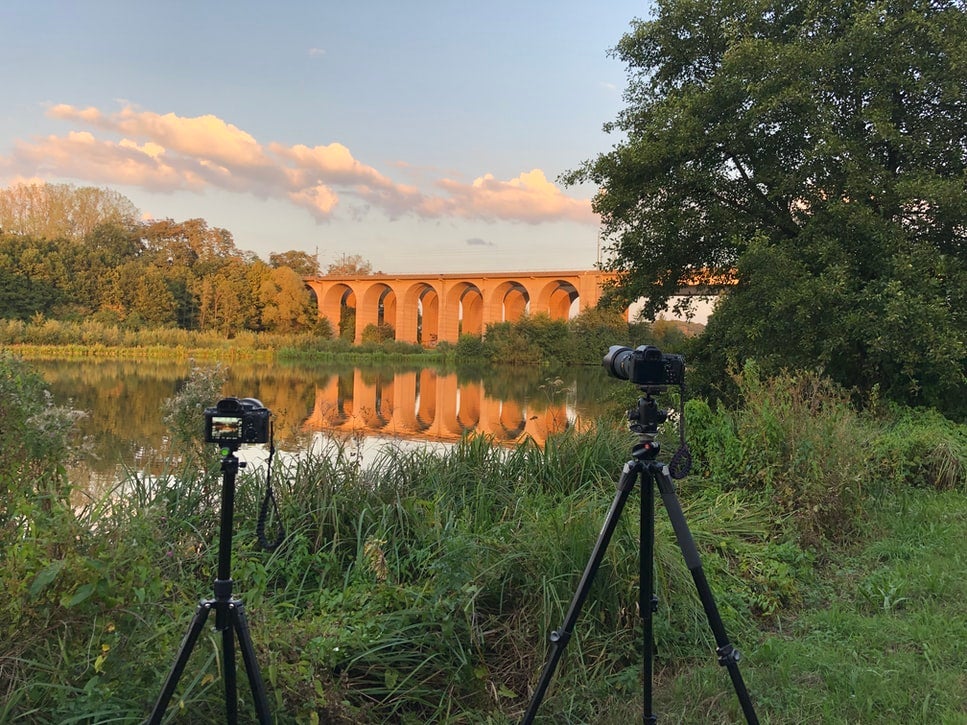
It’s easy to bring the best travel tripod anywhere you go.
The post The best travel tripods in 2023 appeared first on Popular Photography.
]]>We may earn revenue from the products available on this page and participate in affiliate programs. Learn more ›
| Best overall |
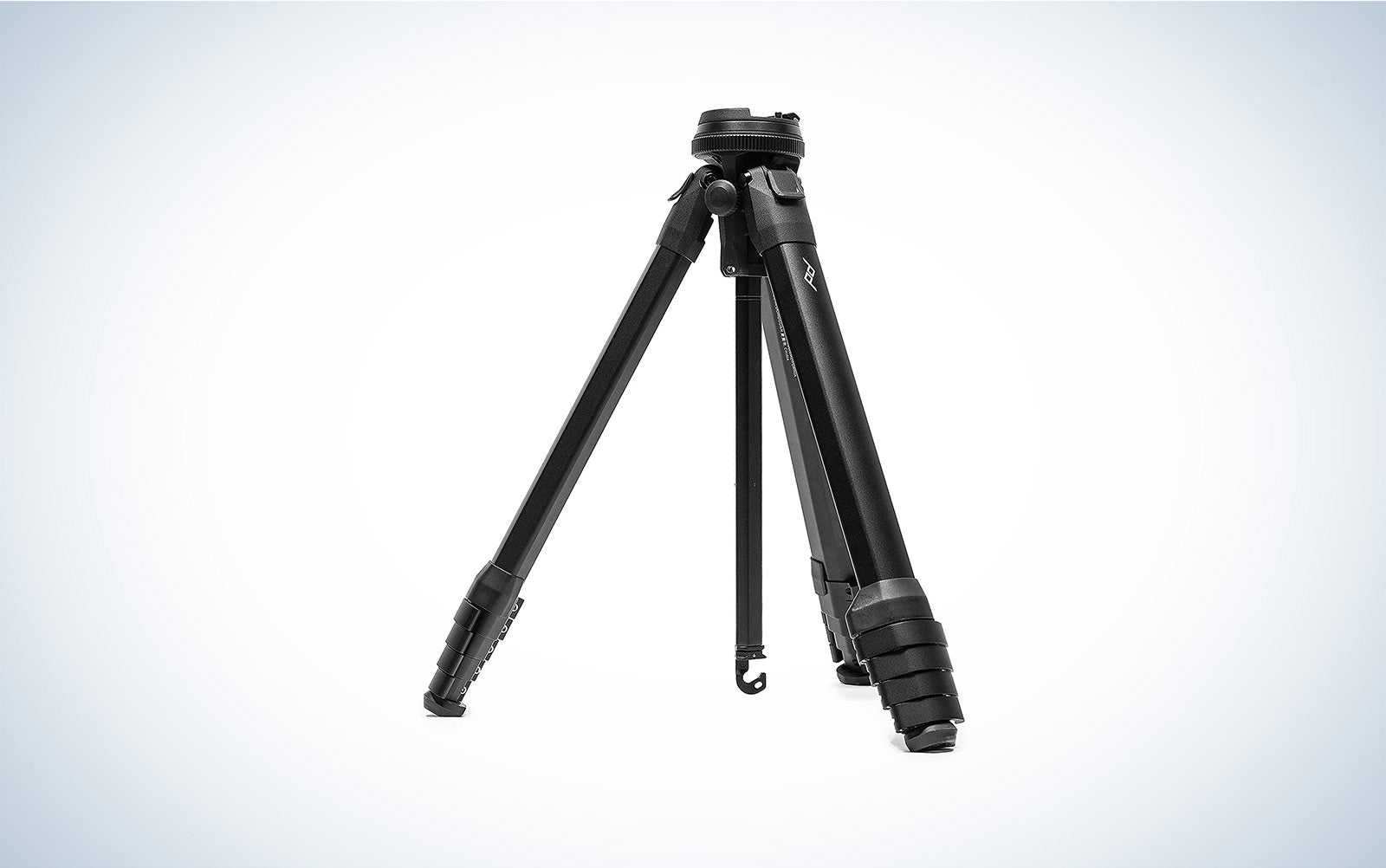
|
Peak Design Travel Tripod | SEE IT |
This compact pick is easy to pack up and carry, so you can take stunning (and still) photos from any adventure. |
|
| Best aluminum |
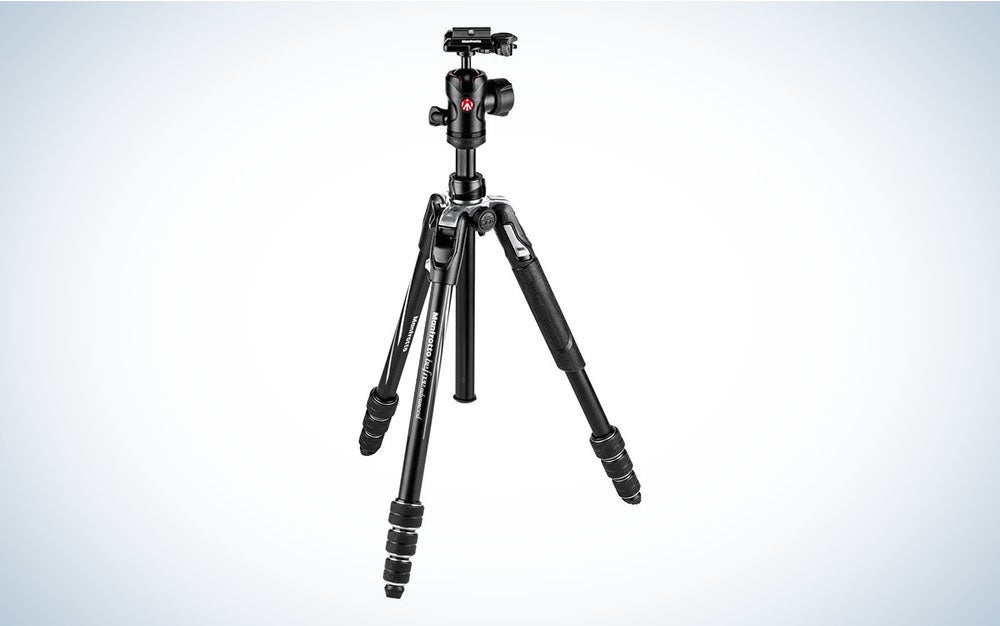
|
Manfrotto Befree Advanced | SEE IT |
The aluminum frame and M-locking design on this tripod make it both lightweight and durable enough to hold heavier cameras. |
|
| Best on a budget |
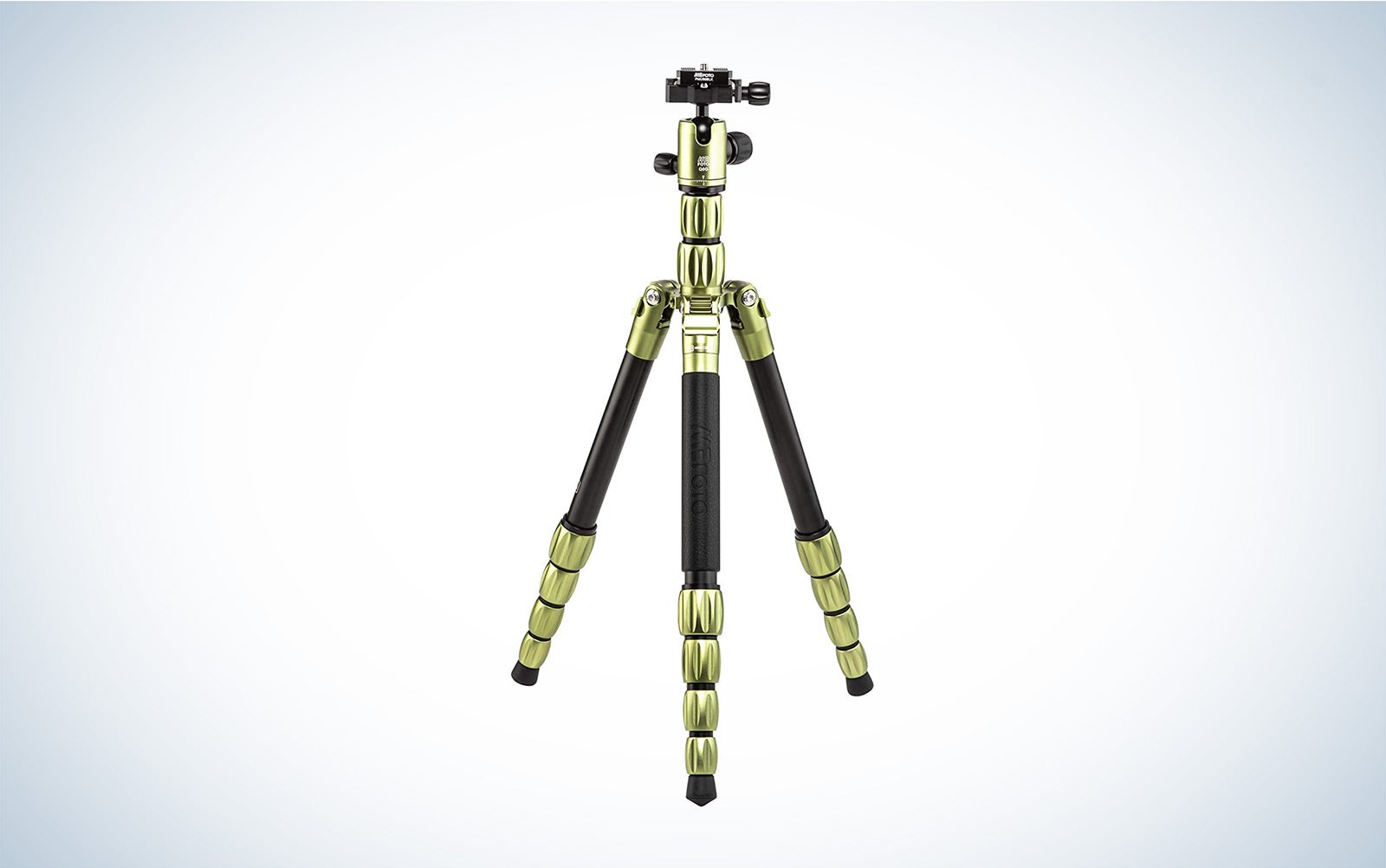
|
Mefoto Roadtrip S | SEE IT |
This pick has a variety of adjustable capacities at a budget-friendly price. |
Tripod makers have it rough. The bigger and heavier you make a tripod, the more stable it’ll be—and stability is the whole point. But if you want photographers to actually take your tripod with them on location, you have to make it lightweight and compact enough to carry around. This contradiction is most pronounced when you’re trying to find the best travel tripod. These tripods have to be even smaller, lighter, and more versatile than your standard set of sticks and ball-head. They have to be small enough that you can easily strap one to the side of a backpack, rugged enough to withstand being banged around in luggage, fast enough to be set up in seconds, versatile enough to let you shoot from multiple angles, and sturdy enough to keep a full-frame camera and lens stable on a busy street or windy cliff face.
Fortunately, there are plenty of great options for every skill level and budget. You just have to know what to look for.
- Best overall: Peak Design Travel Tripod
- Best aluminum: Manfrotto Befree Advanced
- Best carbon fiber: Gitzo Traveler Series 1
- Best heavy-duty: 3 Legged Thing Leo 2.0
- Best budget: Mefoto Roadtrip S
How we picked the best travel tripods
The editors and writers at Popular Photography have decades of photography experience in nearly every genre and have covered just about every major camera and tripod brand on the market. When looking at travel tripods, we looked at the essential components of a tripod that get brought along on trips. Weight and folded length were critical factors, as travel tripods must be easily packed and carried. The weight capacity was also significant, as the tripod should be sturdy enough to hold most major cameras. Lastly, we factored in the extended height, minimum height, and other miscellaneous features.
Best travel tripods: Reviews & Recommendations
Best overall: Peak Design Travel Tripod
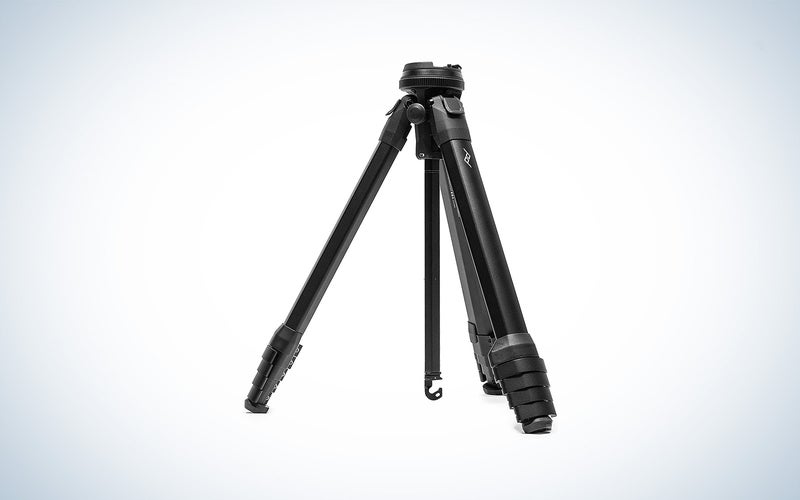
Peak Design
Why it made the cut: The Peak Design Travel Tripod has a novel design that allows it to be compact enough to fit in a water bottle pocket on a backpack yet still expand to 5 feet in height. Available as either aluminum or carbon fiber, this lightweight option is sturdy and travel-ready.
Key features
- Material: Aluminum or carbon fiber
- Tripod weight: 3.4 pounds
- Weight capacity: 20 pounds
- Extended height: 60 inches
- Folded height: 15.2 inches
Pros
- Very compact
- Available as aluminum or carbon fiber
- Built-in mobile phone mount
- Comes with a padded, weatherproof case
Cons
- Pricey
The Peak Design Travel Tripod boasts a fresh design that reimagines just how small a travel tripod can be. Thanks to its one-of-a-kind leg design, this camera stand folds down to the diameter of a water bottle, allowing you to pack it in a standard water bottle pocket on a backpack. In addition, the unique, low-profile ball-head mechanism lets you adjust your camera angle with a single hand. It may take some getting used to, but it is a nice feature.
The Peak Design Travel Tripod is available in carbon fiber or aluminum. You should pick the carbon fiber version if you want to save weight and the aluminum version if you want to save money.
Best aluminum: Manfrotto Befree Advanced
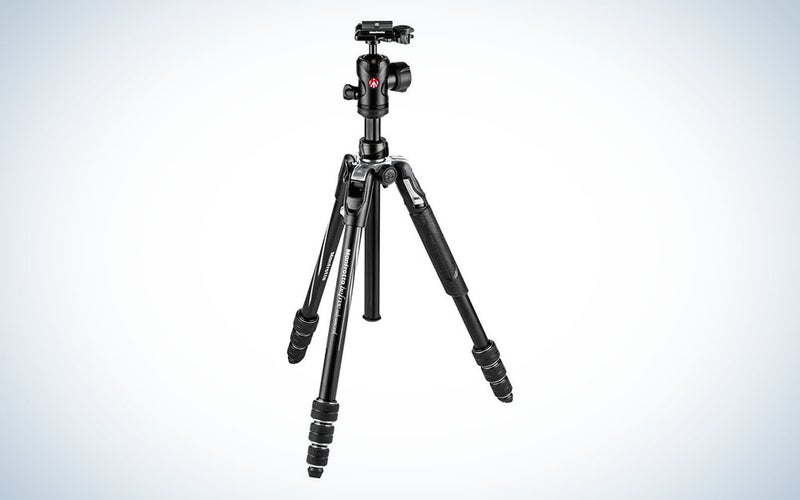
Manfrotto
Why it made the cut: Manfrotto’s Befree Advanced travel tripod is a 3.5 pound aluminum option that is sturdy enough to hold heavy gear. And at only 15.2 inches when folded, it can fit in most luggage.
Key features
- Material: Aluminum
- Tripod weight: 3.5 pounds
- Weight capacity: 19.8 pounds
- Extended height: 59.45 inches
- Folded height: 15.75 inches
Pros
- Lightweight aluminum build
- Can handle full-frame gear with heavy lenses
- Quality ball-head
Cons
- A bit wide when folded
Manfrotto’s Befree tripods are popular among travel photographers, and it’s easy to see why. The aluminum version weighs in at just 3.4 pounds, with a folded length of 15.2 inches. In addition, it has a weight capacity of 19.8 pounds, making it capable of holding full-frame cameras with heavy lenses. As a result, it has a great balance of price to performance for an aluminum travel tripod.
But it’s not just about size and weight. The Befree Advanced has twist-style M-lock leg locks that make setting up the tripod a breeze. The included ball head is surprisingly solid, and the leg angle selector offers more options than some competitors at and above this price point.
Best carbon fiber: Gitzo Traveler Series 1
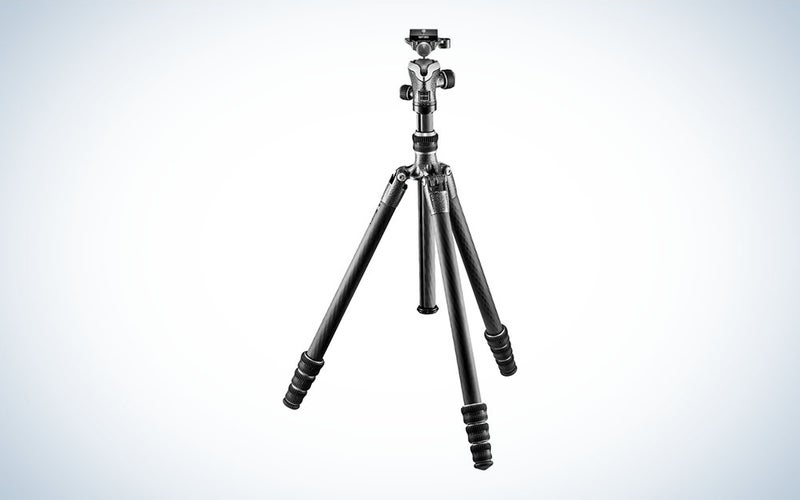
Gitzo
Why it made the cut: The Gitzo Traveler Series 1 is an excellent carbon fiber tripod. At 3.3 pounds, it isn’t the lightest one on the list. But it can handle the heaviest load, making it a great option for those wanting something sturdy.
Key features
- Material: carbon fiber
- Tripod weight: Tripod: 2.34 pounds, Head: 0.9 pounds
- Weight capacity: 22 pounds
- Extended height: 60.24 inches
- Folded height: 16.73 inches
Pros
- Excellent build quality
- Compatible with lenses up to 200mm
- Quality ball head
Cons
- Very pricey
The Gitzo Traveler Series 1 is the go-to professional tripod for photographers who demand uncompromising build quality. At 3.3lbs and a folded length of 16.73 inches, it’s not the smallest or lightest carbon fiber travel tripod you can buy. But it offers a weight capacity of 22lbs, making it a sturdy choice. In addition, it has a max height of 60.24 inches and can go as low as 8.66 inches, making it useful for low-angle or macro shots and high-angle ones.
This kit comes with the Gitzo Series 1 Traveler Center Ball Head, which is the slimmest Gitzo head. It has an independent pan lock and an incredibly smooth rotating ball head. This head is also compatible with plates from other brands as long as the dimensions are similar, which could be helpful when traveling.
Best heavy-duty: 3 Legged Thing Leo 2.0
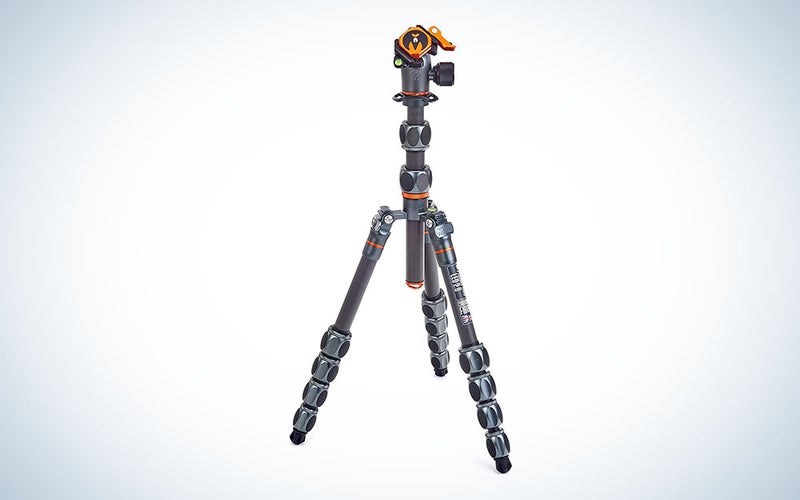
3 Legged Thing
Why it made the cut: The 3 Legged Thing Leo 2.0 has the highest weight capacity you can find at 66 pounds. And yet, it still packs down to around the same size as other compact travel tripods.
Key features
- Material: Carbon fiber
- Tripod weight: 3.35 pounds, 4.08 pounds with head
- Weight capacity: 66 pounds
- Extended height: 57.7 inches
- Folded height: 14.7 inches
Pros
- Excellent weight capacity
- Folds down small
- Legs detach to become monopods or booms
Cons
- Lots of leg locks
With a maximum weight capacity of 66lbs, the 3 Legged Thing Leo 2.0 is about the sturdiest travel tripod you can buy, and yet it still folds down to under 15-inches and tips the scales at just 4.1lbs. The large weight capacity means you can use it with larger mirrorless or DSLR cameras or even medium format setups.
The Leo is also unique in its versatility. Each leg is detachable, allowing you to use them as monopods or booms. They also feature a 3-position angle lock and boast twist locks for quick and easy setup. And, if you buy separate footwear, it can be used as a tabletop tripod with the legs removed as well. These features make it one of the most versatile, heavy-duty travel tripods money can buy.
Best budget: Mefoto Roadtrip S
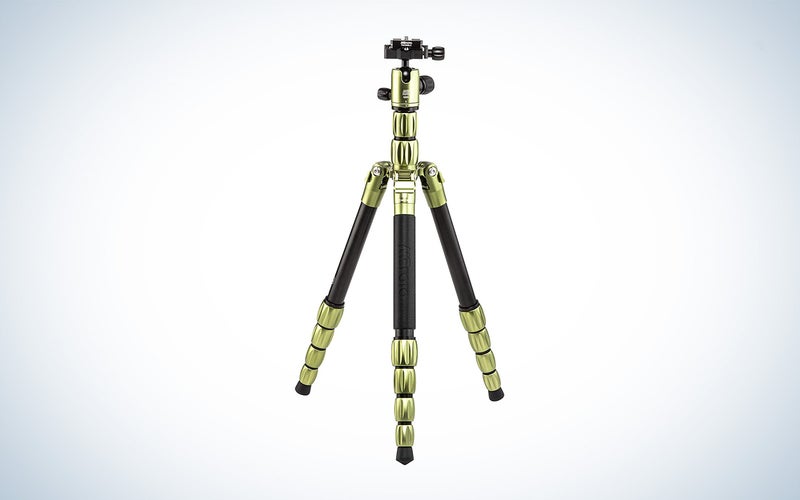
MeFOTO
Why it made the cut: The MeFOTO Roadtrip S is a very affordable travel tripod for beginner photographers while still having plenty of good features. It weighs only 2.5 pounds, packs down to 13.2 inches, and can even convert to a monopod.
Key features
- Material: Aluminum
- Tripod weight: 3.65 pounds
- Weight capacity: 17.6 pounds
- Extended height: 59.4 inches
- Folded height: 13.98 inches
Pros
- Budget-friendly
- Swappable head
- Converts into a monopod
Cons
- Weight capacity is fairly low
MeFOTO’s BackPacker, RoadTripper, and GlobeTrotter tripods are travel-friendly favorites that regularly make roundups like this. The aluminum version of the Roadtripper S weighs in at just 3.65 pounds and still boasts a respectable weight capacity of 17.6 pounds.
The Roadtripper S also has some nice features for a tripod at this price. For example, it has a scale on the center column for lining up panoramic shots right, a separate lock for its pan axis, and can convert into a monopod. It’s not the most capable on the list, but it’s a great entry-level travel tripod for beginners.
Features to consider when shopping for the best travel tripods
The main difference between a regular tripod and a travel tripod is size and weight. While regular tripods—especially high-end video tripods—are often large and heavy in order to offer as much stability and weight capacity as possible, travel tripods have to balance these core features with the need for portability. The best travel tripod is the one that offers the most rigid and stable construction in a package that folds up small and weighs no more than a large DSLR.
To do this, lightweight tripod makers rely heavily on materials like aluminum (good) and carbon fiber (better), creative designs with thinner legs that fold 180° over the ball head, telescoping legs with as many as 5 sections, and smart extras like sandbag hooks for adding weight while you shoot, reversible center columns, and built-in bubble levels.
The goal is to create a tripod that delivers the best of all worlds: something compact enough that it will fit comfortably in a carry-on bag, light enough that it won’t bog you down on a long hike, and yet stable enough that it’s actually worth bringing along. Here are the key features you should consider when shopping for the best travel tripod, and a few of our top picks.
Size and weight of a travel tripod
As we’ve already mentioned several times at this point, the first and most important features to consider when shopping for a travel tripod are size and weight. The best travel tripod overall will be lightweight, with a respectable weight capacity, an ingenious design that allows it to fold up really small, and a carbon fiber construction for the best possible strength-to-weight ratio.
In terms of raw numbers: a compact travel tripod should weigh no more than 4lbs, it should be able to hold at least 15lbs, and it should fold up to less than 16-inches long for easy packing. Once these boxes are checked, everything else is a bonus. Smaller folded diameter, vari-angle legs, reversible center column, a well-designed ball-head, and easy-to-deploy legs are the secondary features that separate the “good” travel tripods from the “great” ones.
Skill level and budget
Another important consideration is your own skill and interest level. While it’s always tempting to purchase the best-of-the-best camera gear right away, there’s no need for a beginner travel photographer to drop $500+ on a high-end carbon fiber tripod with all the bells and whistles—no matter what the ads try to tell (or sell) you.
If you’re just starting out, look for important core features (lightweight construction, compact foldable design, reasonable weight capacity, and solid build quality) in an affordable aluminum model that will offer you everything you need and won’t cost you a bundle. If you can afford to spend a little more than the budget options, but don’t want to get carried away with Gear Acquisition Syndrome (also known as G.A.S.), a great entry-level tripod is the way to go.
Aluminum vs. carbon fiber tripod
One of the most important decisions you’ll need to make when looking for the best travel tripod is whether to go with aluminum or carbon fiber.
A carbon fiber tripod is the premium choice. Weight for weight it’s both stronger and more rigid than aluminum, which translates into tripods that are both lighter and sturdier. As a result, it’s also a lot more expensive. Aluminum may be heavier and a little more flexible, but it’s a lot cheaper and plenty of photographers rely on it day-in and day-out. Plus, the added weight helps keep your shots stable when you don’t have any way to weigh the tripod down.
Fortunately, many of the most popular travel tripods from the most recognizable brands are available in both aluminum and carbon fiber variants. You get to decide what’s more important: a lighter tripod, or a heavier wallet?
Weight capacity
Most travel tripods can handle a maximum load of about 22lbs, with many of the lightest options cutting that number down even further in order to save weight. Fortunately, that’s plenty for most mirrorless cameras or DSLRs with a regular lens attached. However, if you plan to tote around a huge DSLR and lens combo, or maybe even shoot medium format, you’ll want to find a tripod that can handle a lot more weight without flinching.
Keep in mind that there will be a trade-off here, usually in terms of tripod weight. The higher the weight capacity, the thicker and sturdier the lens and ball head will need to be, and the heavier the tripod itself is likely to become. Only you can decide if that’s a worthwhile compromise.
FAQs
Q: Does it matter what tripod you use?
Absolutely it does! Extremely cheap tripods don’t deliver the same stability or features that you get from higher-quality options like the ones listed above.
At the very least, a good-quality travel tripod will ensure you can keep your ISO down and capture longer exposures without camera shake, even in windy or otherwise challenging conditions. But beyond this, most high-quality tripods offer multiple leg angles, reversible columns, bubble levels, a huge range of height settings, and much much more. Features like this open up a world of photographic possibilities.
Q: What is the strongest yet lightest tripod material?
Carbon fiber is the strongest and lightest material used in tripods. Weight for weight, carbon fiber is anywhere from 2x to 5x more rigid and up to 10x stronger depending on the type and orientation of the fiber used. This is obviously a huge plus for photographers who want to travel light without sacrificing tensile strength, but remember: the lighter the tripod, the less stable it will be. So keep an eye out for a carbon fiber travel tripod with weight hooks so that you can hang your bag on your tripod while you shoot and add back any lost stability.
Q: How much does a good tripod cost?
Materials, size, weight, and weight capacity are all going to factor into the final price of a good travel tripod, which makes an “average” hard to pin down. Generally speaking, aluminum travel tripods will be cheaper, starting at around $100 for a good-quality tripod, although you can find them for less. Carbon fiber models will be more expensive, starting around $150, with most options coming in above the $200 mark. If you want a high-quality, lightweight, carbon fiber tripod that folds up small and features great weight capacity at the same time, expect to spend $200 or more.
Final thoughts on the best travel tripods
The list above is not a comprehensive overview of all the best travel tripods on the market. With so many great brands like Gitzo, Benro, Manfrotto, 3 Legged Thing, MeFOTO, and Peak Design putting out solid products, there’s no shortage of great options. That said, we’ve found the Peak Design Travel Tripod to be the best overall option. It has a unique design that allows it to fold down smaller than any other option in the same class. However, it can still hold a good amount of weight, making it sturdy enough to use with heavier cameras or on windy days. The added touch of a built-in phone mount and the included padded carrying case are nice additions as well.
The post The best travel tripods in 2023 appeared first on Popular Photography.
Articles may contain affiliate links which enable us to share in the revenue of any purchases made.
]]>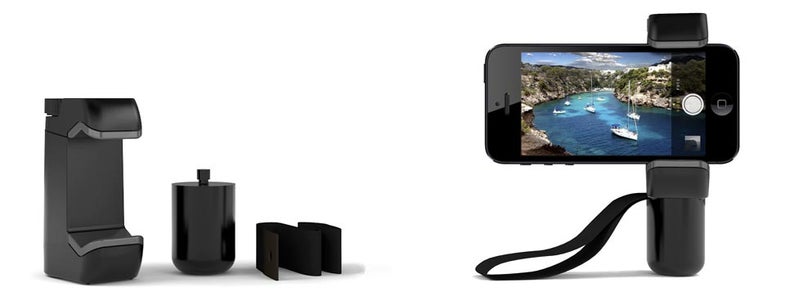
Any smartphone, any which way
The post New Gear: The Shoulderpod is a 3-in-1 Grip, Tripod Mount, and Stand For Any Smartphone appeared first on Popular Photography.
]]>We may earn revenue from the products available on this page and participate in affiliate programs. Learn more ›
The Shoulderpod S1 is a new smartphone grip out of Europe that will not only let you mount your phone on a tripod, but will also work as a stand and video grip, and thanks to its adjustable rubber grips, will work with almost any smartphone, even while in a case.
The shoulderpod is comprised of three basic parts. The main section is a mount/stand. It uses an adjustable screw to shift from 48-93mm (1.9-3.6 inches), which is enough variance to fit just about any smartphone on the market. Since it’s not locked to a single form factor, you can also position it at any point on the smartphone’s body. In this configuration, it has a 1/4-20 tripod mount, and can be used as a smartphone stand.
But the Shoulderpod gets an extra functionality boost by letting you screw a wrist-strap and extended grip into place, making it suitable for hand-held photography and videography. The folks behind the Shoulderpod are also planning to expand the S1 in the near future with further extensions and modifications that will likewise slot into the tripod mount.
So if you’ve ever considered using your smartphone for some more advanced shooting, something like the Shoulderpod S1 might be the way to go about it.
With a usual price of $35, the Shoulderpod S1 is having a launch sale for $30.
The post New Gear: The Shoulderpod is a 3-in-1 Grip, Tripod Mount, and Stand For Any Smartphone appeared first on Popular Photography.
Articles may contain affiliate links which enable us to share in the revenue of any purchases made.
]]>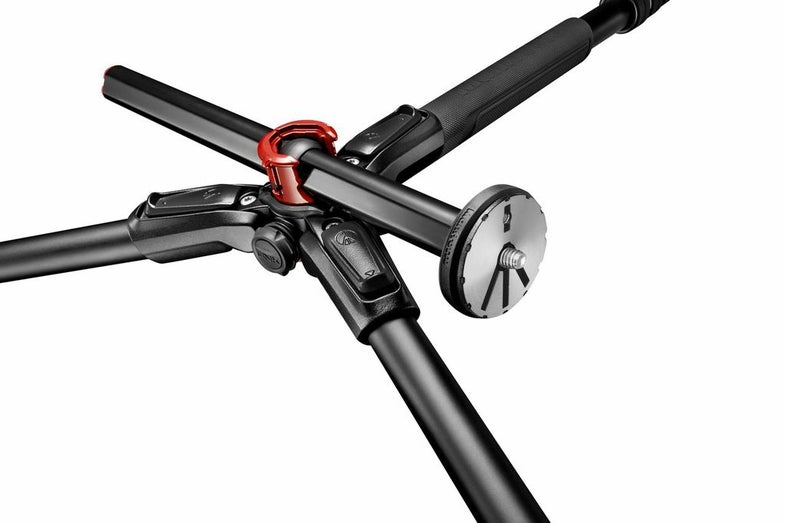
It weighs less than four pounds and is shorter than 18-inches when folded up
The post New Gear: Manfrotto’s 190GO! Travel Tripod Is Their Smallest and Lightest appeared first on Popular Photography.
]]>We may earn revenue from the products available on this page and participate in affiliate programs. Learn more ›
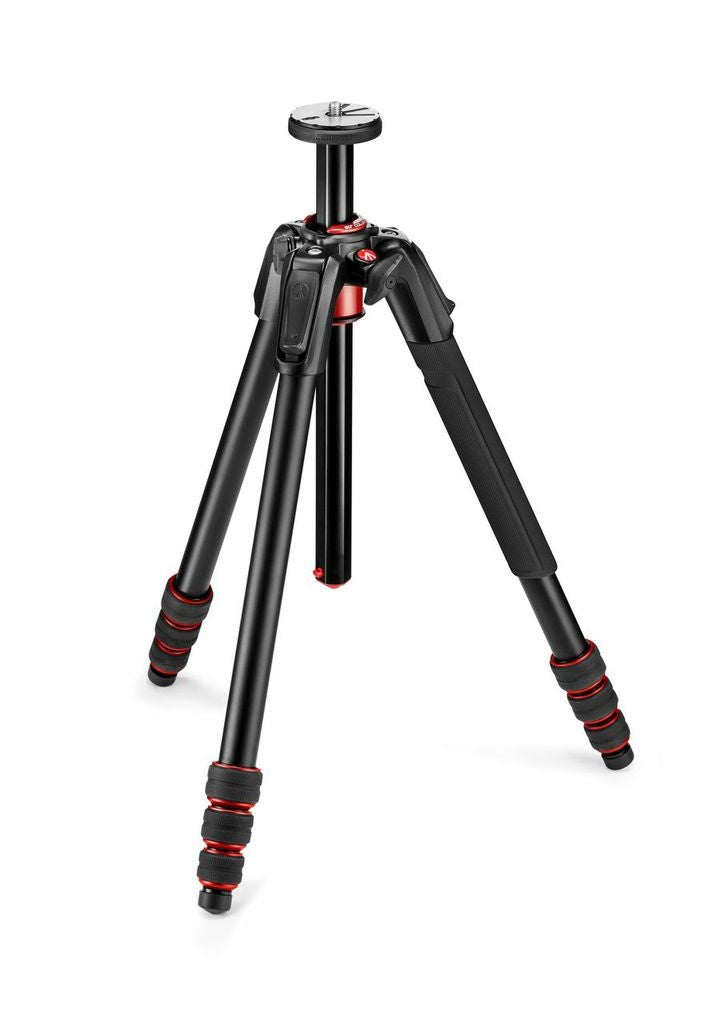
Manfrotto’s 190-series tripods have been a solid option for some time, but they aren’t always the most portable options for camera stabilization. Now, Manfrotto has introduced the 190GO!, which is the smallest and lightest tripod in the series, weighing just 3.75-pounds and collapsing down to 17.7-inches for travel.
The legs are made from aluminum rather than carbon, which keeps the price lower than it otherwise would be at $199. They have also equipped it with new twisting leg locks instead of the clasps that you’d expect to find on a 190 series tripod.
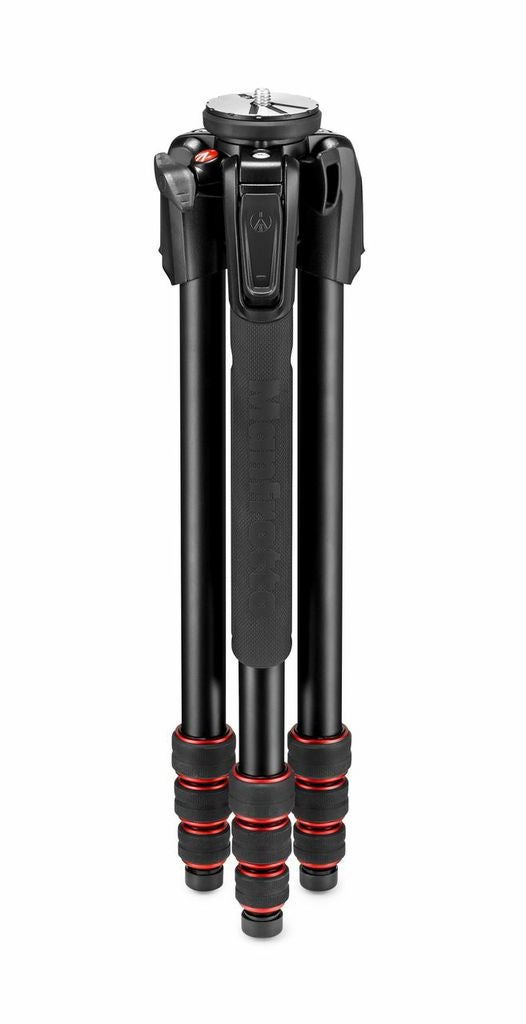
Despite its small size, it still uses Manfrotto’s 90-degree center column, which can slide out into a horizontal position with a simple button release. That helps it get much lower to the ground.
As stated above, the new 190GO! will cost $199, which doesn’t make it the cheapest option around, but it should be sturdy and reliable if it lives up to it’s bigger siblings.
The post New Gear: Manfrotto’s 190GO! Travel Tripod Is Their Smallest and Lightest appeared first on Popular Photography.
Articles may contain affiliate links which enable us to share in the revenue of any purchases made.
]]>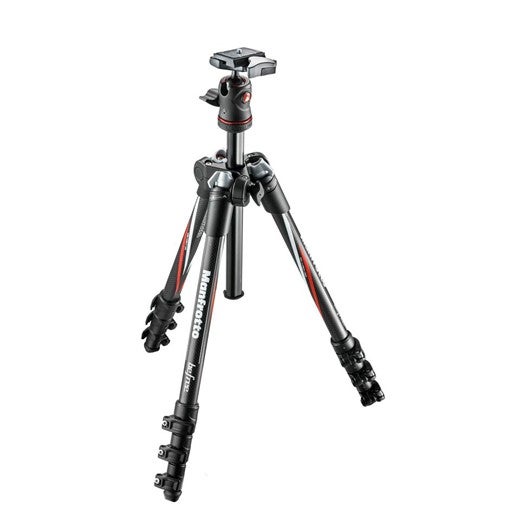
Shave a little weight, pay a lot more
The post New Gear: Manfrotto BeFree Carbon Fiber Tripod appeared first on Popular Photography.
]]>We may earn revenue from the products available on this page and participate in affiliate programs. Learn more ›
Manfrotto has expanded its BeFree line of travel tripods with the introduction of the MKBFRC4-BH, a carbon fiber version of the existing aluminum edition. Identical except for in weight and price, the carbon fiber tripod is available to purchase immediately from Manfrotto and dealers.
The original aluminum BeFree tripod weighs 3lbs (1.4kg), and has a list price of $223 (though you’ll get a $50 Visa rebate card if you purchase one right now). Conversely, the carbon fiber version swaps the aluminum legs for carbon, but keeps the aluminum/magnesium central column and aluminum castings, which shaves the weight down to 2.4lbs (1.1kg). The price, however, spikes up to $389.
Both versions of the tripod are capable of holding up to 8.8lbs (4kg) in gear, extend to a maximum height of 4.6 feet, and collapse down to just over a foot in length. The BeFree tripods feature folding back legs which flip up around the tripod head in order to ensure the most compact possible travel size, a design first pioneered by Gitzo around a decade ago.
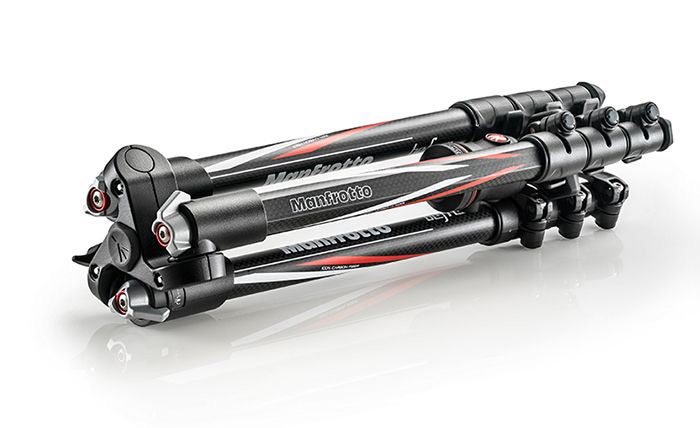
[via DPReview]
The post New Gear: Manfrotto BeFree Carbon Fiber Tripod appeared first on Popular Photography.
Articles may contain affiliate links which enable us to share in the revenue of any purchases made.
]]>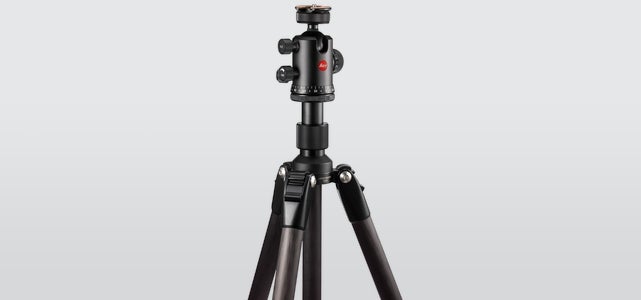
Get that Leica dot on even more of your gear!
The post New Gear: Leica Travel Tripod and Ball Heads appeared first on Popular Photography.
]]>We may earn revenue from the products available on this page and participate in affiliate programs. Learn more ›
Leica has announced a trio of new accessories: a carbon fiber tripod and two ball heads, and as you’d expect from Leica branded gear, they cost a pretty penny. All three of the items are made in Germany, and expected to be available in November.
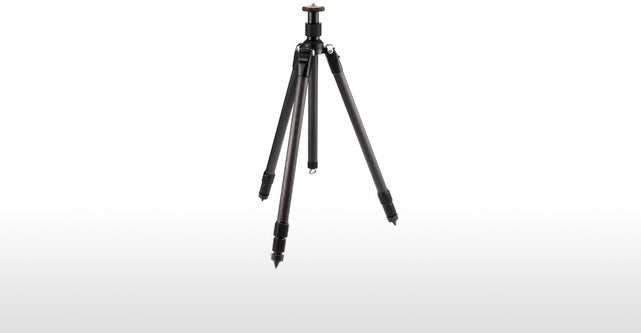
The carbon fiber Traveller tripod weighs just 2.64lbs, and is small enough that it collapses down and “fits in any travel camera bag”. When collapsed, the head disappears into the tripod to save space. It can support up to 22lbs of gear.
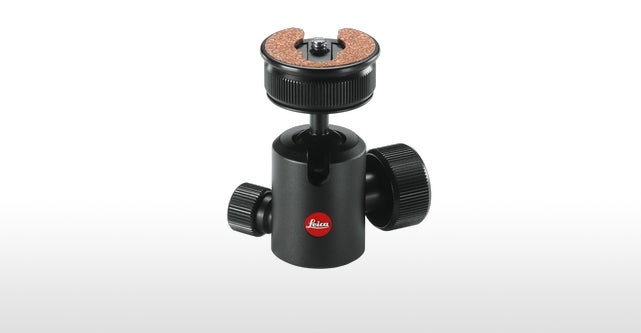
Alongside the tripod are the Leica 24 and 38 ball heads, based on their size. The smaller, 24mm ball head weighs half a pound, and can support masses of up to 26lbs, and uses two friction locks. The larger, 38mm ball head, can hold up to 53lbs, and has additional locks so that the camera can be moved to just tilt, or precisely controlled 15° increments for panoramas.
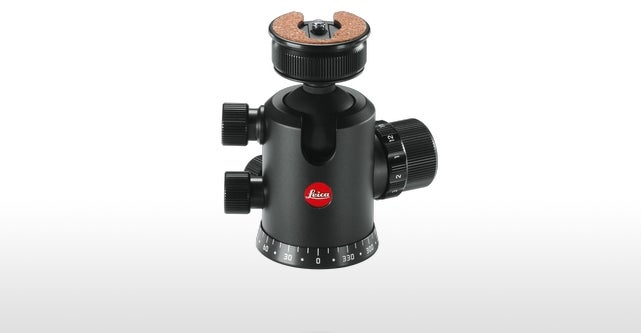
As with everything with a Leica dot, this gear won’t come cheap. Initial indications point to the tripod costing $665, with quick change disks setting you back an extra $55, and a carrying bag an extra $100. The ball head 24 is said to go for $300, and the ball head 38 for $515. Which means you’ll easily paying in excess of $1000 for a travel tripod and head — which is a significant investment.
The post New Gear: Leica Travel Tripod and Ball Heads appeared first on Popular Photography.
Articles may contain affiliate links which enable us to share in the revenue of any purchases made.
]]>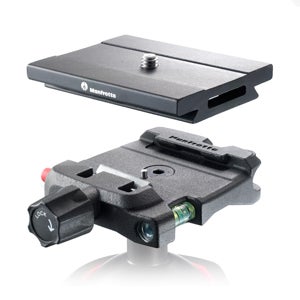
Manfrotto has a new quick release system — and it's Arca-Swiss compatible
The post New Gear: Manfrotto Top Lock Quick Release appeared first on Popular Photography.
]]>We may earn revenue from the products available on this page and participate in affiliate programs. Learn more ›
Manfrotto’s recently announced a new quick release system for its tripod heads, designed to be light, easier to level, and quicker and easier to use. The Top Lock Quick Release System was just announced in the UK, but has been around in the USA for a short while.
The new system is available as either just the plate, an adapter for extant heads, or as ball-heads with the system built in — with prices likewise ranging from less than $30 to more than $350.
The Top Lock Quick Release System allows you to drop your camera in from above, rather than having it slide in from the side, and most interestingly it’s Arca-Swiss compatible. In a press release, Manfrotto said:
The Top Lock Quick Release System also has three bubbles for accurate placement, and ease of leveling. It’s also constructed from “light aluminium and stainless steel offering weight savings without any performance sacrifices.”
If you want to try out the new system on your existing tripod gear, an adapter will set you back $112.
The post New Gear: Manfrotto Top Lock Quick Release appeared first on Popular Photography.
Articles may contain affiliate links which enable us to share in the revenue of any purchases made.
]]>