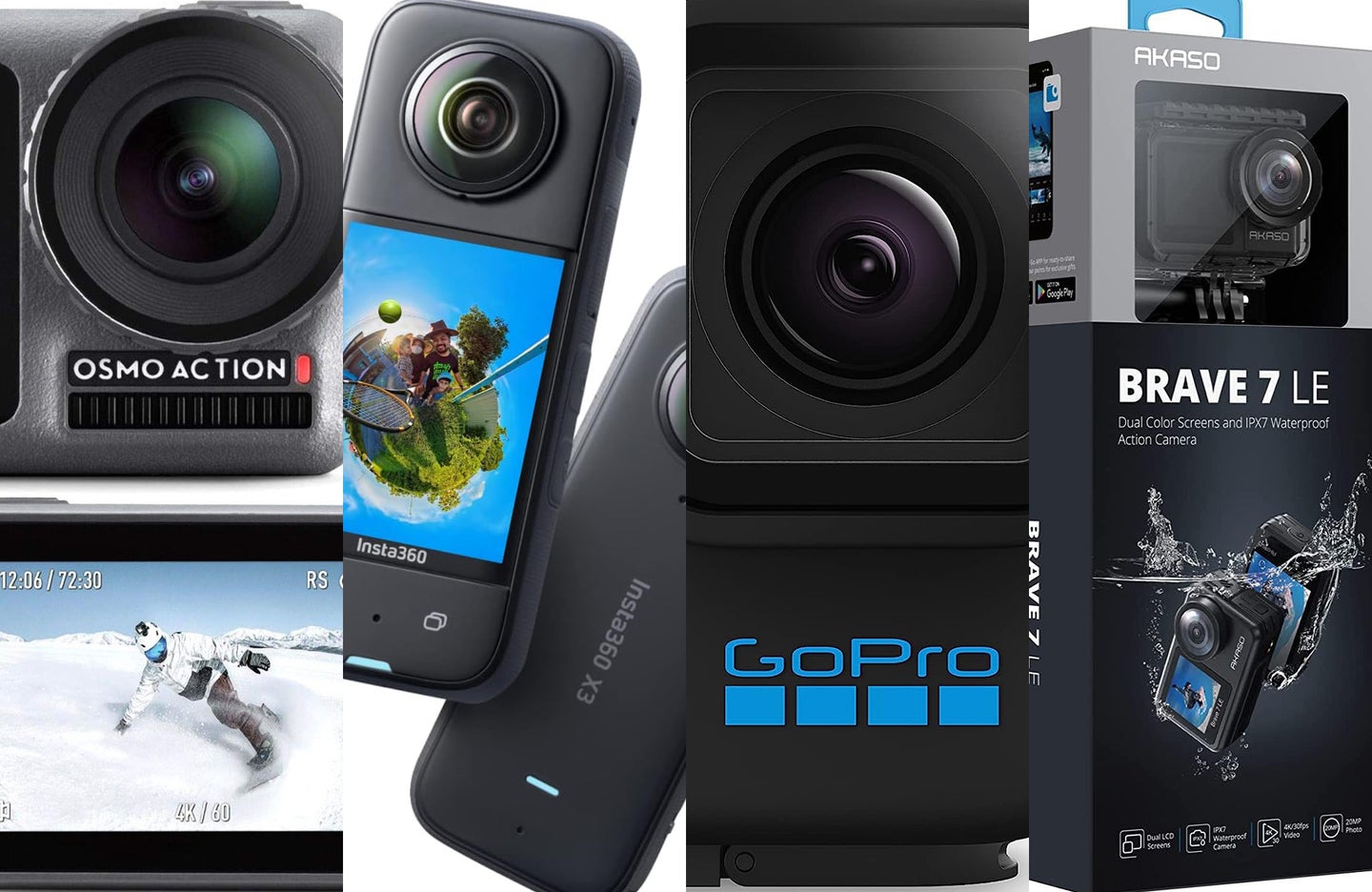
Whether you’re shooting down the slopes or catching a wave, an action camera can record the most exciting moments.
The post The best action cameras in 2023 appeared first on Popular Photography.
]]>We may earn revenue from the products available on this page and participate in affiliate programs. Learn more ›
| Best overall |
|
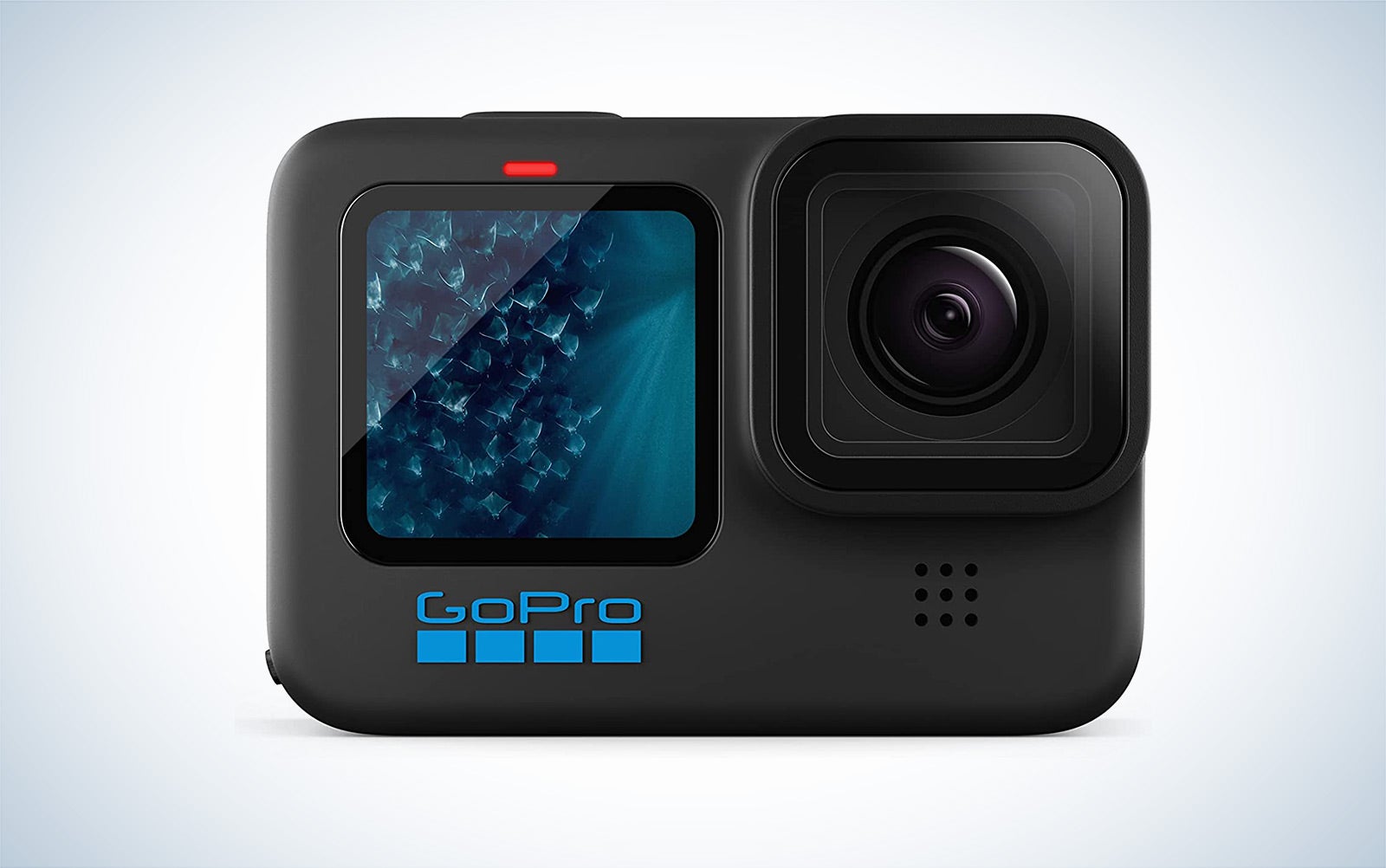
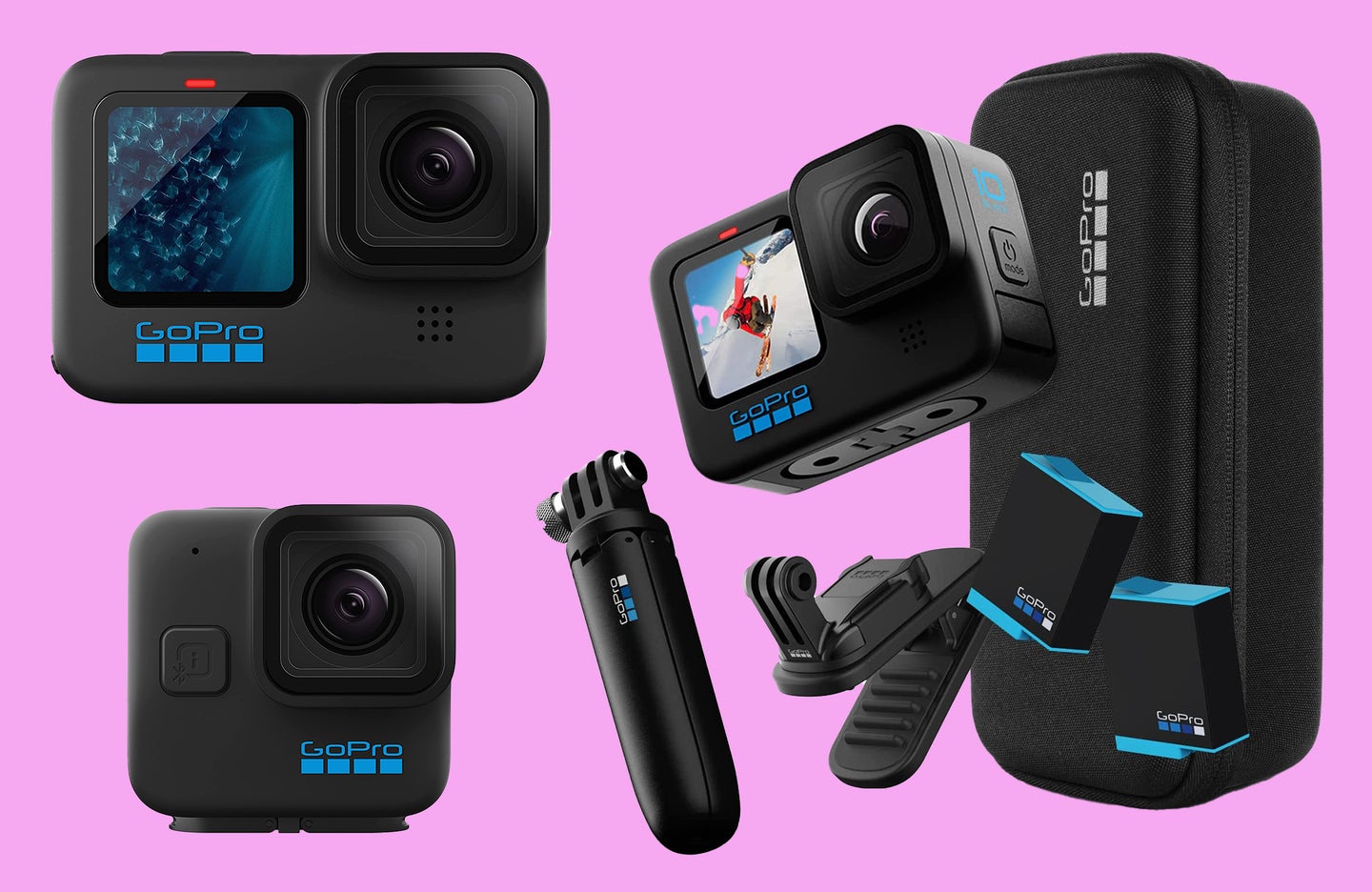
GoPro Hero 11 Black | SEE IT |
Featuring the largest GoPro sensor yet, the Hero 11 is capable of stunning and smooth 5.3K video. |
|
| Best for vlogging |
|
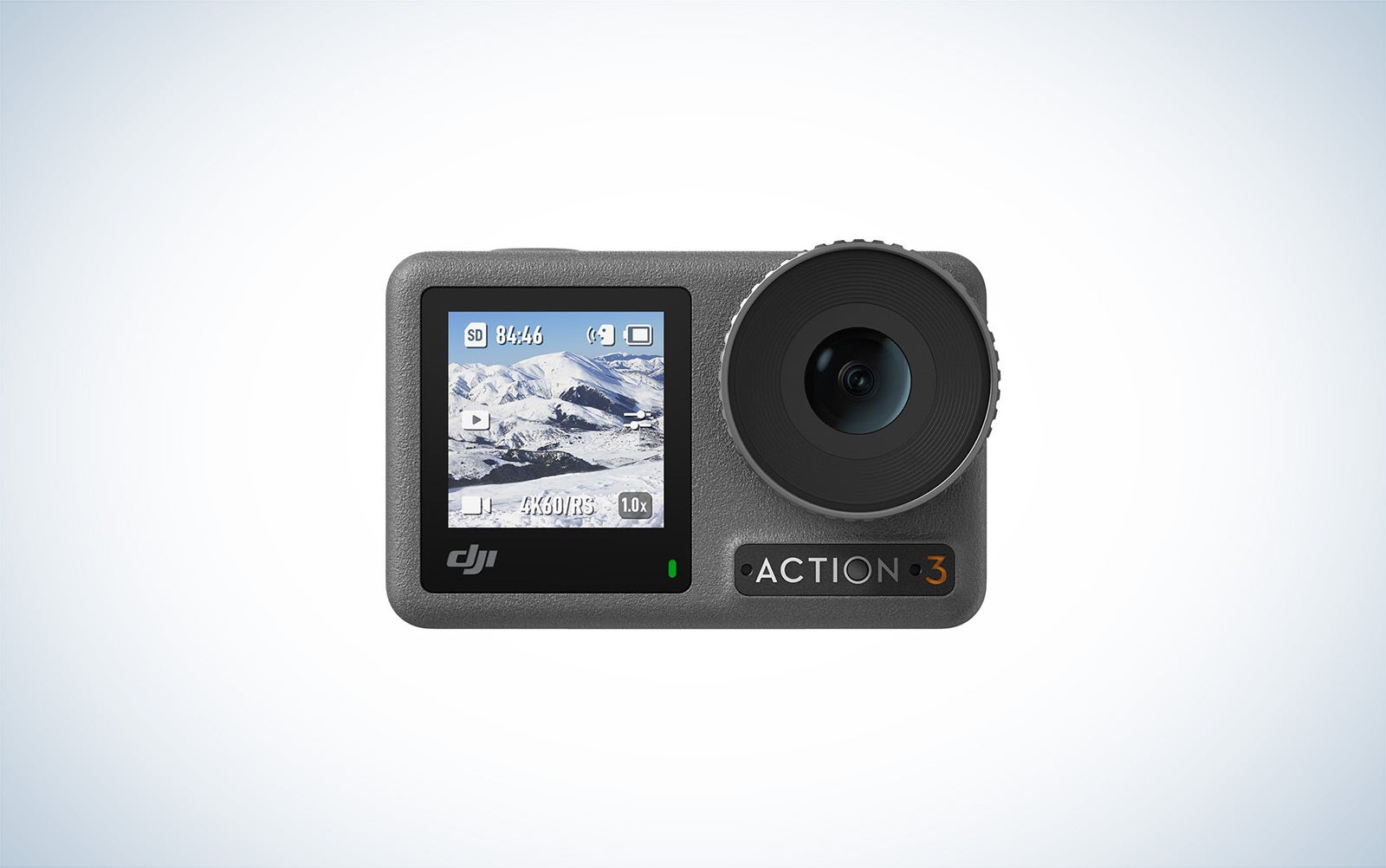
DJI Osmo Action 3 | SEE IT |
The Osmo Action 3 allows for quick mounting in both portrait and landscape orientation along with various live stream options. |
|
| Best for beginners |
|
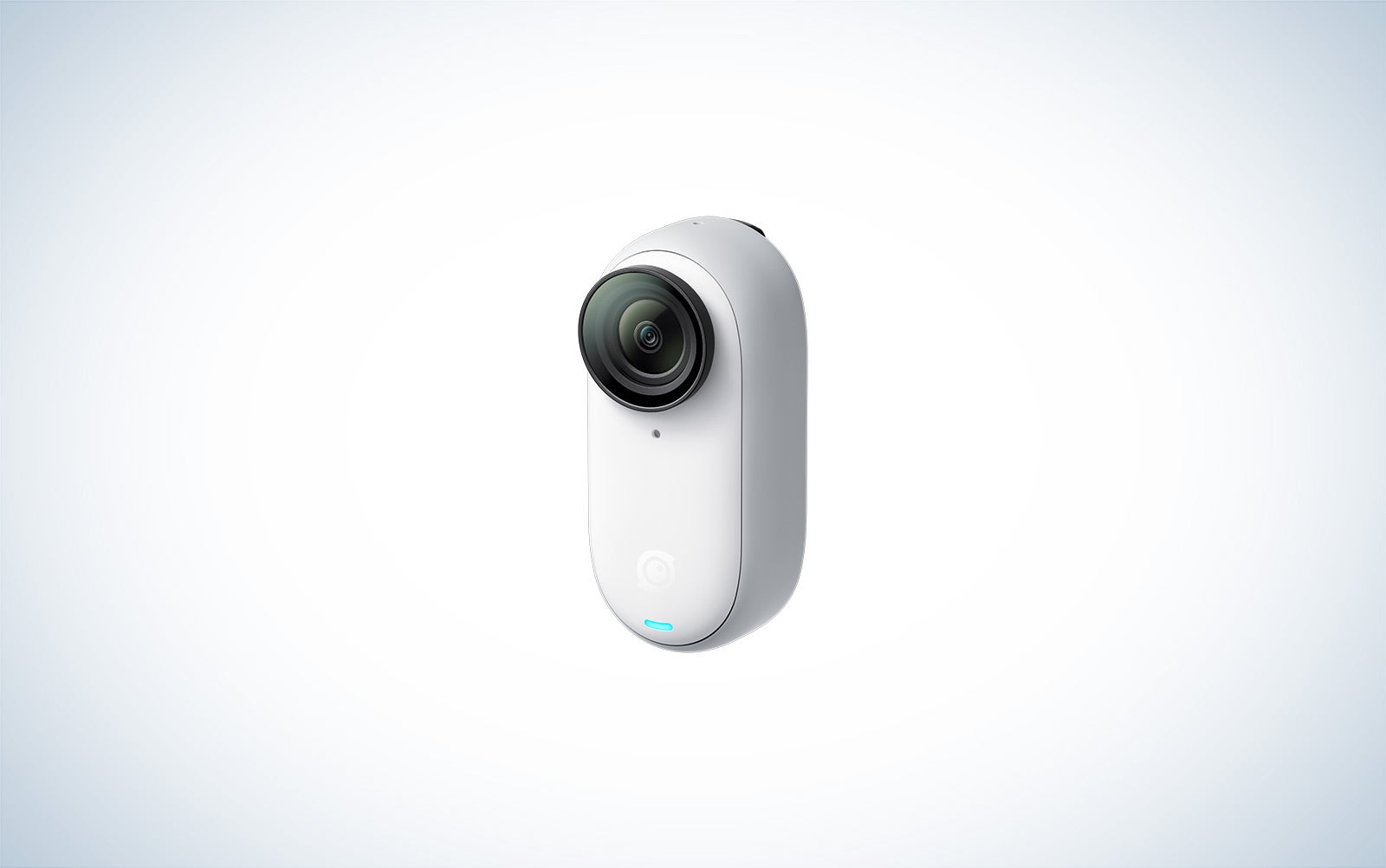
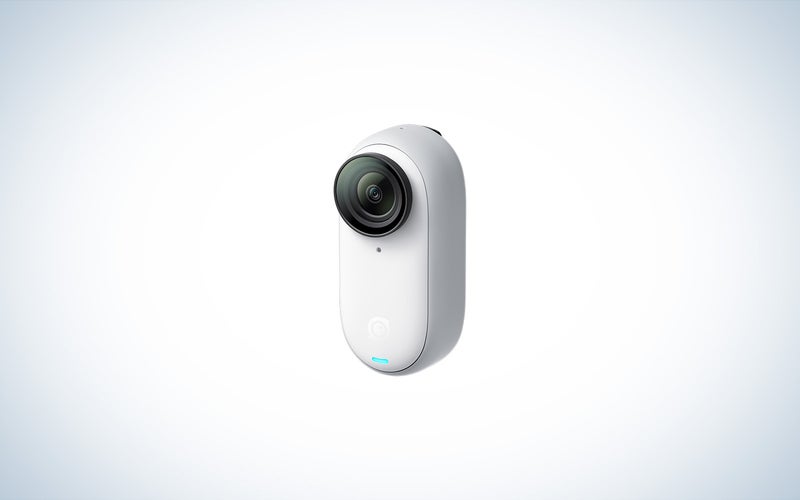
Insta360 GO 3 | SEE IT |
The one-button operation and advanced AI editing features take the hassle out of shooting and sharing. |
Action cameras are a high-speed ticket to capturing the most immersive and engaging footage possible. They bring viewers as close to your experiences as they can be without actually being there. These video cameras excel in environments where stability and durability are key to attaining the highest caliber of footage, which is why they are popular amongst surfers, bikers, climbers, and other athletes. Plus, vloggers, video production teams, and hobbyists of all kinds can benefit from the compact and easy-to-handle design. From travel photography to underwater photography, the best action cameras provide a totally unparalleled video production experience to users of every interest and passion.
- Best overall: GoPro Hero 11 Black
- Best for vlogging: DJI Osmo Action 3
- Best for 360-degree video: Insta360 X3
- Best small: GoPro Hero 11 Black Mini
- Best for beginners: Insta360 GO 3
- Best budget: AKASO Brave 7 LE
How we chose the best action cameras
The writers and editors at PopPhoto have decades of experience with just about every camera brand and genre out there, including action cameras. As an adventure-lover and active individual, I have found myself in my fair share of situations ideal for action cameras. We chose the cameras included here through a mix of hands-on experience, user and editorial reviews, and brand knowledge.
When selecting the best action cameras, we focused on a variety of features and specifications. They should foremost be compact and offer easy mounting solutions, making them easy to use without obstructing the action. Action cameras should also be durable and able to withstand epic adventures, including water trips. Lastly, we looked at video and photo quality, stabilization, and other camera-specific features.
Best action cameras: Reviews and recommendations
Whether you are climbing, mountain biking, surfing, or simply wanting to document your travels, these action cameras will help you capture your best (or sometimes worst) moments.
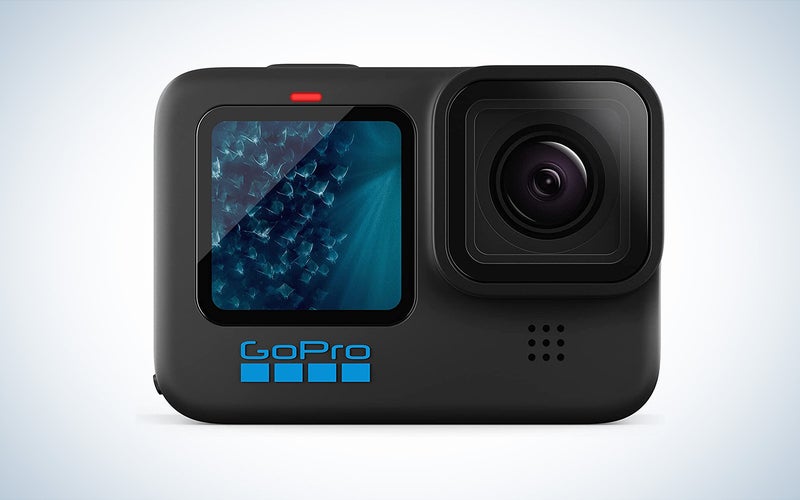
Best overall: GoPro Hero 11 Black
GoPro
Specs
- Max video resolution: 5.3K at 60 fps
- Max framerate: 240 fps at 2.7K
- Photo resolution: 27 megapixels
- Waterproofing: 33 feet
- Dimensions: 2.8 x 2 x 1.3 inches
- Weight: 4.5 ounces
Pros
- Improved photo performance
- New night modes add versatility
- Award-winning stabilization
- Vertical video support
Cons
- Battery won’t last all day
The GoPro Hero 11 Black is among the most well-known models of action cameras thanks to its durable and full-featured reputation. This latest model features the largest sensor in a GoPro yet. The large sensor makes it possible to crop video to vertical orientation without losing out on most of the scene, so you can share your epic adventures on social media. And it allows you to change digital lenses for different perspectives.
The Hero 11 results in stunning 5.3K video recording at up to 60 fps. Or, you can get up to 240 fps at 2.7k if you want dramatic slow-motion. Still photo quality has improved significantly over previous models, bumping up to 27-megapixel photos. You’ll have access to time-lapse and new night modes, including star trails and light painting.
As we would expect from a GoPro, the Hero 11 features incredibly impressive stabilization via HyperSmooth 5.0. Even videos of the most rugged activities will be smooth. It’s waterproof to 33 feet without a case, and GoPro built it with improved cold weather performance, so you can use it for your capturing your winter sports. The Hero 11 is a well-rounded, impressive action camera ready for anything you throw at it.
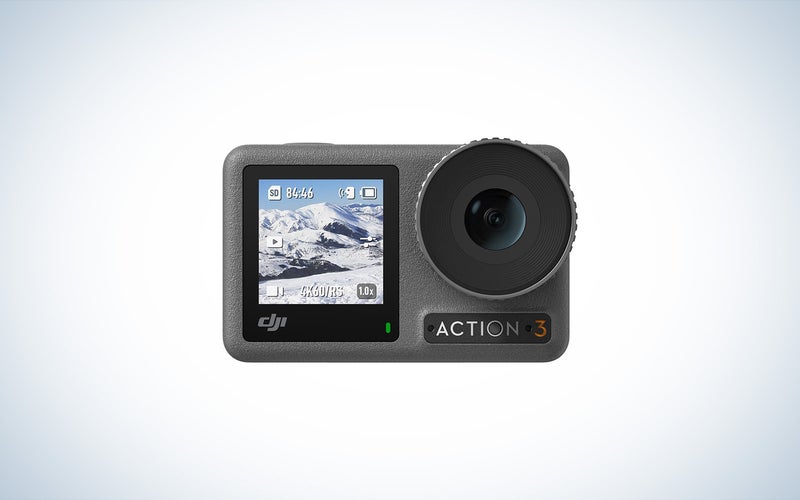
Best for vlogging: DJI Osmo Action
DJI
Specs
- Max video resolution: 4K at 120 fps
- Max framerate: 240 fps at 1080p
- Photo resolution: 12 megapixels
- Waterproofing: 52 feet
- Dimensions: 2.8 x 1.7 x 1.3 inches
- Weight: 5.1 ounces
Pros
- More affordable than GoPro
- Waterproof down to 52 feet
- Front and rear touchscreen
- High-capacity battery for long recording sessions
Cons
- Video quality tops out at 4K
- Limited photo quality
DJI completely redesigned the third iteration of this action camera, and it is ready for seriously epic adventures. It’s waterproof down to 52 feet without special housing and features a color temperature sensor to automatically adjust the color of your video even if you are deep below the surface while scuba diving. Should you want to go even deeper, with a waterproof case, the camera can go to 210 feet.
For activities on land, the camera can function as cold as -4 degrees Fahrenheit. You’ll be able to document even your freezing-cold ski trips. It utilizes a unique magnetic quick-release plate that is convenient and easy to use. And you can mount the camera vertically, meaning no cropping is required in order to create social-media-ready video. And for vloggers, the live stream support at multiple resolutions is a huge benefit.
The DJI Osmo Action 3 is capable of image-stabilized 4K video up to 120 fps. DJI claims that there are no recording limits other than the promised 160-minute battery life when recording 4K 60p video, so long, single takes are possible. It offers the equivalent of a 12.5mm full-frame lens, so you can catch all of the action. The RockSteady stabilization does a great job of smoothing out video. And the HorizonSteady mode keeps your shots level and adjusts for any horizontal rotation. Unfortunately, photo resolution is limited to 12 megapixels, but if your focus is vlogging, that likely won’t matter as much anyway.
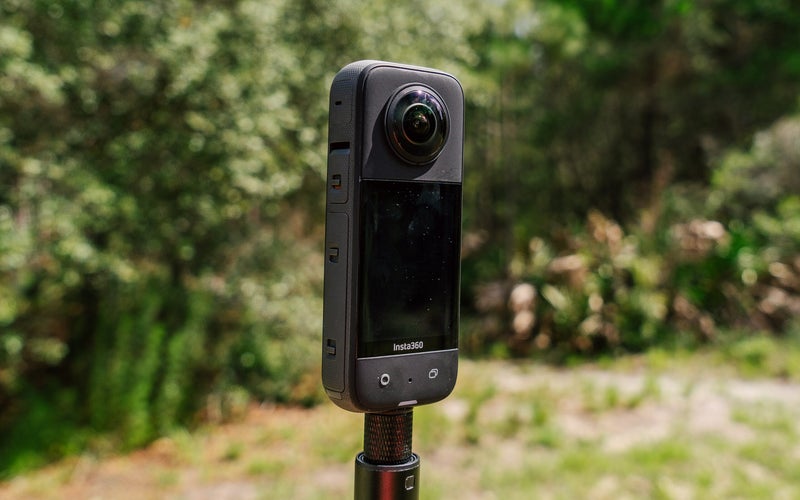
Best for 360-degree video: Insta360 X3
Abby Ferguson
Specs
- Max video resolution: 5.7K 360-degree, 4K single-lens
- Max framerate: 60 fps at 4K
- Photo resolution: 72-megapixel 360-degree, 18-megapixel single-lens
- Waterproofing: 33 feet
- Dimensions: 4.5 x 1.8 x 1.3 inches
- Weight: 6.3 ounces
Pros
- Impressive stabilization
- 360-degree video is highly immersive
- Lots of editing options
- Excellent photo and video quality
Cons
- App is a little confusing to use
If you want truly immersive videos of your action adventures, you can’t beat the Insta360 X3. This camera can record 360-degree video at up to 5.7K and 30 fps. Then, you can use either the Insta360 mobile or desktop apps to edit your video and reframe your shots how you want to showcase the best parts of each moment or show off the full 360-degree view at once.
This action camera is highly versatile, thanks to the ability to use a single lens along with the dual lenses used for recording 360-degree video. You can either record selfie content with the rear lens or show off what’s in front of you with the front-facing lens. And it features a handful of shooting modes, such as up to 8K 360-degree timelapse and 4K slow-motion. The 2.29-inch touchscreen makes it easy to adjust settings and see what you are recording.
The X3 is a durable camera and is waterproof down to 33 feet without a separate housing. It features a 6-axis gyroscope and uses Insta360’s FlowState stabilization for smooth video, even with activities like mountain biking. And the Horizon Lock mode keeps the shot level even as you move and rotate.
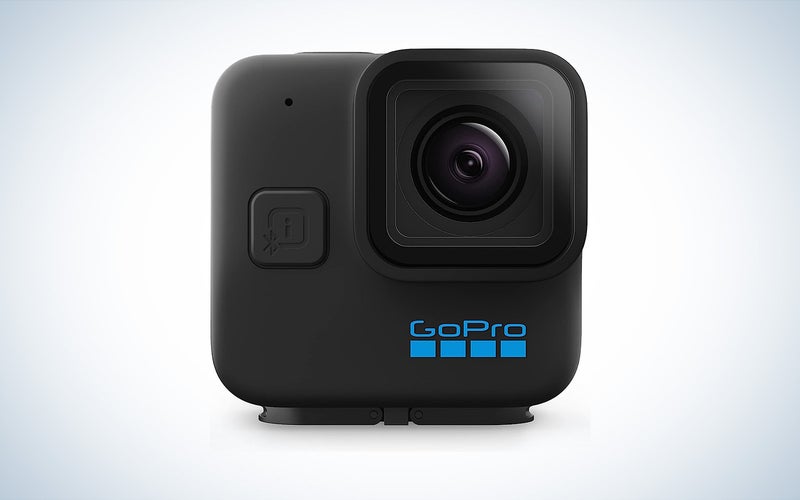
Best small: GoPro Hero 11 Black Mini
GoPro
Specs
- Max video resolution: 5.3K at 60 fps
- Max framerate: 240 fps at 2.7K
- Photo resolution: 24.7 megapixels
- Waterproofing: 33 feet
- Dimensions: 2.1 x 2 x 1.5 inches
- Weight: 4.7 ounces
Pros
- Tiny form factor is less intrusive
- Award-winning stabilization
- Excellent video quality
- Two mounting points
Cons
- No display for framing
- No dedicated photo mode
For those who are extra concerned about wind resistance and drag, the GoPro Hero 11 Black Mini is the way to go. This camera is 13 percent smaller than the Hero 11 Black, making it more suitable for mounting on a motorcycle helmet, surfboard, or airplane. It also features mounting feet on the bottom and back of the camera, opening up more options for how you mount it.
Despite the smaller size, the Hero 11 Mini gets many of the same features and specs as its big brother. It uses the same larger sensor allowing for vertical videos and is still capable of 5.3K 60p video with class-leading stabilization. Unfortunately, there is no photo mode on the Mini version. Instead, you’ll have to rely on grabbing 24-megapixel stills from videos.
Another difference between the Mini and regular-sized Hero 11 is the lack of a screen on the Mini. That means that you’ll need to reply on the Quik app for camera setup and framing help, but it’s one less thing to break on the camera, which is nice. It also features a built-in battery, so you won’t be able to swap batteries out when one dies. But GoPro promises 73 minutes of battery life when recording 5.3K 30p, which is plenty for most situations.
Best for beginners: Insta360 GO 3
Insta360
Specs
- Max video resolution: 2.7K at 30 fps
- Max framerate: 120 fps at 1080p
- Photo resolution: 6.6 megapixels
- Waterproofing: 16 feet
- Dimensions: 2.1 x 1 x 0.9 inches
- Weight: 1.3 ounces
Pros
- Stabilized video
- Unique magnetic mounting options
- Versatile modular design with the Action Pod
- Tiny size is very convenient
Cons
- Photos are only INSP or DNG
- Built-in memory is limiting
If the GoPro Hero 11 Mini isn’t small enough for you, the Insta360 GO 3 is the smallest that action cameras come. It weighs just 1.3 ounces, which is light enough to put on your hat and barely notice. The tiny size makes it feasible to put in locations that you otherwise couldn’t. This modular camera utilizes a unique magnetic mounting system that is fast and simple to use. And it comes with a few different mountain devices right in the box to get you started, including a magnet pendant and Easy Clip for wearing the camera on your person.
The GO 3 tops out at 2.7K 30p video, which is the main disadvantage of this camera. But, if you just want to capture memories or share your action adventures on social media, 2.7K is more than enough. And there are no recording limits at that resolution, so you can record long takes. It also allows for 120fps when backing off the resolution to 1080p, offering up slow-motion footage. And you’ll have access to Insta360’s impressive stabilization for smooth video.
This tiny action camera is waterproof to 16 feet on its own. It comes with the new Action Pod, which, although that adds bulk, it extends the battery life from 45 minutes to 170 minutes. It also adds a 2.2-inch flip touchscreen, which is very convenient and adds versatility to the camera. And it’s all very easy to use with simple controls and AI editing tools to take most of the work out of your hands.
Best budget: AKASO Brave 7 LE
Akaso
Specs
- Max video resolution: 4K at 30 fps
- Max framerate: 120 fps at 720p
- Photo resolution: 20 megapixels
- Waterproofing: IPX7, 131 feet with included case
- Dimensions: 2.44 x 1.61 x 1.26 inches
- Weight: 4.64 ounces
Pros
- Comes with waterproof housing
- Front and rear-facing screen
- Stabilization is fairly effective
- Affordable
Cons
- Photo and video quality are lacking
- Image stabilization results in heavy crop
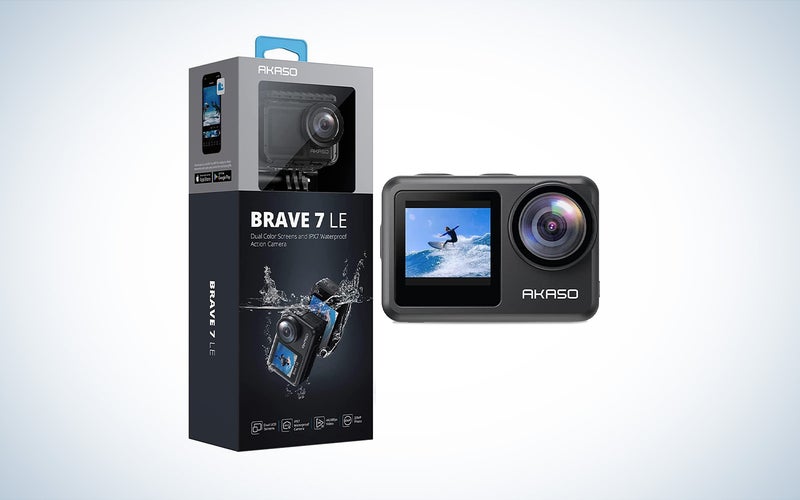
Most action cameras are quite expensive and come with extensive lists of features. Not everyone needs the latest and greatest camera, though. If you just want a durable, basic action camera to document your travels, the AKASO Brave 7 LE is a great choice. The camera itself is IPX7 rated, but it comes with a case that makes it waterproof to 131 feet. The case also makes it more rugged and durable, allowing you to worry less about dings and falls.
The Brave 7 LE is capable of 4K 30p video or 720p at 120 fps for slow motion. It offers 6-axis electronic stabilization, which is pretty good considering the price of the camera. It does result in a significant crop in your footage, though. For still photos, it can take up to 20-megapixel images.
This budget action cam features a front and rear screen, which makes it easier to frame your shots no matter which way you point the camera. It comes with two batteries, a remote, waterproof housing, and multifunction mounting kits, so you have everything you need to get recording right away. And it supports a Wi-Fi connection making it easier to transfer your photos and videos.
Features to consider when shopping for the best action cameras
The best action camera for your needs will depend on the nature of the filming environment as well as your ultimate use of the footage. Considering the size, waterproofing, video quality, and budget is essential whether you’re traveling, vlogging, or just starting out on your action camera journey.
Stabilization
One of the most important aspects of any action camera is how effective its image stabilization is. Action sports typically result in jarring movements, which can make footage unwatchable if it isn’t stabilized effectively. That said, if you’re primarily using an action camera for casual use on your travels, you may be able to get away with less stabilization than others. And you can make some adjustments in editing if you would like. But, if you are a mountain biker, trail runner, or recording any type of activity with lots of movement, you will want to look for a camera with the best possible stabilization.
Mounting options
An action camera won’t do you much good if you can’t mount it in a way that enables you to actually record your activity without holding it. For example, you may want a way to mount the camera to a helmet or the end of a surfboard, which are two very different mounts. So, before purchasing a camera, be sure that the company makes a mount specifically for the activity you want to record.
Waterproofing and build-quality
Action cameras should be durable since they are meant to be used for, well, action. Most are ruggedly built and able to withstand lots of abuse. That said, depending on what type of sports or activities you plan on using the camera for, you may want to invest in more protection for the lens or camera as a whole. If so, be sure to check what accessories are available prior to purchasing.
For those who want to take their camera underwater, knowing the waterproofing is key. Most cameras these days are waterproof to fairly deep without any additional case. For example, the GoPro can be submerged down to 33 feet. But if you want to use the camera for scuba diving, you’ll need to invest in a case to take it deeper than that. We always recommend purchasing a waterproof housing directly from the company that made the camera to ensure proper fit, as you don’t want to risk the case flooding with water.
Photo and video quality
What photo and video quality you need from your action camera depends on how you intend to use the footage. If you are just wanting the camera to document your travels and adventures for the sake of memories or maybe to share on social media, you don’t necessarily need 4K video quality. But, if you want to create YouTube videos of your content, or maybe even have grander plans than that, then you will want to go with the highest quality possible.
Likewise, if you primarily want to record videos, you don’t necessarily need to pay attention to photo specs. But, if you want more flexibility, be sure to check what the camera can produce in terms of still photos as well.
Size
While all action cameras are compact, some are smaller than others. If you partake in sports or activities where drag and wind resistance are critical, such as surfing, motorcycle or automotive sports, or flying an airplane, the smaller the camera, the better. Smaller cameras also allow for more unique mounting opportunities, as they can be placed in locations that larger cameras could not. Of course, there are usually sacrifices with smaller cameras, including lower video and photo quality and shorter battery life. It’s simply a matter of deciding what is most important to you.
FAQs
Q: How do I choose an action camera?
Most models of action cameras include similar features across different brands, but the key factors to consider are the intended environment of use, the resolution required, and the desired weight and size of the camera. When in doubt, a 4K camera with a highly durable casing should fare well in a large majority of situations.
Q: What is the best alternative to a GoPro?
The DJI Osmo Action 3 is one of the best alternatives to a GoPro, thanks to its durable construction and mounting flexibility. This class of action camera is set apart by being compatible with a large range of proprietary accessories, which enables them to excel in almost any environment.
Q: Can action cameras be used for photography?
Yes. Action cameras are used for photography all the time—the high-megapixel sensors that help an action camera excel at capturing high-resolution video are the same that allow units to take high-quality still photos. Many units include such a photography mode by default but double-check before buying if it’s a must-have feature on your list.
Final thoughts on the best action cameras
- Best overall: GoPro Hero 11 Black
- Best for vlogging: DJI Osmo Action 3
- Best for 360-degree video: Insta360 X3
- Best small: GoPro Hero 11 Black Mini
- Best for beginners: Insta360 GO 3
- Best budget: AKASO Brave 7 LE
The main traits found in all the best action cameras on the market are high-resolution, high-speed video capture, and compact durability. Whether you’re looking for a camera for beginners, a waterproof camera, a vlogging camera, or some combination of all three, consider the main activities and the environment that you plan to film to help you make your final choice.
Why trust us
PopPhoto has a long history of delivering the opinions of some of the sharpest and most prolific camera dorks the world has to offer. Since 1937, we’ve been reviewing cameras, providing wisdom from well-known photographers, and generally just nerding out about all that goes into making great pictures. Our current crop of writers and editors have decades of professional photography and camera writing experience among them. Collectively, we’ve probably shot with just about every camera and lens combo you can imagine—as well as some obscure stuff you may not even know about. Remember the Casio Tryx folding camera? PopPhoto does.
We also get that buying a camera is a big decision, which is why we’re dedicated to helping folks choose the right one (or, in our case “ones”) for their needs. Case in point: Handing over top dollar for an expensive rig may leave you unsatisfied if it doesn’t fit your preferred shooting style. Sure, a $6,000 sports-oriented DSLR can capture landscapes, but do you really need to do it at 30 frames-per-second? No, you don’t.
The post The best action cameras in 2023 appeared first on Popular Photography.
Articles may contain affiliate links which enable us to share in the revenue of any purchases made.
]]>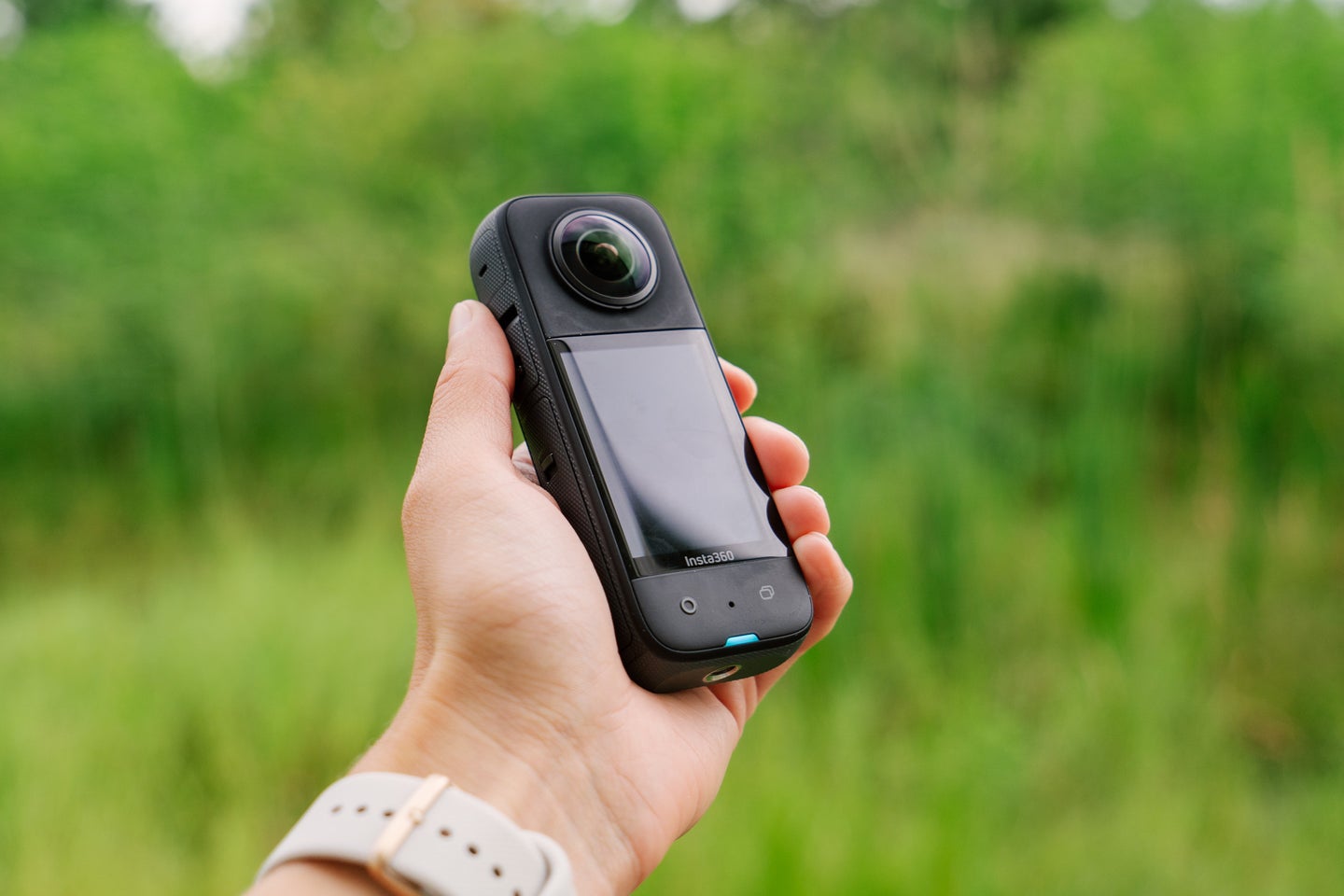
With a solid build, robust waterproofing, an easy-to-use design, and high-quality results, the X3 is a truly well-rounded camera.
The post Insta360 X3 camera review: A versatile 360 action camera appeared first on Popular Photography.
]]>We may earn revenue from the products available on this page and participate in affiliate programs. Learn more ›
Insta360 has also been around for some time, making a name for itself with its dual lens, 360-degree cameras. The 360-degree footage is one of the primary features that make it stand out against its main competition, GoPro. The immersive video style opens up a lot of creative doors that wouldn’t otherwise be possible. That’s especially true if you are skilled with editing. I’ve been testing out The Insta360 X3 for a few months now, and although I haven’t done anything too crazy in terms of action-based activities, it has been a lot of fun to see what is possible with this unique action camera.
Abby Ferguson
Overview: The Insta360 X3 is relatively simple to use, offers impressive stabilization and high-quality videos, and provides a lot of creative opportunities when editing footage.
Pros
- 360-degree video provides unique perspective
- Also records single-lens, traditional action cam footage
- Highly effective stabilization
- Impressive microphone
- Desktop app is available on top of the mobile app
- Rugged build quality and waterproof without a case
- Lots of different recording and photo modes
- Overall easy to use and learn
Cons
- Mobile app for editing is a bit tricky to use at first
- 360 videos have to be processed before sharing
- Taking still photos is rather slow and clunky
- Some things can only be done with the desktop app
- Some appealing shooting modes are only available when shooting 360 footage
Insta360 X3 design
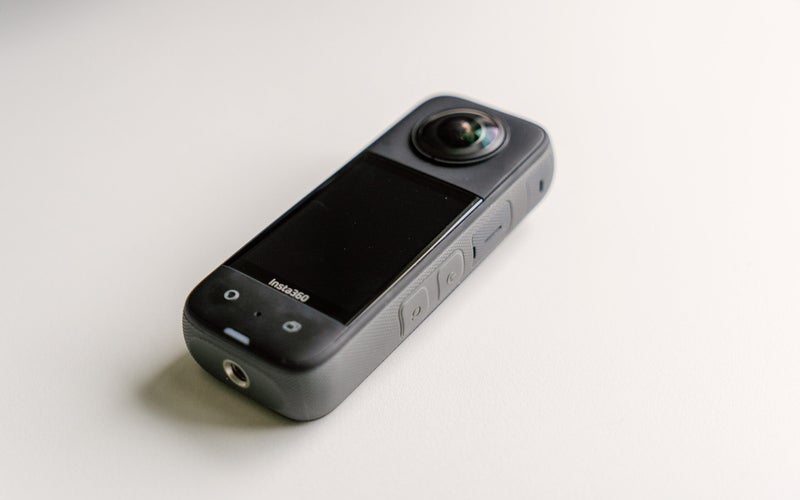
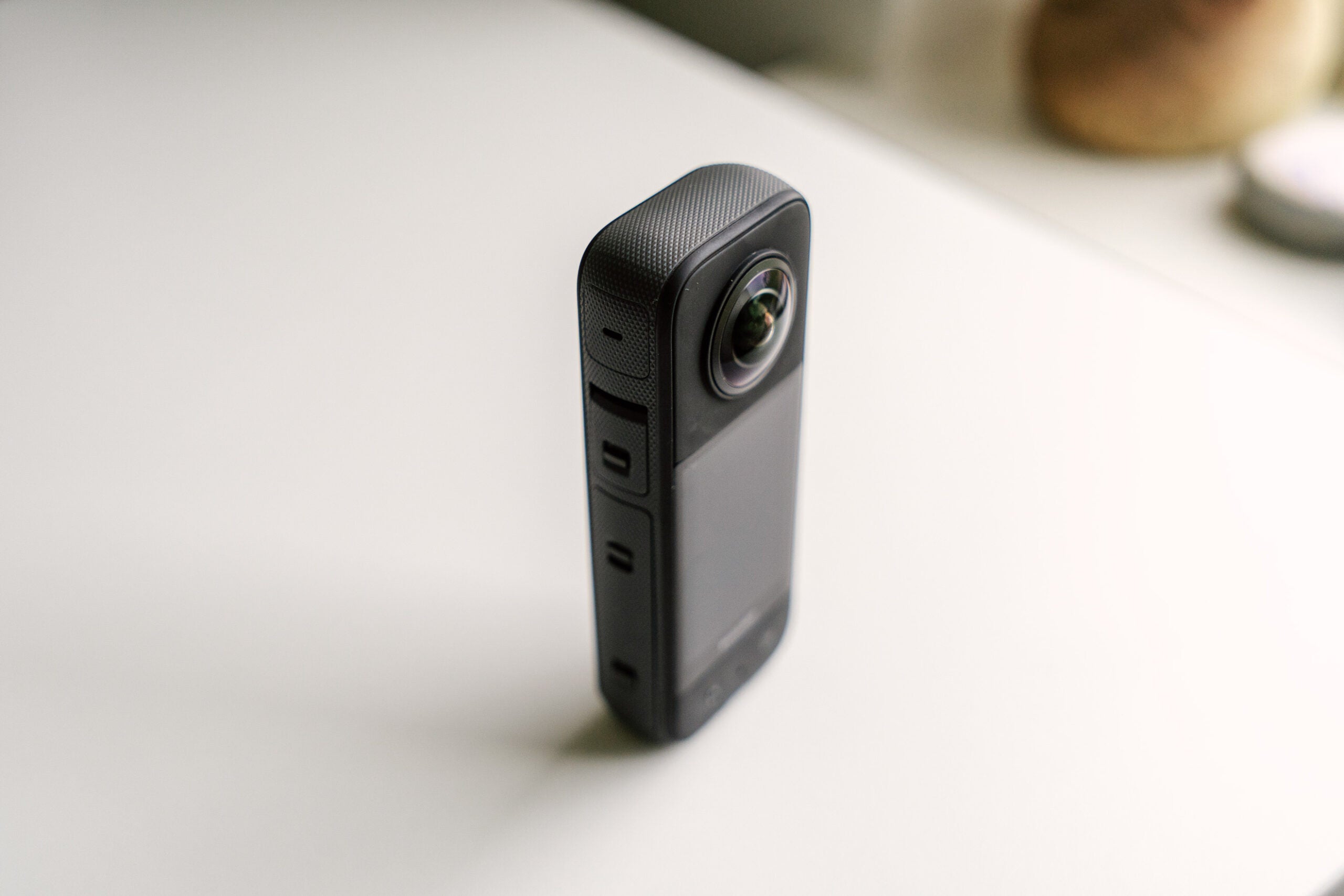
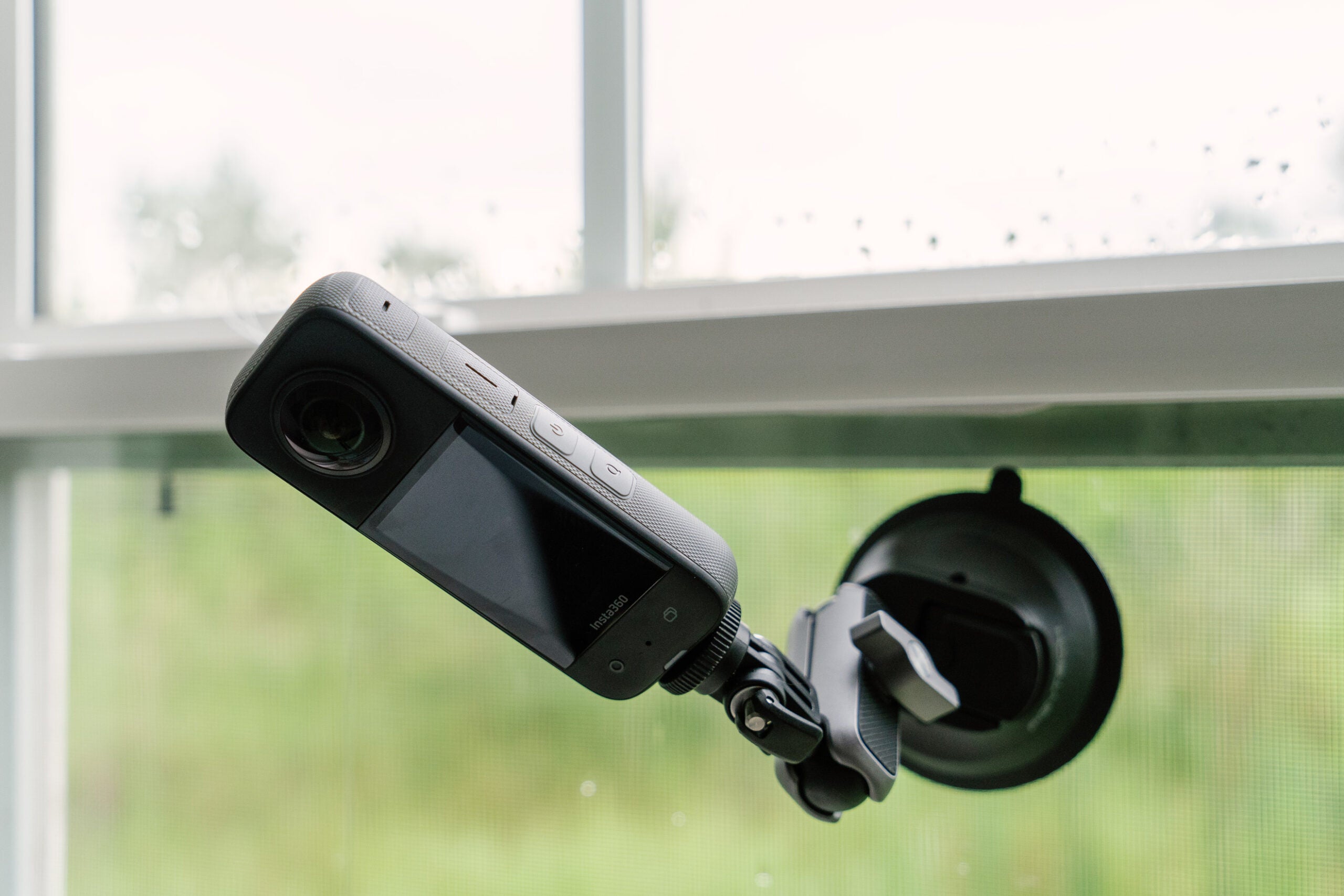
The Insta360 X3 is very simple design-wise. It’s a narrow rectangle meant to be used vertically, much like a smartphone. It’s fitted with two cameras, one on the front and one on the back, which enables the 360-degree footage. Both cameras protrude from the body, so it is easy to accidentally touch and smudge them when moving the camera around. You’ll want to keep a microfiber cloth or something similar on hand to clear off the lens.
I’d recommend at least purchasing the Get-Set Kit, which includes a lens cap to keep the camera safe when you aren’t recording. If you want even more protection while recording—which would be smart if you are capturing activities that kick up debris—you can get sticky lens covers as well.
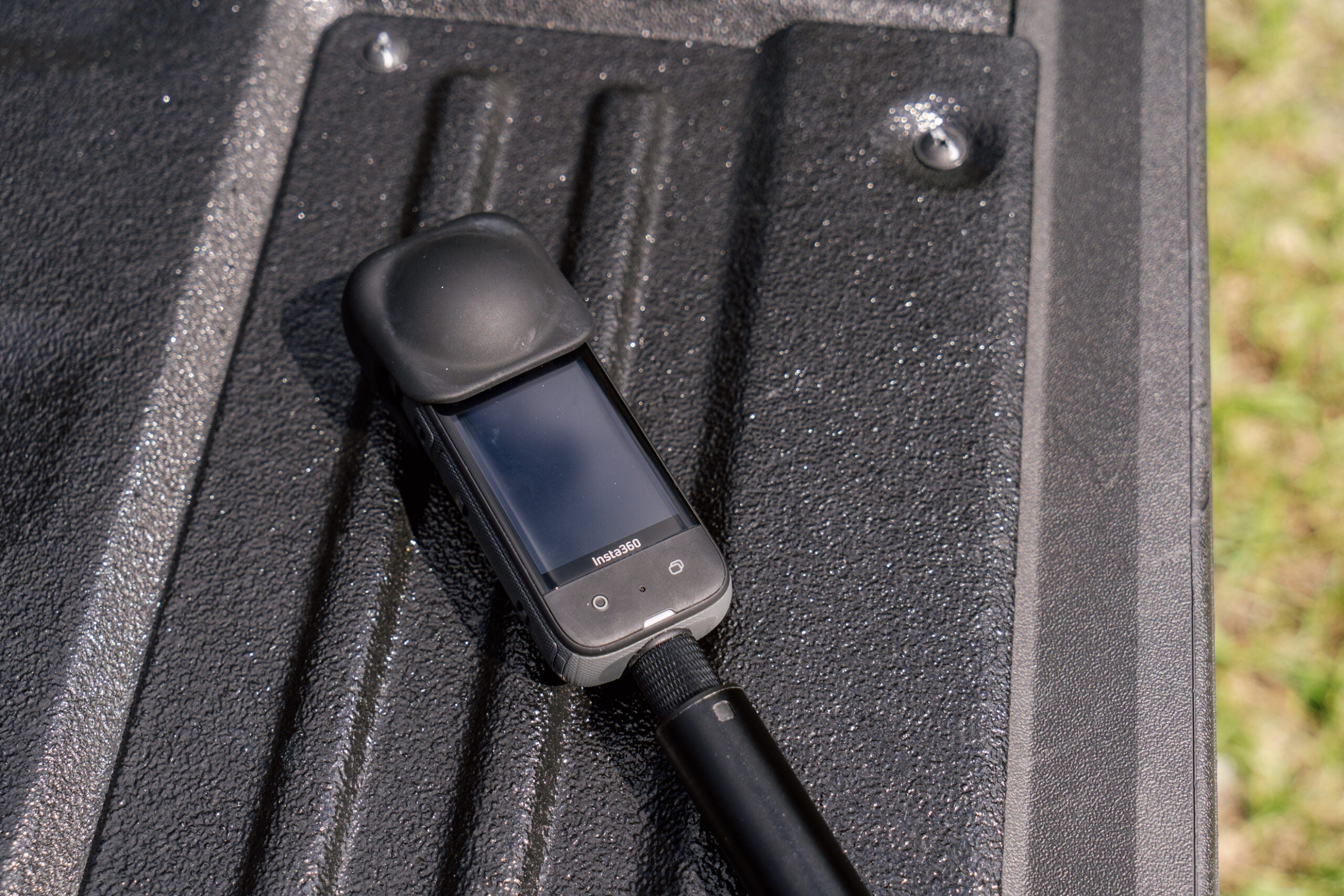
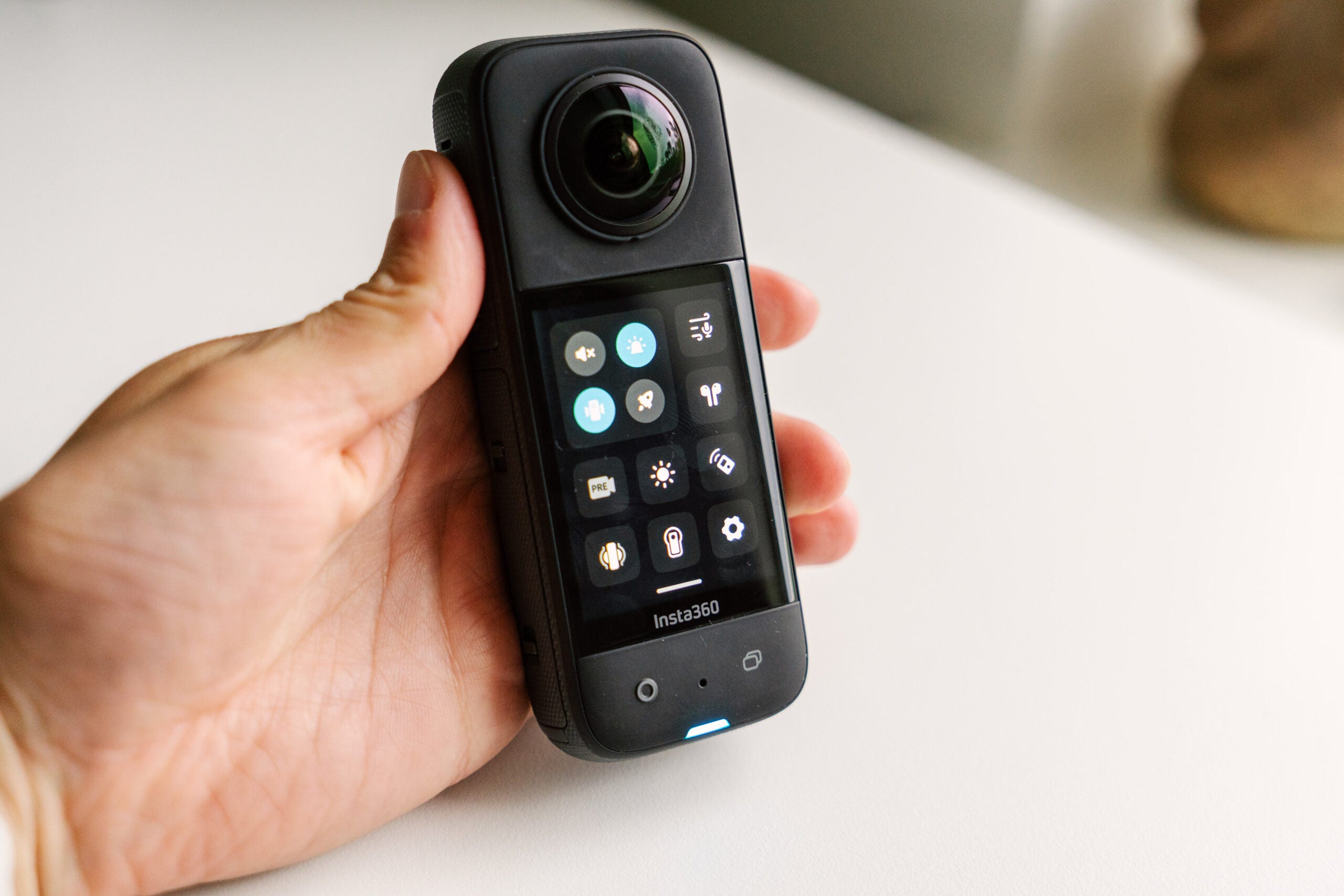
A 2.29-inch touchscreen fills the back of the camera. It’s a responsive touchscreen with easy-to-use, mostly familiar, and intuitive gesture controls. The default brightness makes it hard to see in bright sun, so you’ll want to bump that up before going outside. But, with the brightness all the way up, it is easily viewable even at noon on a sunny day. The large screen size also makes it easy to adjust settings and frame your shots when you aren’t recording 360-degree content.
Besides the touchscreen, there are four buttons to help navigate and use the X3. The back of the camera features two. One is indicated by a circle, and it starts and ends recordings or takes photos. The stacked rectangles icon defaults to changing from the inner and outer single lenses to 360 mode, which is very convenient. It can also be customized, but the only other option is to start and end recordings, which seems redundant and unnecessary. The side of the camera also offers up two buttons, one for powering on and off and one that pulls up a quick menu with preset settings for different types of activities.
X3 build quality
The narrow rectangular shape is easy to hold, aided by the textured plastic sides and soft-touch plastic front. Even when the camera is wet, it doesn’t get slippery at all, which is reassuring. And it just feels nice in the hand. Although I didn’t have any drops or crashes, it feels like the body would stand up to a lot.
As we would hope to see in any action camera, the X3 is ruggedly built with an IPX8 rating. That makes it waterproof down to 33 feet without a case. If you want to go even deeper—or want more reassurance when underwater—you can take advantage of the dive case to get down to 164 feet.
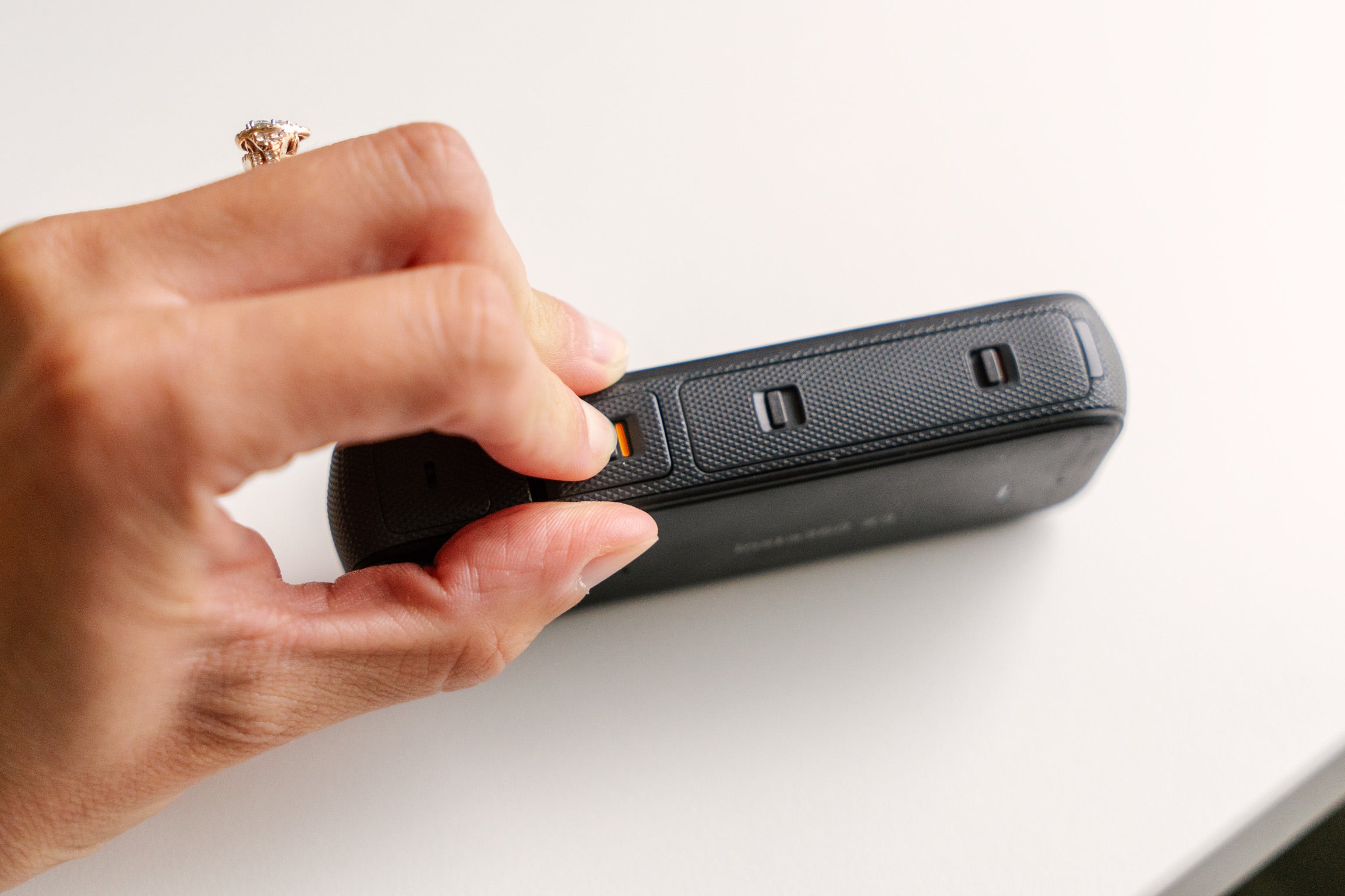
One excellent feature of the X3 is the color-coded doors. These give you a quick, noticeable visual queue if a door isn’t snapped shut all the way and therefore isn’t watertight. That way, you can be sure that it’s ready to dunk underwater without flooding the electronic guts. I didn’t go any deeper than a few feet with it, but I was sticking it in salt water, and the camera was totally fine after. I’d definitely recommend rinsing it with fresh water afterward, though.
Using the Insta360 X3
Using the X3 is overall very simple. It does take some getting used to all the shortcuts and menu items. But that’s true of any new camera, especially in the action camera segment, where buttons are typically sparse.
Most settings and features are accessed from the touchscreen, with some quick access options via the buttons. As mentioned, the circle button to start and end recording or to take a photo. And the two stacked rectangles allow you to quickly switch between 360 mode, single inner lens, or single outer lens. These buttons take some force to press, and it’s a bit too much for my liking. It prevents accidental button pushes, which is nice, but it makes it slower to operate, especially if you don’t have a sturdy grip on the camera. You also need to hold the power button down to fully turn the camera off, as just pressing it only puts it to sleep.
There are quite a few customization options within the camera. That way, you can set it up in a way that makes sense for your particular activity and needs. For example, you can turn on sounds so that it is obvious when you are turning the camera on or off, taking a photo or starting a recording, and so on. It’s annoying at times, but when you are in a situation that requires quick reaction time and prevents looking closely at the screen, it’s nice to have that verification that you are indeed recording.
If you buy the base version of the Insta360 X3, it doesn’t come with the selfie stick. And while you can hold the camera without, 360 photos and videos are a bit trickier. Because of the fisheye perspective, your hand is pretty much guaranteed to be visible in 360 content, no matter how careful you are. I would definitely recommend using the selfie stick—which becomes invisible automatically—as a result.
Recording modes
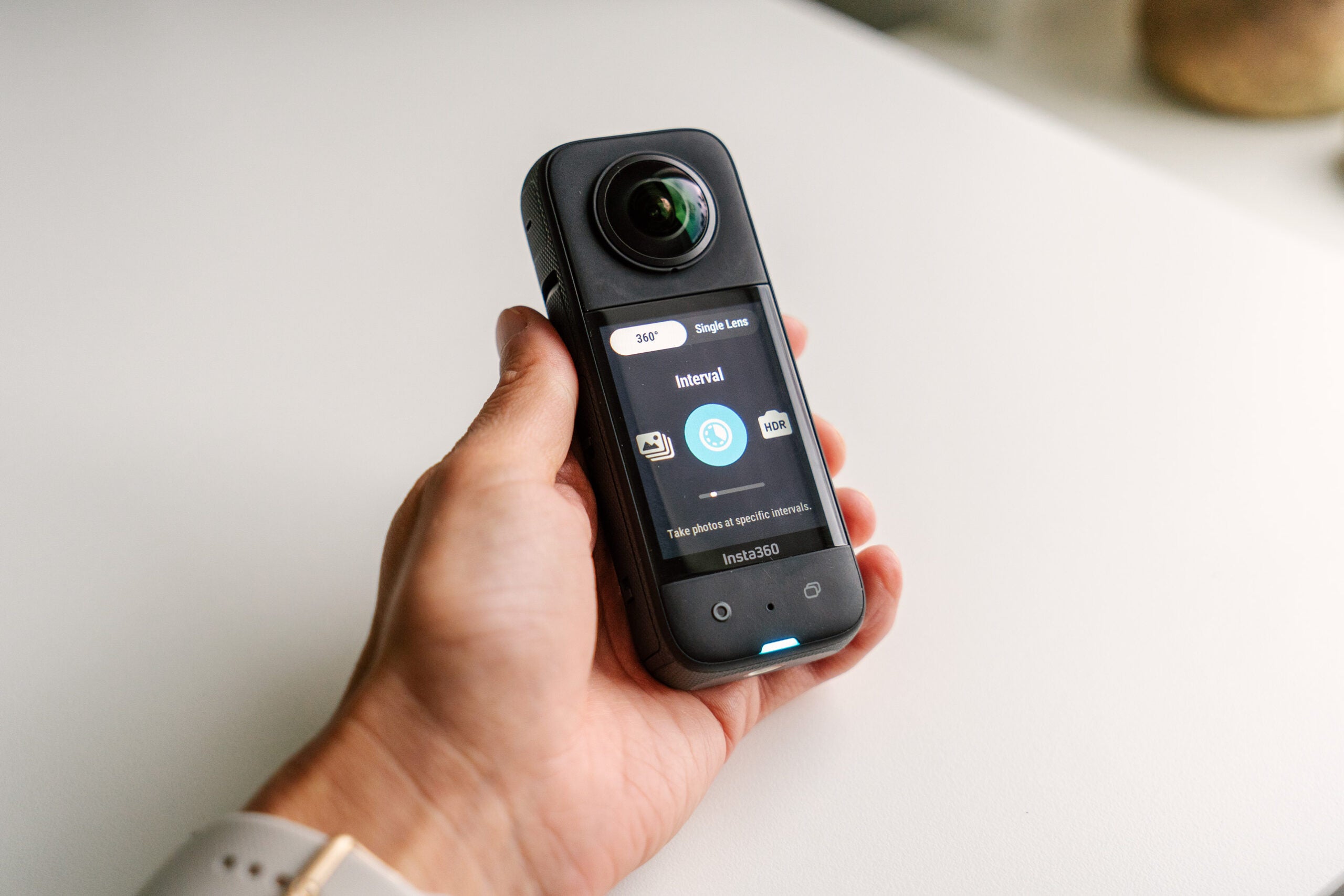
The X3 offers up a wide range of recording modes suitable for many different scenarios. It makes it easier to get content that you will like and be able to use. And helpfully, as you scroll through all the different modes, the camera provides a brief explanation of what it is at the bottom of the screen.
I primarily used the basic video and photo modes, along with Active HDR and HDR photos. But you’ll also have access to Starlapse, Bullet Time, Timelapse, TimeShift, Loop Recording, burst shooting, and interval shooting. The X3 automatically adjusts settings based on the different modes you are using. There’s no fussing with individual settings to get things just right for a particular style of shooting.
If you do want more control, you can swipe left on the touchscreen to manually change camera settings such as shutter speed, ISO, white balance, EV, and color profile. Different recording modes offer various combinations of these settings, however. For example, Active HDR only allows you to adjust white balance, while Timelapse offers all options. Although I didn’t use it, I appreciate having the option to make fine-tuned adjustments if I want or need to.
Single lens modes
One of the things that I love about the Insta360 X3 is that I could use it for more than just 360-degree footage. You can use a single lens on either the front or back to take more traditional action cam photos or videos. But you do lose out on most shooting modes when using a single lens, which is unfortunate. Modes such as Active HDR, Starlapse, Timelapse, Bullet Time, and more, are only available when shooting 360 content.
Underwater use
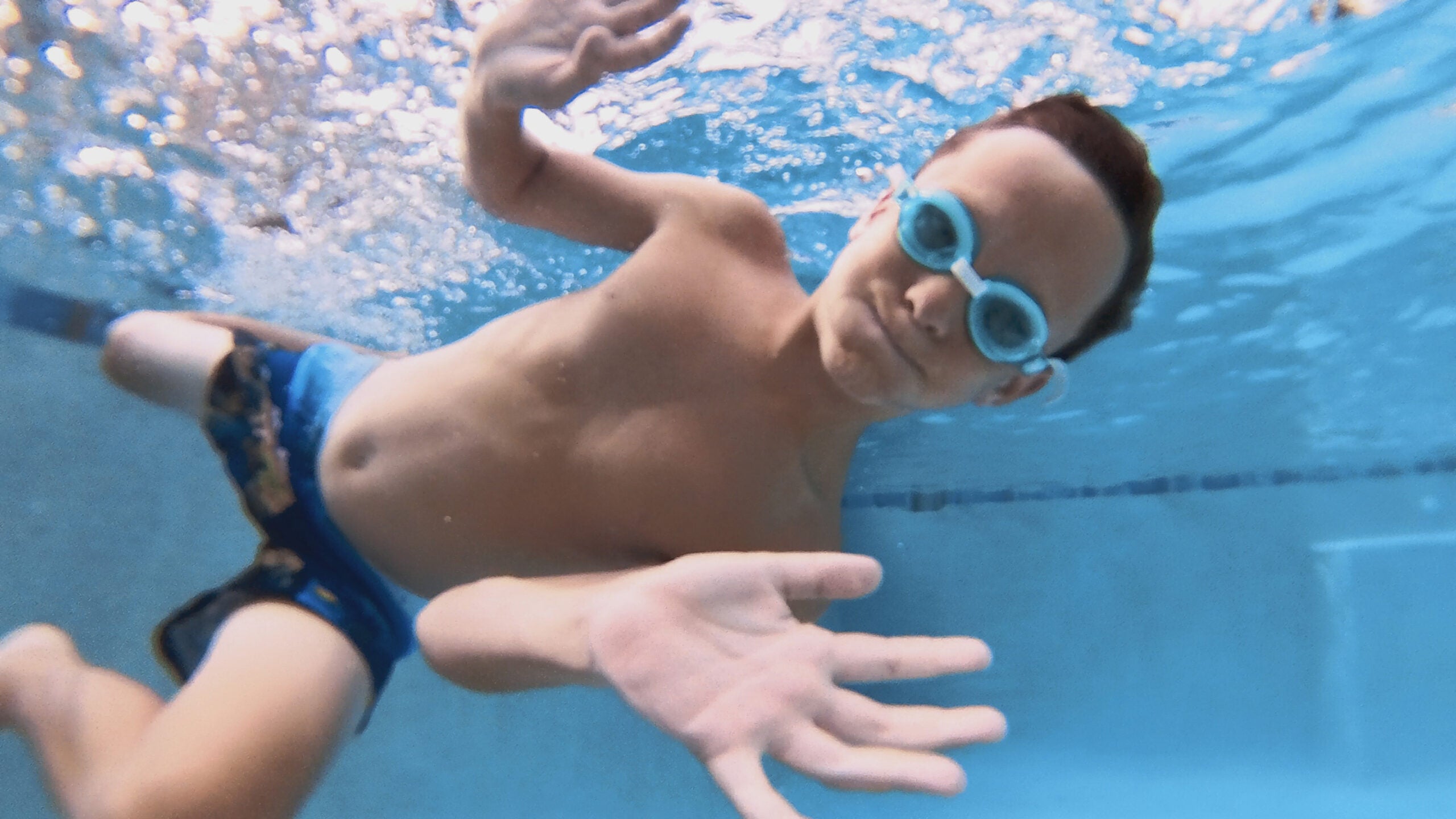
The X3 is waterproof without a case, but you can purchase a dive case to go deeper. To help with using a case, the Insta360 X3 features a specific Dive Case mode on the camera itself. I found it necessary to use that mode even without a case, however. When I was using the camera fully submerged underwater, the pressure from the water had the tendency to activate the touchscreen and change the camera or settings while I was recording. To avoid this, I turned on the Dive Case Mode, which locks the screen to prevent just what I experienced. With this mode on, most you’ll use the physical buttons for most operations instead of the touchscreen. And it’s a simple swipe up to exit Dive Case Mode. You will need to change the stitching method when editing, however, as otherwise, the edges are very obvious because of this mode.
Still photos
The Insta360 is capable of taking photos, but I found the process to be clunky and slow. When you press to take a photo, you first get a brief loading screen that says “Capturing…” and then another that says “Saving.” All said and done, it takes roughly five seconds. That may not sound like much, but it gets annoying when you want to take a quick snap and move on. And it doesn’t work all that well for action shots. There is a burst mode that takes nine photos in rapid succession, which makes action shots possible. But a faster photo mode would be very appreciated.
Photo, video, & sound quality
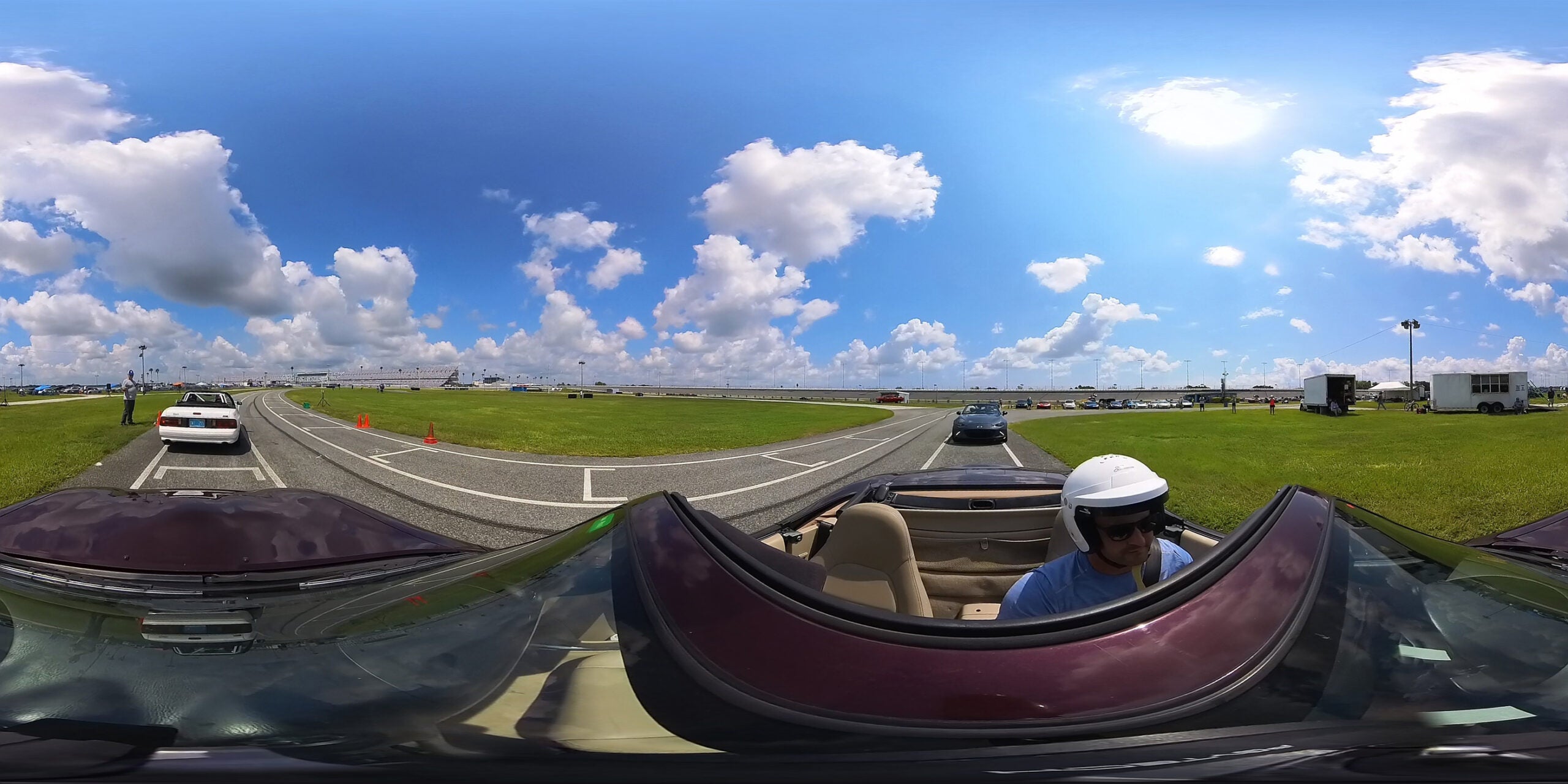
Overall, I was very impressed with the video quality of the Insta360 X3. The camera is capable of up to 5.7K 360-degree, auto-stitched videos or 4K single-lens videos. These are clear, richly colored, and detailed without an overly processed look. The amount of editing that is possible is also very nice.
Most impressive, however, was Insta360 FlowState Stabilization. I went for a trail run while holding the camera, which usually results in jittery video, even with stabilization. While you can definitely notice some movement, it is very subtle and almost entirely smoothed out.
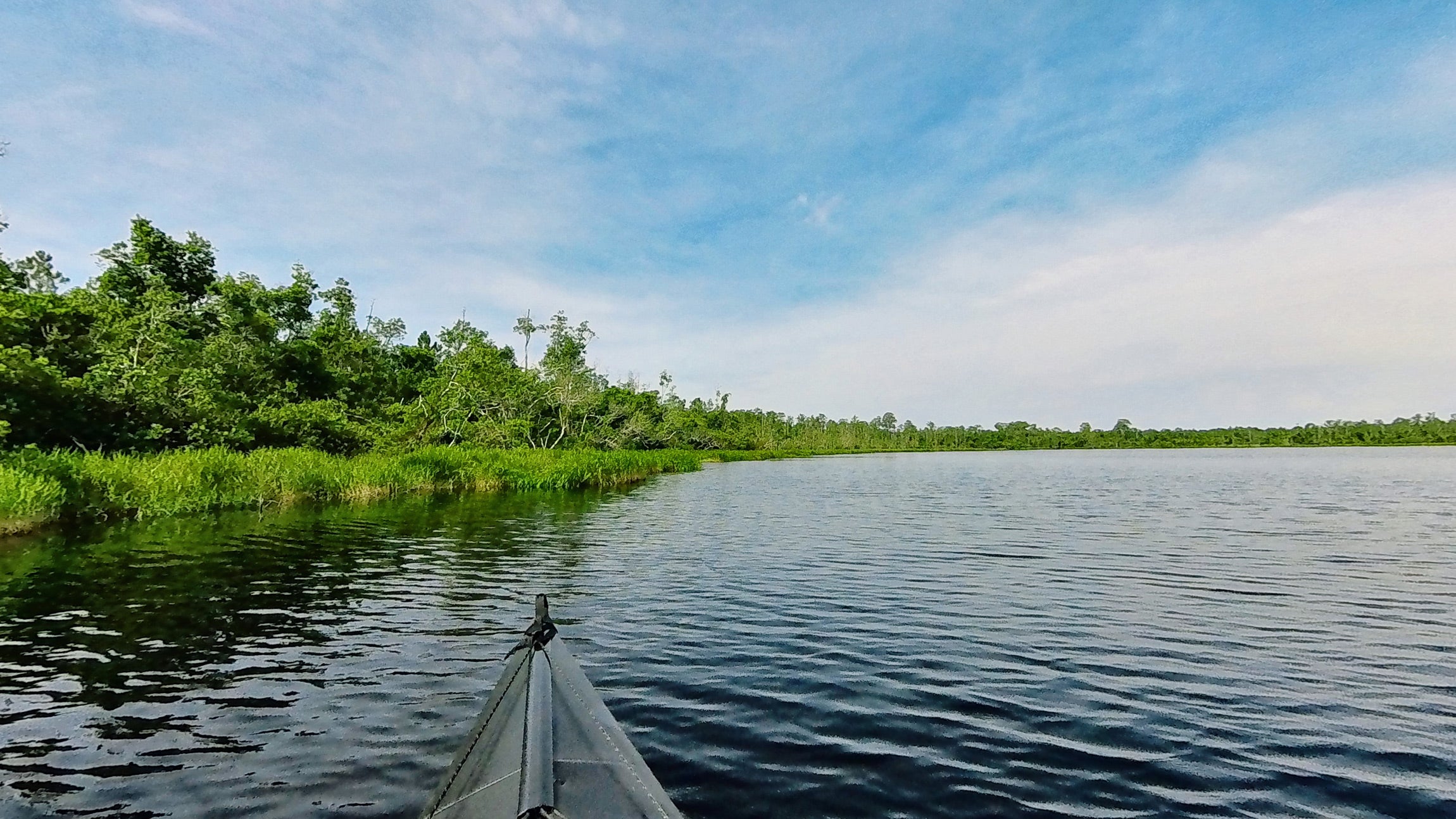
The X3’s photo quality was slightly less impressive, but that’s in line with most action cameras. The overall quality was slightly lower than most of the newest smartphones. They also tend to be a little over-sharpened. But, for quick snapshots during adventures and travel, they absolutely get the job done.
I was also really impressed by the sound quality of the X3. It utilizes four microphones to record stereo audio with reduced wind noise. Even when I was outside with a good amount of background noise, voices came through loud, clear, and natural sounding.
Insta360 app
In order to take full advantage of all the camera’s features and to do much of anything with the photos or videos, you’ll need to pair it with the Insta360 app. Pairing is simple, and all you really need to do is open the app and turn the camera on. The app leads you through prompts, and there are minimal permissions to grant, so it’s a pretty quick process. You do need to pair each time you enter the app, but after the initial setup, this is pretty fast.
The Insta360 app acts as an editing program, social media platform, and tutorial base, so you can learn how to get even better content from your Insta360 camera. You can also review your camera roll and even use your phone as a remote for the camera with a preview right on your phone’s display.
The app keeps the gallery neatly organized and provides the ability to sort by types of photos and videos. The one thing missing is a filter for 360 videos, as you can only sort by Video, Standard Video, or Active HDR videos. Luckily, it is easy to tell which are 360 videos, as they show up as a circle in the thumbnails, compared to a filled square for single lens videos.
Editing photos and videos from the Insta360 X3
Editing photos and videos is where the app gets a little tricky, at least at first. That’s partly because there are just so many options for adjustments when working with 360 materials. The beauty of 360 video (and photos) is that you can reframe materials in editing, but that opens a whole world of possibilities. That results in a steep learning curve, especially for getting creative, high-quality edits.
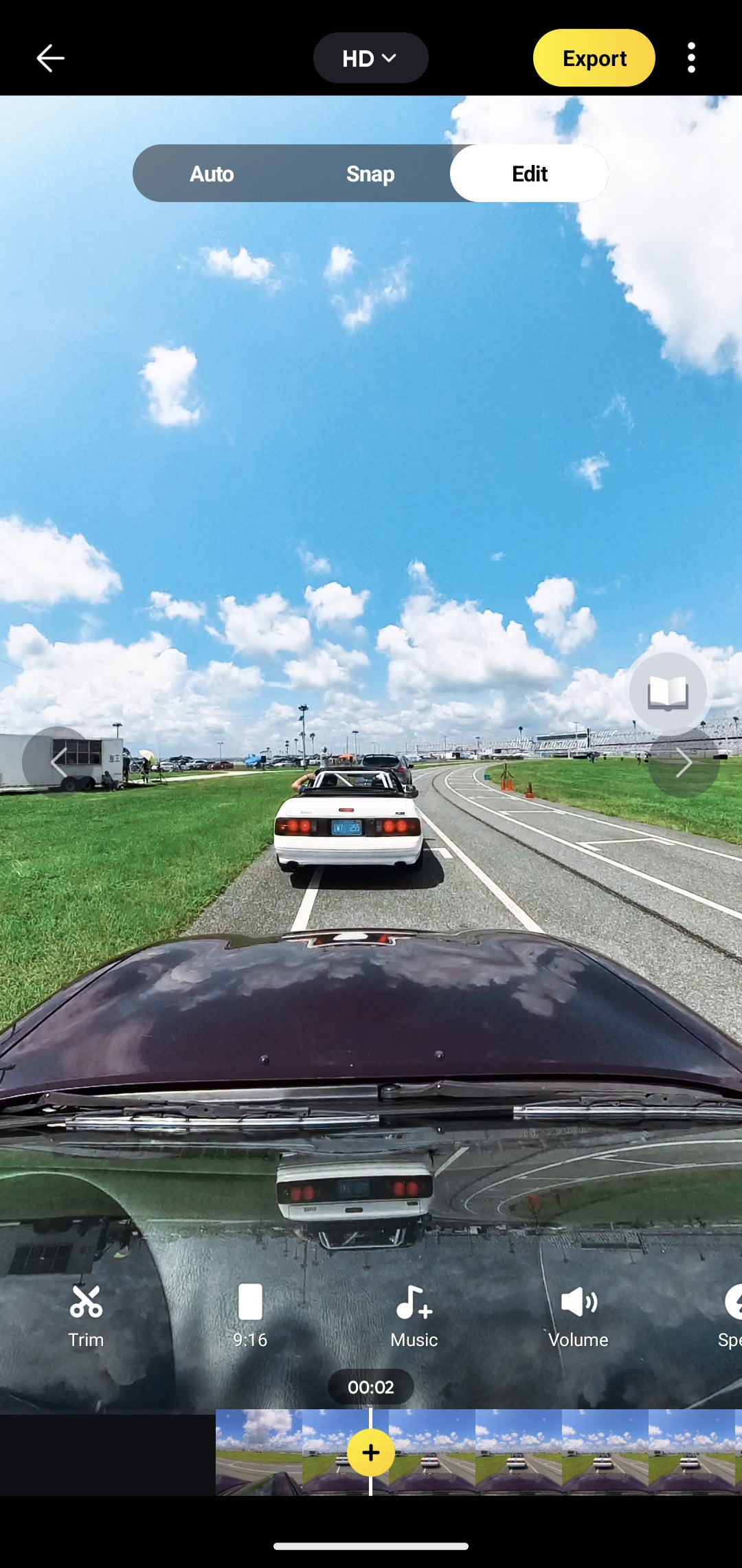
While editing 360 videos in the mobile app, you can choose between three editing modes: Auto, Snap, or Edit. Each of these offers different tools and benefits and makes sense for different types of people and activities.
Manual editing
Edit is where you have full manual control over your editing. You can trim clips, change the aspect ratio, add music, apply filters, and even adjust things like exposure, contrast, sharpness, and more. There’s no shortage of controls, so you could easily spend a long time editing if you wanted to.
One thing that frustrated me to no end when I first started working in the app is that 360 videos default to slowly turning the full 360 degrees automatically. Insta360 buried the setting to change in a less-than-obvious place. To do so, you need to tap the three dots in the top right corner. Once there, you can turn on Direction Lock, which will keep the video pointed in a consistent direction unless you change it. That same menu is where you can turn off stabilization (though I can’t imagine a situation where you would want to do so) and turn off or on the automatic identification of tracking targets. There are also two color adjustment settings in this menu, which seem very out of place.
Auto editing
Auto, as it sounds, uses AI to automatically choose the clips and angles that it thinks are best. It even adds music to the clip, giving you a fully edited piece without any work on your part. This works well for some things but typically missed the mark in my testing. It would choose angles that weren’t interesting or actually showing anything relevant. And it edited in some really jumpy transitions, which isn’t ideal. But it is nice to have the option of a no-fuss way of editing 360 content.
Snap editing
Snap is rather unique. You move your phone to reframe the video, almost like you are re-recording it. You can also use your finger to drag. If you are working with a video that doesn’t have lots of turns and movement, this would work well, but it can be tricky otherwise. I was editing a clip of my husband’s autocross event, with lots of tight turns, and had to take full advantage of my office chair spinning completely around many times. Interestingly, I didn’t see a way to turn off the automatic rotation of a clip, so I had to keep moving to the left to keep the video from slowly spinning in a circle when I wasn’t moving.
Desktop editing
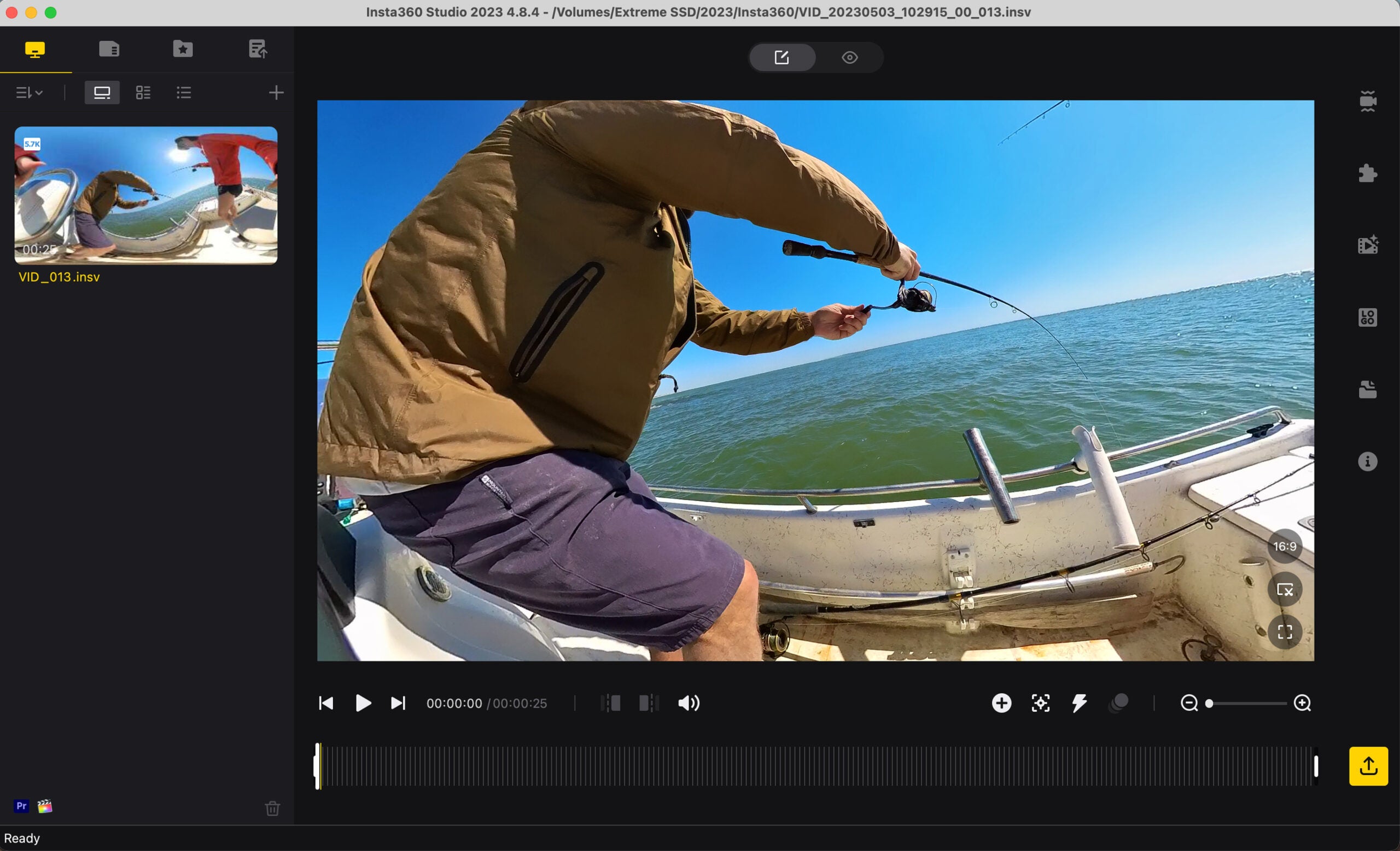
Some edits—such as those to raw files—are only possible on the desktop Insta360 app, called Insta360 Studio. Luckily, the desktop app is more intuitive than the mobile app for most things. And, of course, the larger timeline makes it easier to make precise adjustments than tapping on a tiny phone screen.
The downside to the desktop app is that you won’t have access to all the filters or manual exposure, brightness, contrast, and color adjustments found in the mobile app. That’s true for both photos and videos. There are minimal automatic adjustments available, though. For photos, you can at least turn on PureShot, which looks like it automatically adjusts contrast and exposure. Videos offer up Color Plus, Clarity Plus, and Aqua Vision 2.0, which are all automatic, but you can adjust strength. It is disappointing that the desktop app doesn’t offer more color grading type options, but hopefully, this is something Insta360 can adjust down the road.
Should you want to use an editing app that you are already familiar with, you can take advantage of plugins for Premiere Pro or Final Cut Pro.
Final thoughts on the Insta360 X3
While GoPro briefly dabbled in 360 video with the GoPro Max, and there are a handful of other brands making 360 cameras, Insta360 undoubtedly owns this market. The Insta360 X3 is a versatile, well-rounded camera that will work well for just about anyone wanting to record in this unique format. It offers impressive stabilization abilities, flexible editing tools, and excellent video quality for both 360 and single-lens videos. As with most action cameras, it falls short in low-light situations and with still photos. And there’s room for improvement, especially within both the desktop and mobile app. But overall, it’s a great little camera for anyone who wants to record their travels or rugged adventures.
The post Insta360 X3 camera review: A versatile 360 action camera appeared first on Popular Photography.
Articles may contain affiliate links which enable us to share in the revenue of any purchases made.
]]>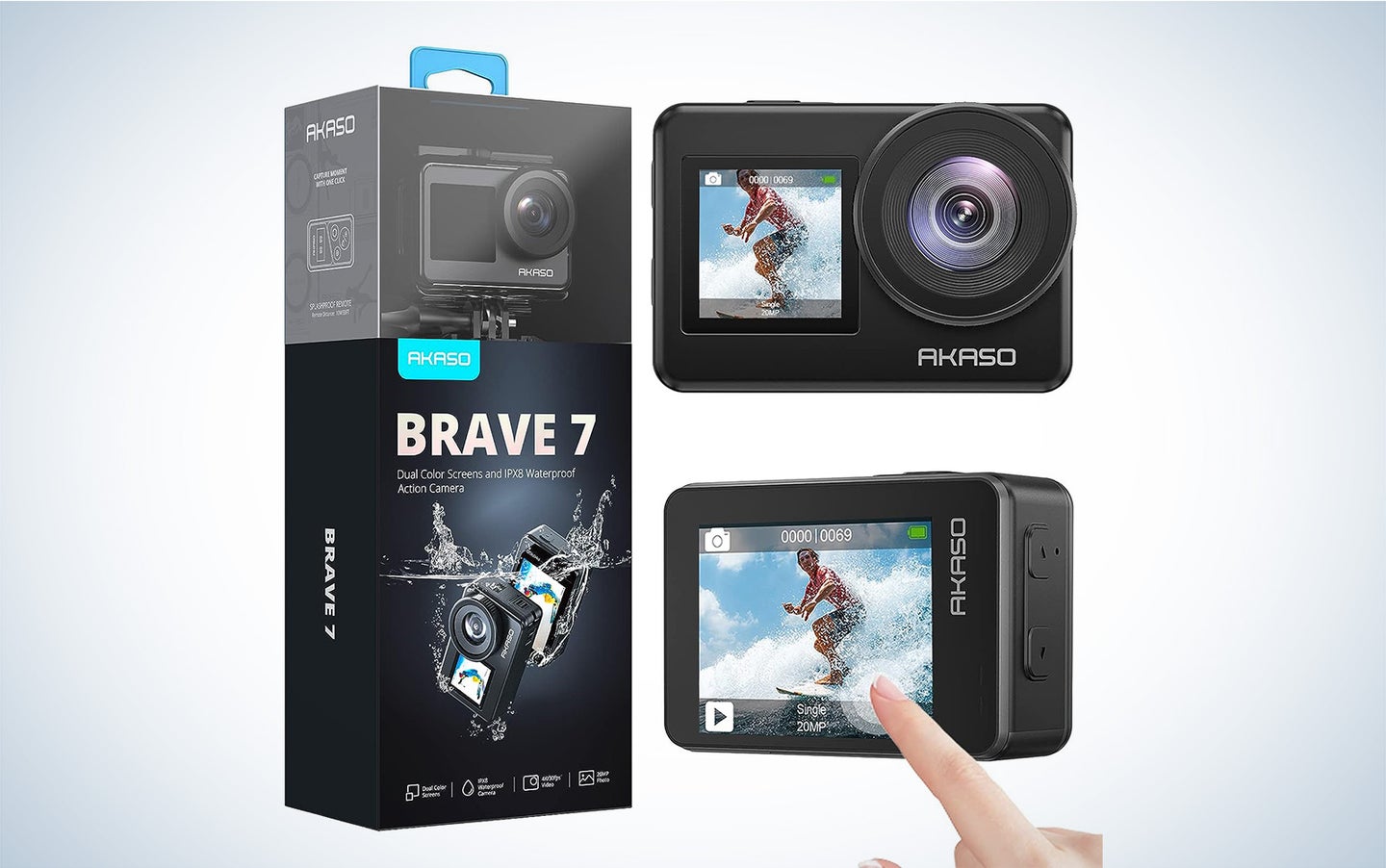
The Akaso Brave 7 shoots 4K video at up to 30 fps and it's fully waterproof down to 33 feet without a case.
The post Get a fully waterproof 4K action camera for $139 at Amazon right now appeared first on Popular Photography.
]]>We may earn revenue from the products available on this page and participate in affiliate programs. Learn more ›
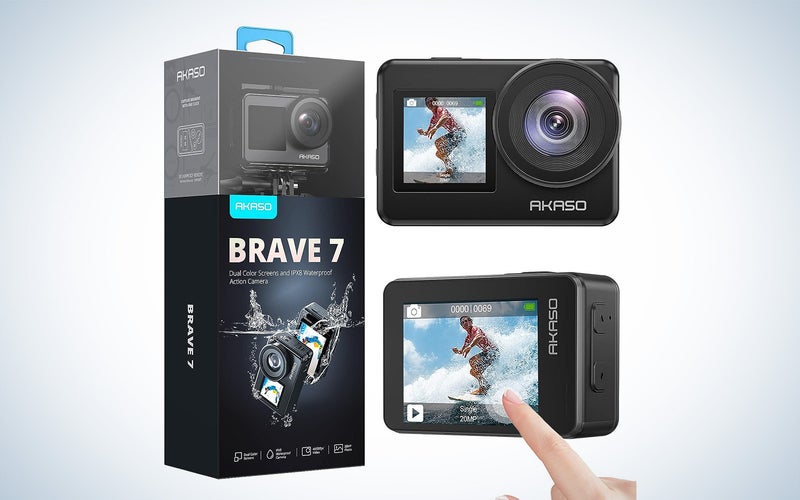
When you think of action cameras, you probably immediately think of the GoPro. It is the best, after all. But it’s also kinda pricey, even when it’s on sale. It hurts to drop a $400+ camera into the lake or off of a cliff. Right now, Amazon is selling the surprisingly good Akaso Brave 7 action camera for just $139 when you check the box for the on-page coupon. It offers an unexpected suite of specs for that price and dramatically reduces the anxiety that comes with putting your action cam in serious danger while capturing your adventures.
AKASO Brave 7 4K30FPS 20MP WiFi Action Camera $139 (was $179)
Akaso
This action camera can capture 4K footage at up to 30 fps, which isn’t quite the high framerates you’d get with a GoPro, but you’re also paying less than half the price. It can also capture 20-megapixel stills. The camera itself is waterproof down to 33 feet without the need for an extra case. Its IPX8 rating also suggests that it can withstand bumps, falls, dust, and pretty much whatever else you can throw at it.
The back of the camera sports a touchscreen display, while the front offers a small screen that comes in handy for composing shots of yourself. That’s useful for action situations, but it’s also great if you’re trying to shoot a vlog or some other walk-and-talk style video.
This is a great option if you have a kid that’s into action sports and they want to start getting their own extreme footage. Or, if you just like putting cameras in danger to get cool shots and you haven’t hit that sweet Mega Millions jackpot just yet.
The post Get a fully waterproof 4K action camera for $139 at Amazon right now appeared first on Popular Photography.
Articles may contain affiliate links which enable us to share in the revenue of any purchases made.
]]>
You can save 30 percent on the latest GoPro, which is the steepest discount we've seen yet.
The post The GoPro Hero 11 Black is down to its lowest price ever at Amazon right now appeared first on Popular Photography.
]]>We may earn revenue from the products available on this page and participate in affiliate programs. Learn more ›
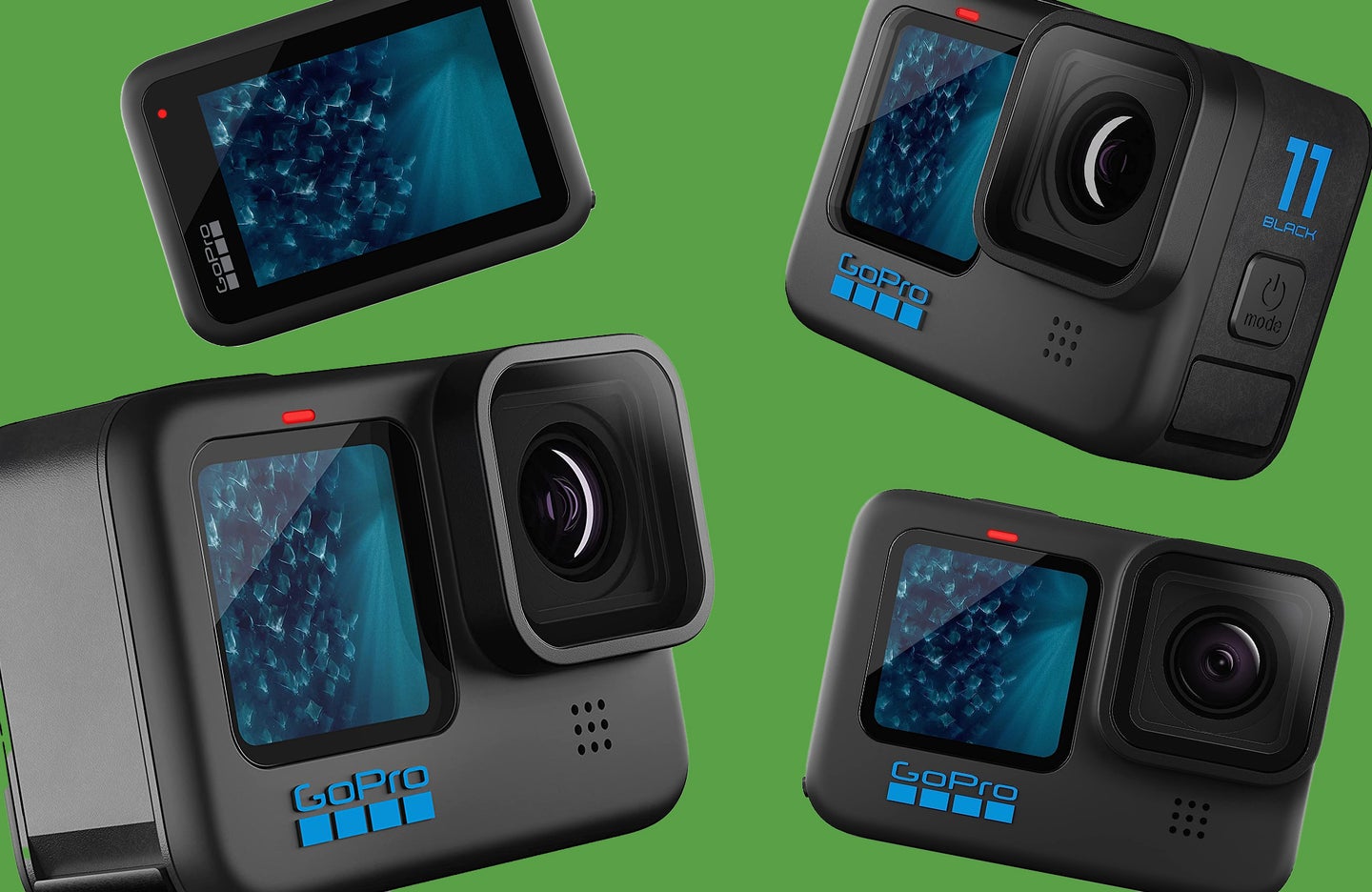
The latest GoPro camera—released roughly a year ago now—is an impressive little device with the largest GoPro sensor yet. And right now, you can save 30 percent on this action camera, which is the lowest price we’ve seen. You won’t want to sleep on this deal. The Hero 11 Creator Edition, as well as some of the older GoPro cameras, are also discounted, though not as steeply as the Hero 11.
GoPro Hero 11 Black – $349.00 (was $499.99)
GoPro
While much of the Hero 11 remains the same as the Hero 10, this new, larger sensor in the Hero 11 makes it possible to crop vertical videos without losing as much of the scene. As a result, it’s the ideal choice for those who want to share their action adventures on social media. It also gets the latest version of GoPro’s award-winning image stabilization, resulting in even smoother video footage even during jarring activities.
Even more GoPro deals
- GoPro Hero 11 Black Creator Edition $599.00 (was $699.99)
- GoPro Hero 9 Black $249.00 (was $349.99)
The post The GoPro Hero 11 Black is down to its lowest price ever at Amazon right now appeared first on Popular Photography.
Articles may contain affiliate links which enable us to share in the revenue of any purchases made.
]]>
You can save on various versions of the ONE RS and X3 cameras from Insta360.
The post Save up to 35 percent on Insta360 cameras appeared first on Popular Photography.
]]>We may earn revenue from the products available on this page and participate in affiliate programs. Learn more ›
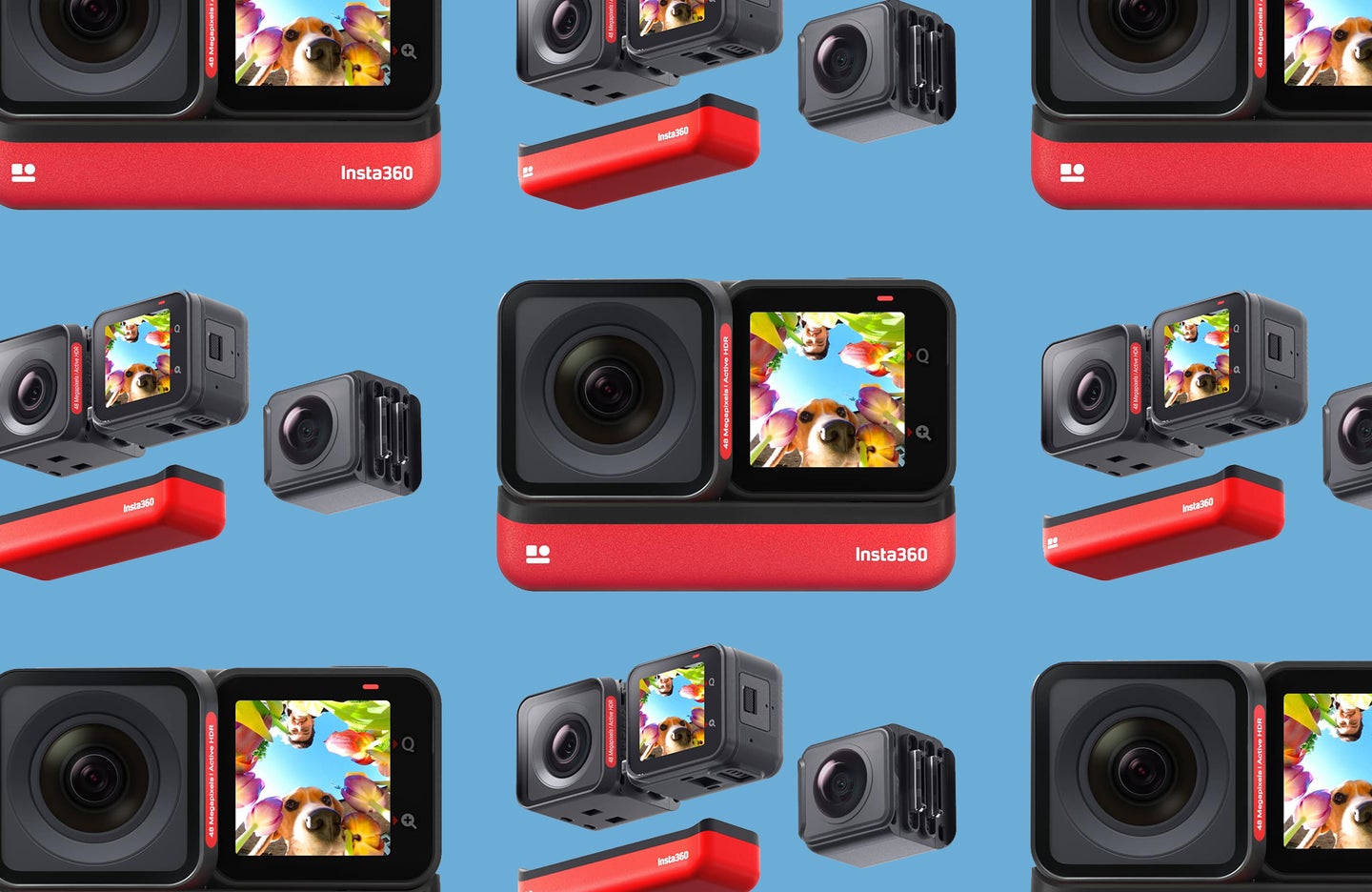
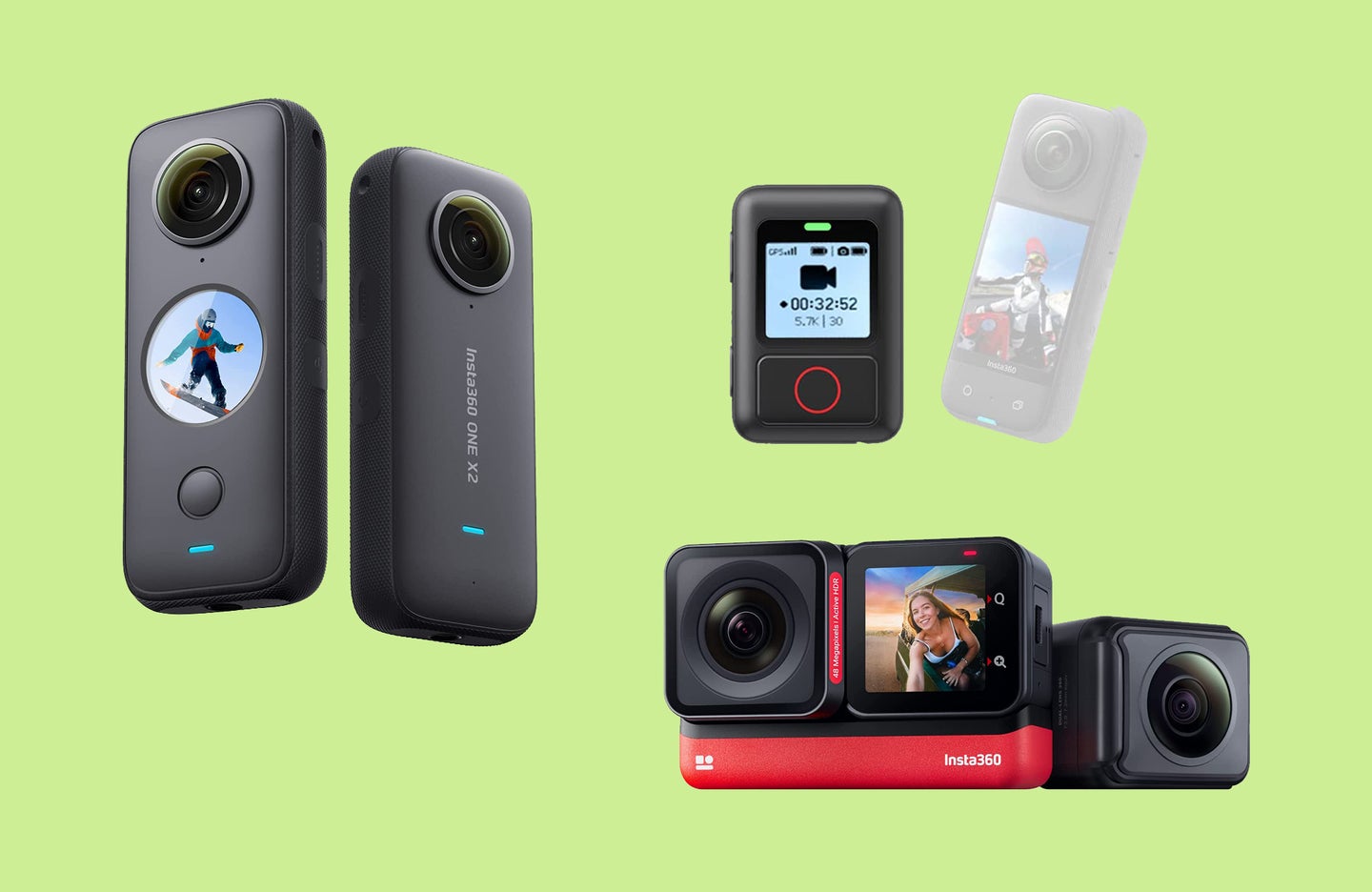
Insta360 cameras are some of the best GoPro alternatives, thanks in part to the unique offering of 360-degree footage from some of its devices. Even those that are more traditional action cameras are excellent. They are built for adventure and feature impressive stabilization and video quality, just like GoPro cameras. And right now, you can get up to 35 percent off certain Insta360 cameras, which is the steepest discount we’ve seen. The deals run through July 17th, so if you’ve been considering an action cam to document your adventures, now would be a good time to pick one up.
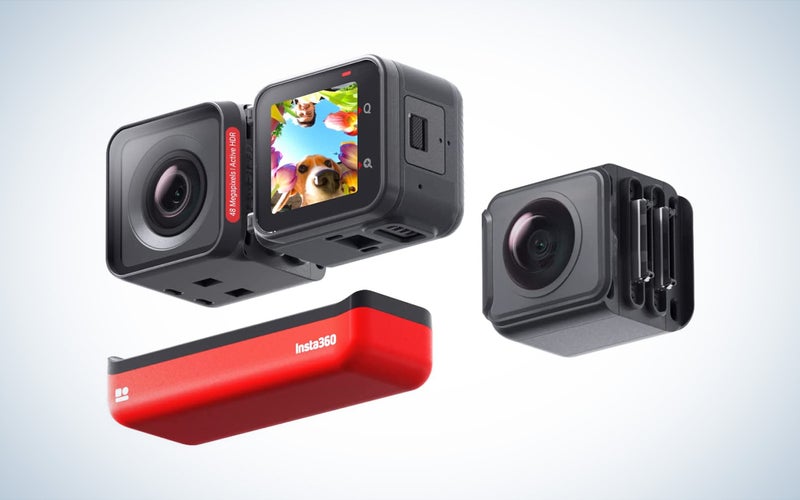
Insta360 ONE RS Twin Edition $359.99 (was $549.99)
Insta360
The Insta360 ONE RS is a unique, modular camera. The Twin Editions comes with a 4K Boost lens for wide-angle videos as well as a 5.7K 360 lens for immersive, 360-degree footage. It utilizes Insta360’s FlowState stabilization for smooth videos, even during jarring activities like mountain biking. And it’s capable of 48-megapixel photos for when you want to grab some stills on your adventures. This deal is for the camera only, but there are also discounts on kits with different accessories listed below.
More Insta360 deals
- Insta360 ONE RS Twin Edition Get-Set Kit $441.00 (was $580.99)
- Insta360 ONE RS Twin Edition Creator Kit $471.00 (was $619.99)
- Insta360 ONE RS 4K Edition Standalone $239.99 (was $299.99)
- Insta360 ONE RS 1-Inch 360 Edition Construction Kit $806.00 (was $848.97)
- Insta360 X3 $426.99 (was $449.99)
The post Save up to 35 percent on Insta360 cameras appeared first on Popular Photography.
Articles may contain affiliate links which enable us to share in the revenue of any purchases made.
]]>
You can save $210 on the GoPro Hero 10 when you opt for the accessory bundle.
The post Capture all the action with these GoPro Amazon Prime Day deals appeared first on Popular Photography.
]]>We may earn revenue from the products available on this page and participate in affiliate programs. Learn more ›
The GoPro Hero 10 Black may be the previous generation, but for most, it’s the best buy. The main benefit of the newer Hero 11 is the flexibility for vertical videos, along with a very minor boost to still photo quality. If you aren’t worried about sharing videos on social media, and 23-megapixel photos are plenty for you, then the Hero 10 is the way to go. Even when full-priced, it’s cheaper than the new Hero 11. But during Amazon Prime Day, it’s 21 percent off, making it hard to pass up. Should you want one of the latest Hero 11 versions, you’re in luck. All three varieties are discounted right now as well. The main deal is even cheaper than it was this morning, so grab one before it sells out.
These Prime Day deals require an active Amazon Prime Membership. You can sign up here for a free 30-day trial.
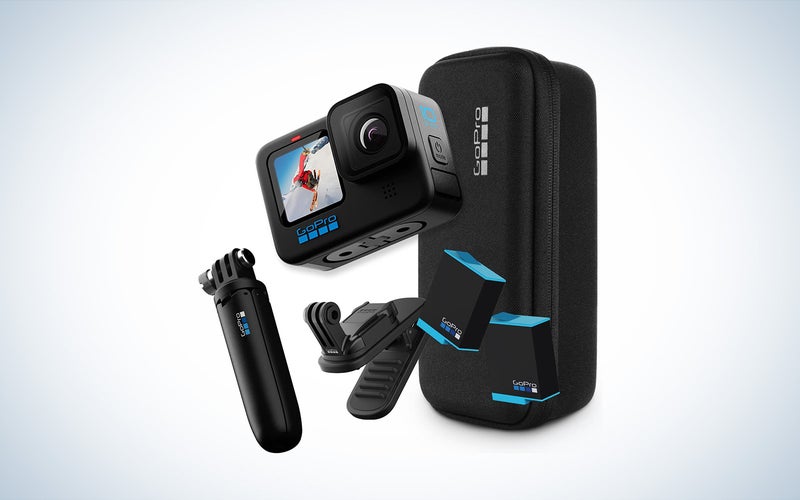
GoPro Hero 10 Black Accessory Bundle – $284 (was $379.99)
GoPro
As mentioned, the Hero 10 features a lot of the same specs and tech as the Hero 11. It offers up to 5.3K 60p video and 23-megapixel photos. And there is a large front and rear display to help frame your shots even when you’re in the middle of the action. This bundle deal comes with the Shorty (a mini extension pole + grip), a magnetic swivel clip, two rechargeable batteries, and a camera case to keep it all organized.
More GoPro deals
- GoPro Hero 11 Black $349.00 (was $499.99)
- GoPro Hero 11 Black Mini $279.99 (was $399.99)
- GoPro Hero 11 Black Creator Edition $549.00 (was $699.99)
- GoPro Travel Kit: Includes Magnetic Swivel Clip, Shorty, and Compact Case $49.99 (was $64.99)
The post Capture all the action with these GoPro Amazon Prime Day deals appeared first on Popular Photography.
Articles may contain affiliate links which enable us to share in the revenue of any purchases made.
]]>
Take advantage of the warming weather and longer daylight hours with a new action camera.
The post Save up to 20 percent during the Insta360 Spring Sale appeared first on Popular Photography.
]]>We may earn revenue from the products available on this page and participate in affiliate programs. Learn more ›
Spring is in the air, and with the warmer temperatures and longer daylight hours, more people are venturing outside. In light of that, Insta360 is holding a spring sale. Though Insta360 is best known for its 360-degree action cameras, it makes a handful of devices that range from consumer to professional level. That includes webcams, action cameras, drone add-ons, and VR-based devices. And right now, most of those are discounted, so you can save some money building out your kit. The sale runs through April 19th, so you still have some time to consider what you want to get your hands on.
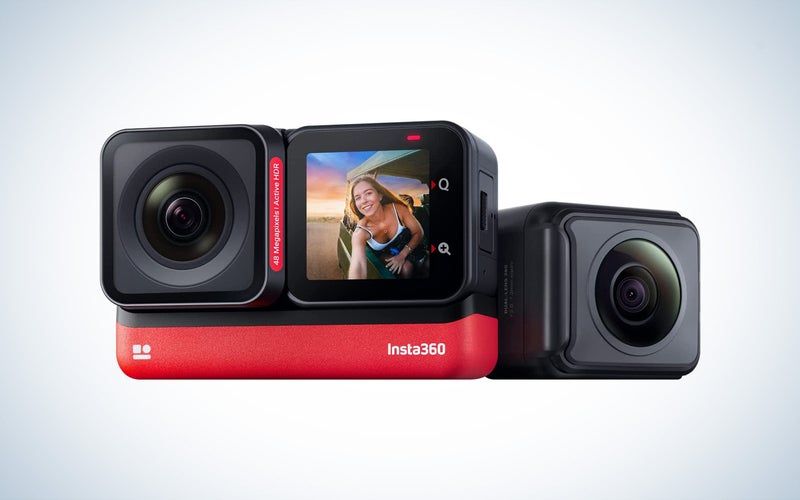
Insta360 ONE RS Twin Edition $415.00 (was $549.99)
Insta360
The ONE RS Twin Edition is a unique, modular action camera. It comes with two lenses: The 4K Boost Lens and 360 Lens, so you can choose what works best for your situation. It’s capable of capturing 48MP photos and 6K wide-screen HDR video. And it comes with Insta360’s excellent FlowState Stabilization for smooth videos even when recording action. Just like Insta360’s other cameras, the selfie stick (which is a separate purchase) will be invisible in your photos and videos, giving you more drone-like footage than other action cameras.
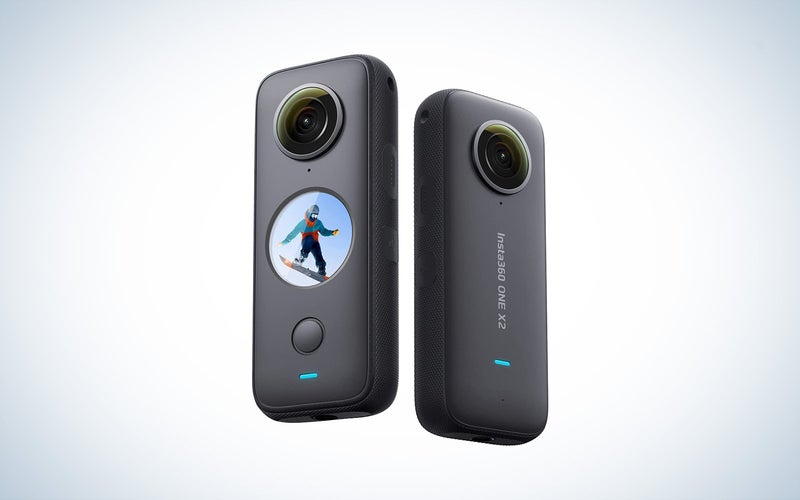
Insta360 ONE X2 $364.90 (was $429.99)
Insta360
Released in 2020, the Insta360 One X2 is the predecessor to the newer X3. However, it is still worth buying, especially at this discounted price. It offers 5.7K 360-degree capture, which is the same as the newer model. Videos are smooth and steady thanks to Insta360’s impressive FlowState stabilization. Photo quality saw a big bump in the X3, but the One X2 is capable of capturing 18MP photos, which is plenty for most people. And it provides access to plenty of AI editing tools in the Insta360 app.
More Insta360 Spring Sale items
Cameras
- Insta360 Link – PTZ 4K Webcam $284.99 (was $299.99)
- Insta360 ONE RS 1-Inch 360 Edition $759.99 (was $799.99)
- Insta360 ONE RS 4K Edition $249.99 (was $299.99)
- Insta360 Sphere $386.99 (was $429.99)
- Insta360 Pro II 8K 360-Degree Spherical Virtual Reality Camera $4,499.95 (was $4,999.95)
- Insta360 ONE X $299.99 (was $399.99)
Accessories
- Insta360 X3 Battery $31.00 (was $34.99)
- Insta360 ONE RS Battery Base $23.00 (was $29.99)
- Insta360 3m 9.8ft Extended Edition Selfie Stick $89.00 (was $99.99)
- Insta360 – Power Selfie Stick $62.00 (was $69.99)
- Insta360 Carry Case for X-Series $17.99 (was $19.99)
- Insta360 GPS Action Remote $71.00 (was $79.99)
- Insta360 Motorcycle Accessory Bundle $40.00 (was $45.00)
- Insta360 Third-Person Bike Handlebar Mount $35.00 (was $39.99)
The post Save up to 20 percent during the Insta360 Spring Sale appeared first on Popular Photography.
Articles may contain affiliate links which enable us to share in the revenue of any purchases made.
]]>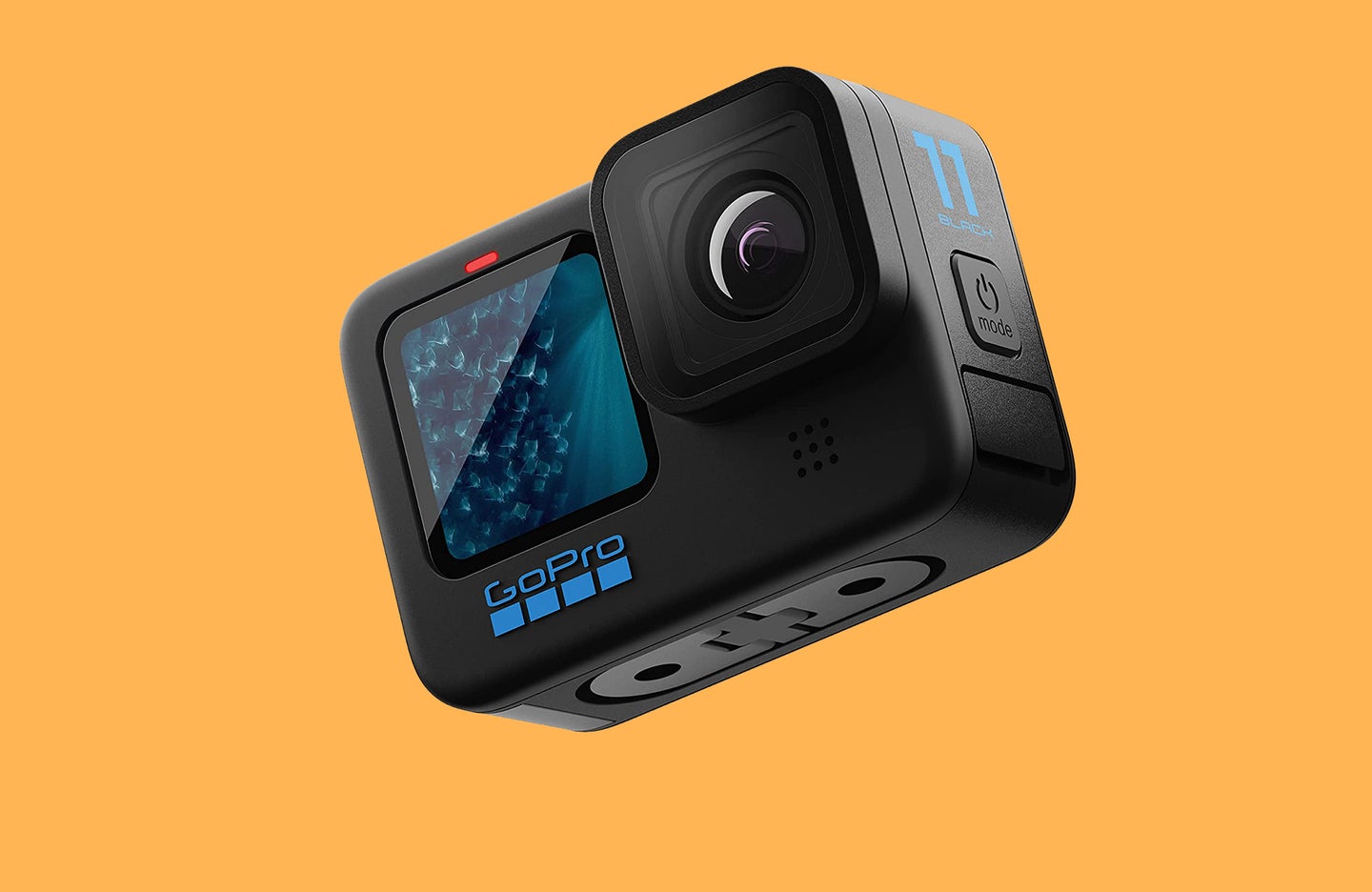
Choose the right GoPro camera for your specific style of shredding gnar.
The post The best GoPros for 2023 appeared first on Popular Photography.
]]>We may earn revenue from the products available on this page and participate in affiliate programs. Learn more ›
GoPro cameras have been capturing gnarly footage for roughly two decades. In that time, these burly little boxes have advanced massively, bumping their photo and video chops to impressive levels. While the company tends to upgrade its flagship camera every year, it can be difficult to figure out which one is right for you. So, we have curated the best GoPros to meet your specific needs as a photographer, videographer, content creator, and gnar shredder.
While the differences can be subtle between generations, knowing what features you need and which ones you don’t could save you some money and make operating your new action camera a lot simpler. Here’s a breakdown of the best models for you.
- Best overall: GoPro Hero11 Black
- Best for the money: GoPro Hero10 Black
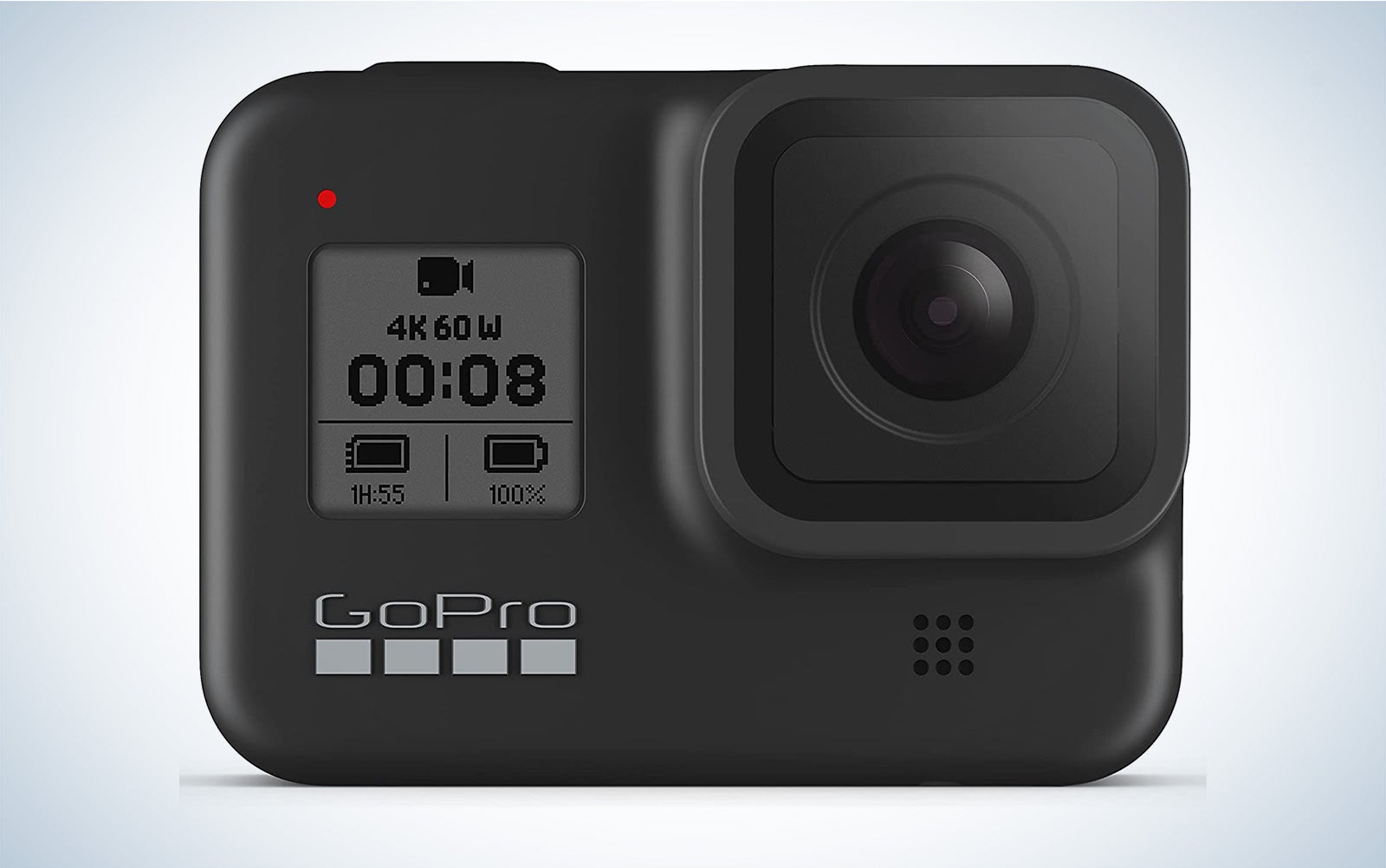
- Best older model: GoPro Hero9 Black
- Best for kids: GoPro Hero8 Black
- Best for 360: GoPro Max
How we picked the best GoPros
I have been shooting photos and video for roughly two decades, during which I’ve tested–or at least shot with–most major camera releases. I was a competitive mountain biker for a decade, during which time I’ve used a GoPro to document my triumphs and my much-more-frequent catastrophes.
To curate this list, I relied on extensive hands-on testing with most of the models, as well as editorial reviews and spec comparisons. While the spec sheets can be difficult to navigate, we have focused on singling out useful features rather than questionably practical bells and whistles that you’ll never end up turning on.
The best GoPros: Our picks
Once you’ve considered the specs you need out of a GoPro camera, it’s time to dig into the specific models. Here are our picks for the Best GoPros.
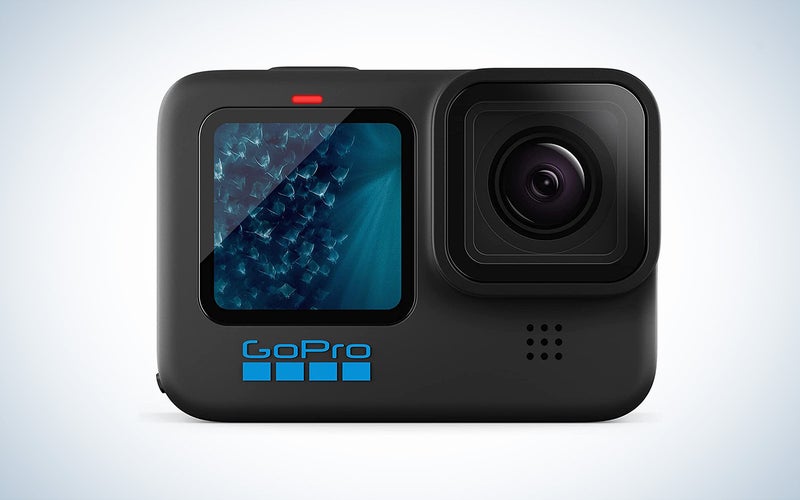
Best overall: GoPro Hero11 Black
GoPro
Why it made the cut: The 1/1.9-inch sensor is the largest in any GoPro yet, which makes it possible to create vertical videos for social media without any quality loss. And it can now shoot 10-bit color videos for more natural color.
Specs
- Max video resolution: 5.3K at 60 fps
- Max framerate: 240 fps at 2.7K
- Photo resolution: 27 megapixels
Pros
- Tops in terms of video resolution
- Upgraded photo resolution
- GoPro’s most advanced stabilization
- Better battery life than previous models
Cons
- Low light performance isn’t greatly improved
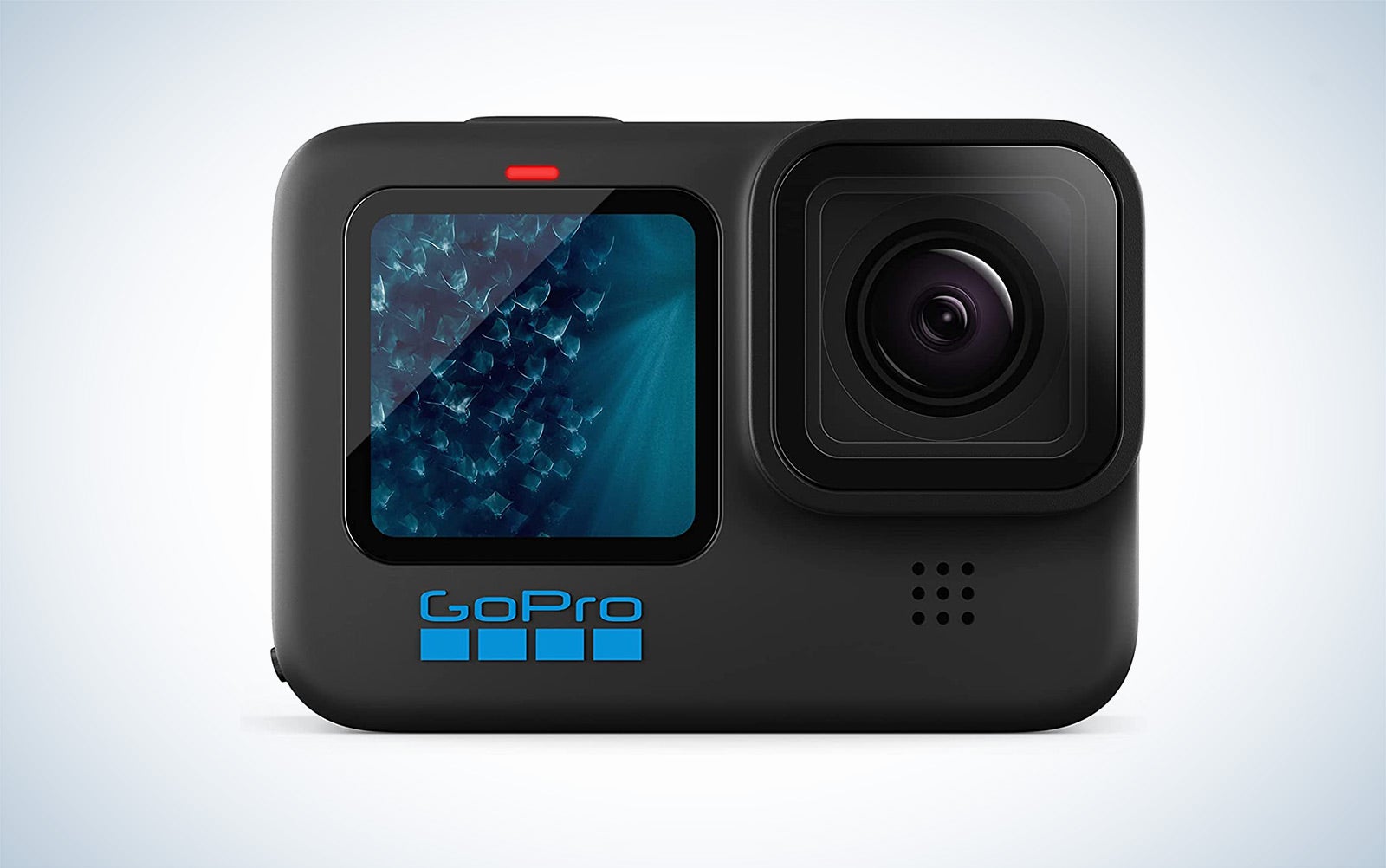
If you’re looking for the greatest GoPro, you can typically also just look to its latest. The GoPro Hero11 Black offers upgrades nearly across the board compared to its predecessor. The most notable upgrade is the sensor, which is the largest yet. The 1/1.9-inch sensor provides a new, nearly-square 8:7 aspect ratio which offers the largest vertical field of view so far. This makes creating vertical videos for social media much easier and of higher quality.
The video resolution hasn’t increased from the Hero10 Black and remains at 5.3K. But it can now shoot 10-bit color videos. GoPro claims that will result in recordings with 64 times more color than previous models. Photo resolution has bumped to 27 megapixels, or you can grab 24.7-megapixel stills from videos as well. The stabilization has also been upgraded to HyperSmooth 5.0, resulting in even smoother video even during activities with jarring movement.
GoPro has also loaded its newest action camera with new modes for easier shooting in a variety of scenarios. Night Effect mode makes it easy to capture jaw-dropping star trails or vehicle lights, while Light Painting mode gives you the opportunity to play around with creating unique images with flashlights. And should you not want to worry about settings as much, Easy mode gives you simplified options. It’s also available as the Hero11 Mini, which has all the same tech in a smaller, more minimal body for better mounting possibilities.
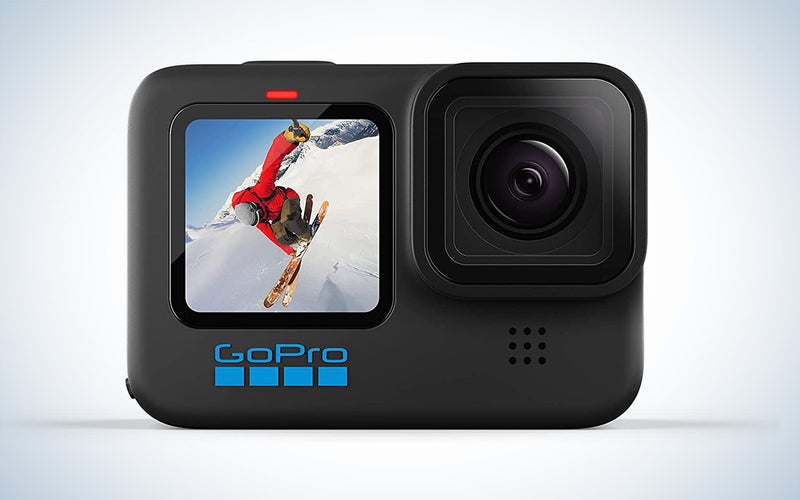
Best for the money: GoPro Hero10 Black
GoPro
Why it made the cut: The Hero10 Black offers a lot of exceptional quality, the same 5.3K video as the newest model, at a lower price.
Specs
- Max video resolution: 5.3K at 60 fps, 4K at 120 fps
- Max framerate: 240 fps at 1080p
- Photo resolution: 23 megapixels
Pros
- Tops in terms of video resolution
- Good photo resolution
- Impressive stabilization
Cons
- Early users complained of overheating issues
Though a year old, the GoPro Hero10 Black still provides a lot of quality that makes it a worthwhile purchase. It offers upgrades across the board compared to its predecessor, though some updates are more minor than others. From a video standpoint, the Hero10 shoots 5.3K footage at up to 60 fps. It can also shoot up to 120 fps at 4K or 240 fps at 1080p.
Like every other GoPro in recent memory, the camera itself can go down to 33 feet underwater and resist bumps and bashes without the need for a protective case. It also uses the same mounting system GoPro has been using for generations, so it’s compatible with any old accessories you may have around from previous cameras.
GoPro built the Hero10 around a 23-megapixel sensor, which isn’t much of a dip from the Hero11. The Hero10 also offers GoPro’s extremely impressive HyperSmooth technology, which takes the shake out of videos without the need for a mechanical stabilizer. HyperSmooth has been great since it debuted back in the GoPro 7, and the HyperSmooth 4 is extremely effective and flexible.
The Hero10’s big advantage comes in the form of its new processor. It’s a seriously powerful chip, and it has a noticeable effect on overall image quality, especially in challenging situations with low light.
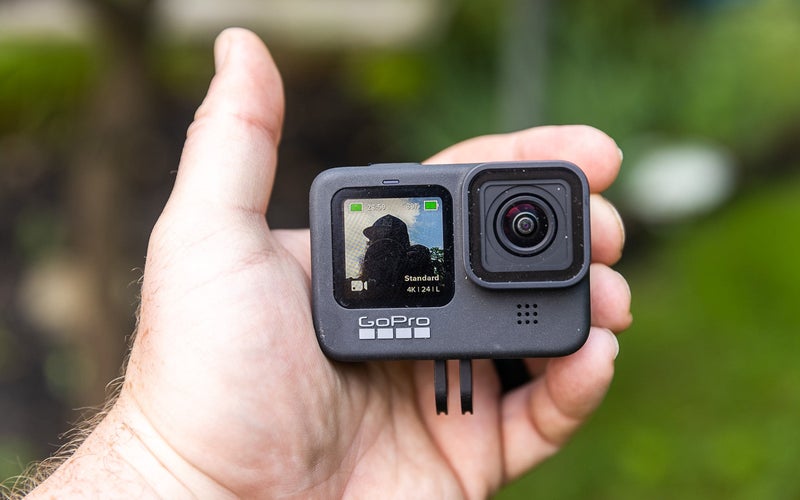
Best older model: GoPro Hero9 Black
Stan Horaczek
Why it made the cut: It may be two generations old, but the Hero9 can still hold its own and doesn’t ask for much in the way of compromise.
Specs
- Max video resolution: 5K at 30 fps or 4K at 60 fps
- Max framerate: 240 fps at 1080p
- Photo resolution: 20 megapixels
Pros
- Greater than 4K recording
- 4K video at 60 fps for smooth footage
- Great image stabilization
Cons
- No 4K at 120 fps
Even though it’s just two generations old, the GoPro Hero9 Black doesn’t stray much from the flagship Hero11’s stats. The Hero9 shoots 4K video at 60 fps, which is likely the most useful mode for most people right now. If you want to push the pixels, you can turn it up to 5K footage. But then you’ll only get 30 fps, which isn’t always ideal for fast action.
The Hero9 does offer HyperSmooth 3 for image stabilization, which seems nearly identical to HyperSmooth 4, at least in my personal experience with it. The Hero9 is every bit as tough as the Hero10, withstanding depths down to 33 feet and taking impacts without the need for an external case.
Pricing on these can vary, so be sure to check the price of the Hero9 and the Hero10 before you make your purchase. GoPro will sometimes offer its newest model for nearly the same price as its predecessor. Unless you need to absolutely max out your resolution, though, either the Hero9 or Hero10 should treat you just fine.
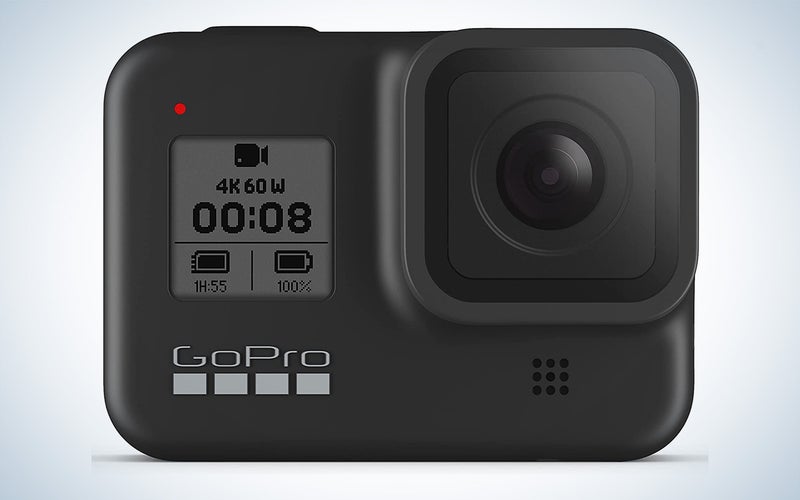
Best for kids: GoPro Hero8 Black
GoPro
Why it made the cut: The oldest camera in GoPro’s current stable still has lots of life left in it.
Specs
- Max video resolution: 4K at 60 fps
- Max framerate: 240 fps at 1080p
- Photo resolution: 12 megapixels
Pros
- 4K at 60 fps
- Cheaper than newer models
- Great image stabilization
Cons
- Low photo resolution
- Nothing above 5K video
It’s a little long in the tooth, but the oldest camera in GoPro’s current lineup still has lots of life left in it and is a great choice for kids. It can shoot 4K video at up to 60 fps, which is the most useful setup for most people looking to capture action footage. It can even go to 240 fps at 1080p for 8x slow motion.
You will have to make a few concessions for stepping down, however. The photo resolution maxes out at a relatively paltry 12 megapixels. And you can’t go over 4K for video, so cropping will result in quality loss.
Still, the Hero8’s specs include plenty for kids. It can live stream with HyperSmooth, just like the newer models, and it has a robust set of time lapse features baked right into it. And it’s just as rugged as newer versions, so you don’t have to worry about your kid breaking it. They are starting to become a bit hard to find, but if you can find a killer deal on one of these, it will be a great adventure companion for a long time.
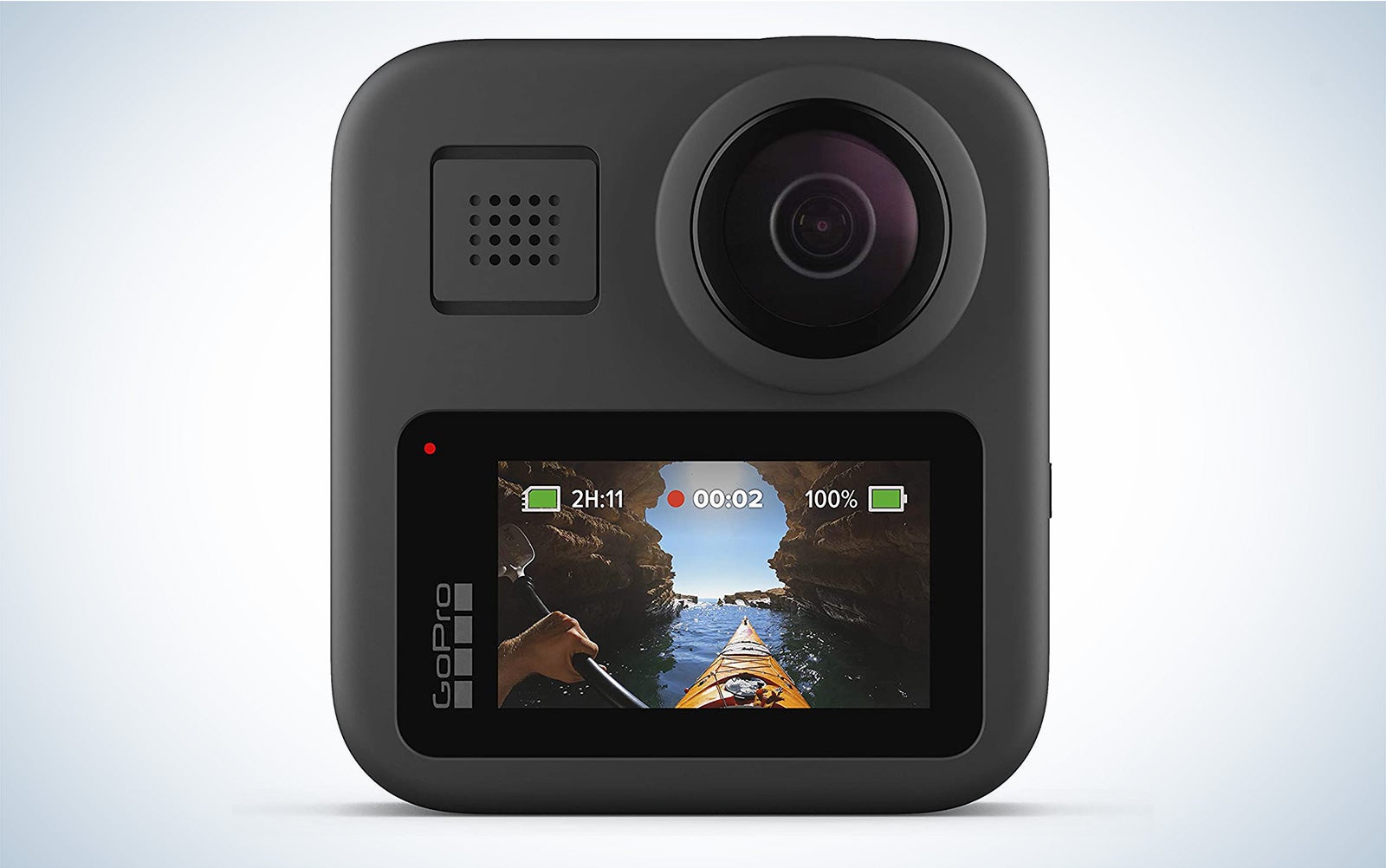
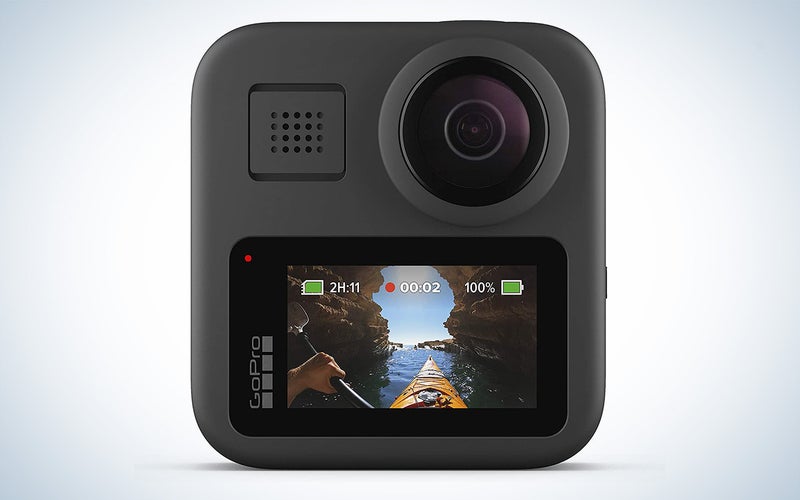
Best 360 camera: GoPro Max
GoPro
Why it made the cut: It looks a little odd, but this model can act as three cameras in one.
Specs
- Max video resolution: Spherical 5K
- Max framerate: 30 fps
- Max photo resolution: 5760 x 2880
Pros
- 360 VR capture
- Waterproof to 16 feet (which is great for 360 cameras)
- Impressive time laps functions
Cons
- Bigger than a normal GoPro
- Reduced resolution per lens
If you want to truly immerse your viewers in footage of your adventures, this camera can create full-on VR shots they can view through interactive players and dedicated headsets.
The GoPro Max has a pair of lenses–one on the front and one on the back. Together, they can capture 5K 360-degree content that looks great through a headset. To go with the cameras, it has a total of 6 microphones positioned around the camera in order to capture 360-degree audio to match the visuals.
Despite its odd size and setup, the camera is still waterproof down to 16 feet without a case, and it’s compatible with more than 30 mounting accessories to make it easy to wear or carry.
Even if you’re not shooting VR content, it’s a capable traditional action camera. That will be handy if you want to capture your trip down the mountain but not the terrified look on your face as you descend.
Things to consider when buying the best GoPros
Peruse the GoPro lineup, and you won’t find a ton of models. GoPro typically updates its flagship model every year with improved image quality and new software-driven features in order to justify an upgrade from the previous year’s model. Here are some key things to consider when you’re trying to determine the best GoPro for you.
Video resolution
It’s unlikely you have a screen with a resolution above 4K. The same goes for the people watching your content. Cameras all the way back to the Hero8 can record at least 4K, but the newer models go beyond that benchmark. While that extra resolution may seem like overkill, it can come in handy for things like cropping footage without losing out on image quality in the finished product. The most recent GoPro tops out at 5.3K, which provides a nice cropping cushion in case your frames aren’t super precise.
Video framerate
This spec is inexorably tied to resolution. The current flagship GoPro can capture 4K footage at 120 fps. That means it can shoot the most epic slow motion out of any camera in the GoPro lineup. At that resolution and framerate, though, you’re going to eat up a lot of battery and storage very quickly. So, it might be overkill if you’re not planning to max out your frames and pixels.
Still image features
For a long time, the GoPro was stuck at around 12 megapixels for still capture. The Hero9 bumped that number up to 20 megapixels, and the current flagship goes all the way to 27 megapixels. While resolution isn’t everything, obviously, nearly doubling the number of pixels on the sensor does give you considerably more image data to work with for your photos.
360-degree capture
Only the GoPro Max can shoot 360-degree video in the GoPro lineup, so if you want to slap on a VR headset and truly relive your hijinx, that’s the way to go for you. There are some solutions for linking several GoPro cameras together in order to capture 360-degree content, but that can get pricey and annoying quickly.
FAQs
Q: How much does a GoPro cost?
The newest GoPro will cost around $500 without a subscription or $400 with a subscription. Or you can find older models for a few hundred dollars cheaper, depending on how old you are willing to go.
Q: Does GoPro take better pictures than iPhone?
Generally speaking, no, the GoPro’s overall image quality won’t exceed what you’ll get from a typical iPhone. You may get some extra resolution out of a GoPro, but the iPhone’s HDR functionality is above and beyond. That said, the GoPro can go many places your iPhone can’t, which means it can take photos you wouldn’t be able to capture with your phone.
Q: How long does a GoPro battery last?
It depends on what you’re doing with it. Battery life changes based on a number of factors, including the resolution that you’re recording at and the conditions in which you’re shooting. You could get a half hour of shooting at maximum resolution and high framerate in cold temperatures, or you could get more than an hour. GoPro does say that the new battery in the Hero11 Black offers 38% better battery life than previous models, giving you more time to record. Regardless, we always recommend buying more batteries pretty much right away when you get your camera.
Final thoughts about the best GoPros
Your phone camera is pretty great right now, but a GoPro can go places you wouldn’t want to bring your pricy smart device. Any GoPro from recent generations will capture excellent video and photo quality while providing almost impossibly smooth footage regardless of your activity.
Whatever you do, we absolutely recommend that you buy at least one extra battery to go with your GoPro because they don’t always last that long, and you don’t want to be stuck doing epic stuff without any proof of it for the internet. That’s the only way it counts, after all.
The post The best GoPros for 2023 appeared first on Popular Photography.
Articles may contain affiliate links which enable us to share in the revenue of any purchases made.
]]>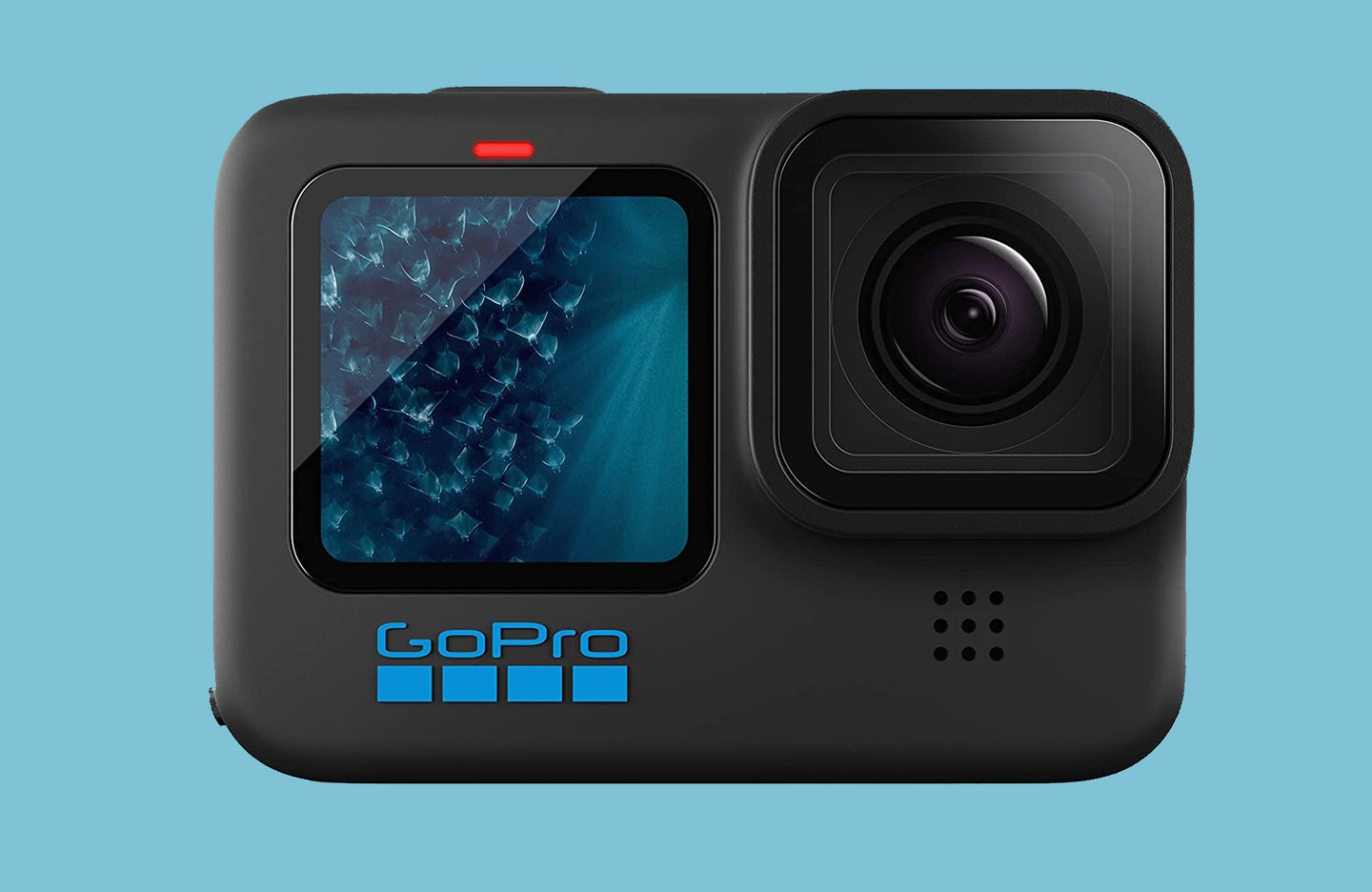
You can save on a variety of GoPro models right now, including the new Hero 11 Black.
The post Early Black Friday deal: Save on GoPro cameras appeared first on Popular Photography.
]]>We may earn revenue from the products available on this page and participate in affiliate programs. Learn more ›
GoPro recently released its newest camera, the Hero 11 Black, and good news, it’s already on sale. During this early Black Friday deal, you can save on the newest action camera—capable of 5.3K60p video and 27-megapixel photos. The new Hero 11 Black Mini and Creator editions are discounted as well. Or you can save even more money by buying one of the past—and still highly capable—models. So if you’re looking to upgrade or get started with action photography, be sure to take advantage of these GoPro early Black Friday deals.
There are two ways to save on GoPros right now. You can buy the camera only through Amazon. Or, if you want to get a GoPro subscription, you can take advantage of deeper discounts by bundling the subscription with your camera purchase. The GoPro subscription will cost you $49.99 per year if you purchase it on its own. With it, you’ll get unlimited cloud backup with auto uploads, unlimited use of the Quik app, including premium editing tools, up to 50 percent off at GoPro.com, savings on new GoPro models, and no-questions-asked camera replacement twice a year.
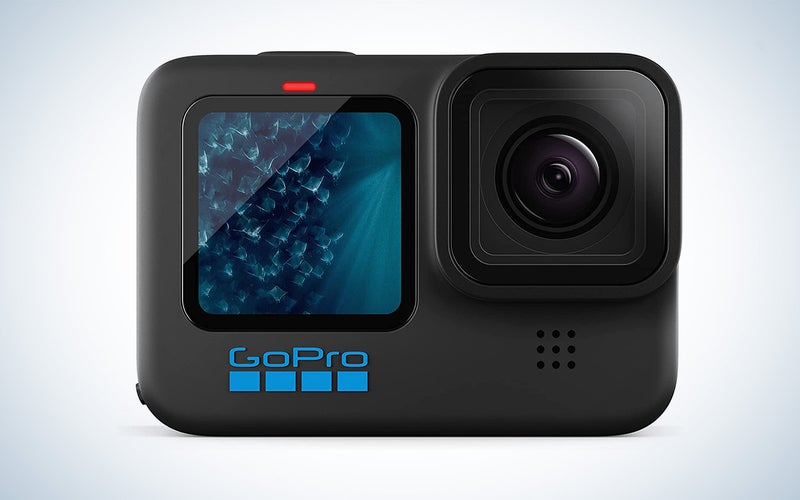
GoPro Hero 11 Black $449.99 (was $499.99)
GoPro
The newly released Hero11 Black features the largest sensor in a GoPro yet, which provides a new 8:7 aspect ratio. That makes it easier to produce vertical videos, ideal for your TikTok or Instagram accounts. The new sensor allows for the new HyperView feature, which provides an even wider angle of view for content in tight spaces. The video specs didn’t get much of an upgrade, but the photo quality did. The action camera is now capable of 27-megapixel photos, burst mode can take raw files, and you’ll have the ability to extract 24.7-megapixel photos from videos. And GoPro added a few different modes for shooting at night. That includes the ability to take photos of the stars with the push of a button using the Star Trails feature or to play around with flashlights and the Light Painting mode. The company also released the Mini and Creator versions of the Hero11 Black and you can also find them on sale below.
Amazon’s GoPro early Black Friday deals:
- GoPro Hero 10 Black $399 (was $449.99)
- GoPro Hero 9 Black $294.99 (was $369.99)
GoPro’s subscription bundle deals:
- GoPro Hero 11 Black with new GoPro subscription $349.98 (was $549.98)
- GoPro Hero 11 Black Mini with new GoPro subscription $299.98 (was $449.98)
- GoPro Hero 11 Black Creator Edition with new GoPro subscription $579.98 (was $834.94)
- GoPro Hero 10 Black with new GoPro subscription $349.98 (was $499.98)
- GoPro Hero 10 Black Bones with new GoPro subscription $349.98 (was $599.98)
- GoPro Max with new GoPro subscription $399.98 (was $549.98)
The post Early Black Friday deal: Save on GoPro cameras appeared first on Popular Photography.
Articles may contain affiliate links which enable us to share in the revenue of any purchases made.
]]>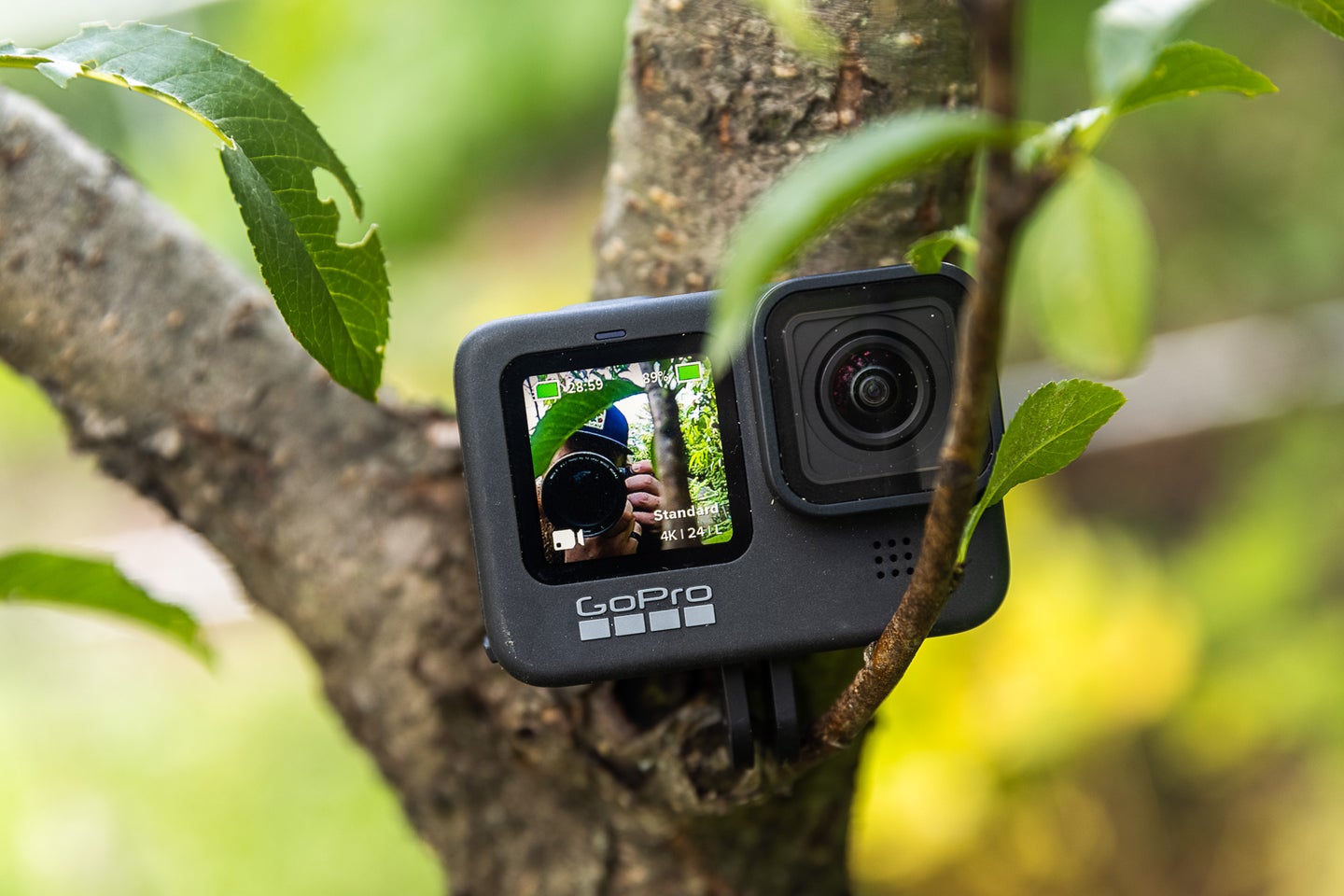
The GoPro Hero 9 offers some useful upgrades over its predecessor including better battery life and even smoother image stabilization.
The post GoPro Hero 9 Black camera Review: An underrated tool for photographers appeared first on Popular Photography.
]]>We may earn revenue from the products available on this page and participate in affiliate programs. Learn more ›
Years ago, I strapped a GoPro Hero 4 to my chest and flung myself down some of the most famous mountain bike trails in the world at Whistler mountain bike park. I still go back and watch that footage from time to time as shaky and slow as it is. While I don’t participate in many action sports these days, my time spent with the GoPro Hero 9 Black action cam helped me realize that a good waterproof action camera can be a valuable asset in just about any camera bag here in the “everything is content” era.
What is the GoPro Hero 9 Black?
Stan Horaczek
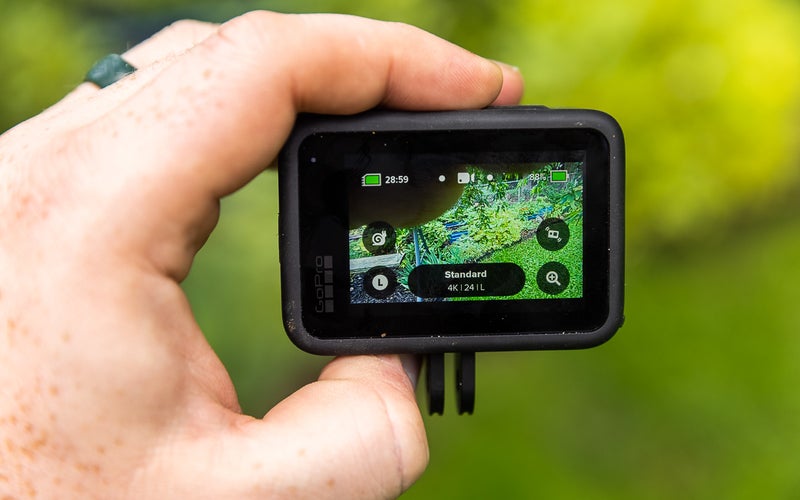
If you haven’t picked up a GoPro in a while, things have changed quite a bit. The small, rectangular form factor has remained basically the same, but the guts have gotten a tangible overhaul.
Compared to the previous GoPro Hero 8, the Hero 9 offers a new front-facing display that shows you a live feed from the sensor in addition to camera settings. That makes setting up selfie-style shots much simpler, especially when you’re participating in sketchy activities.
The Hero 9 Black can capture up to 5K footage at up to 30 fps. That’s not 8K like some smartphones promise, but 5K is also much more practical at least for the moment. For stills, you now get access to 20-megapixel pictures, which is up from 12-megapixels in the previous version.
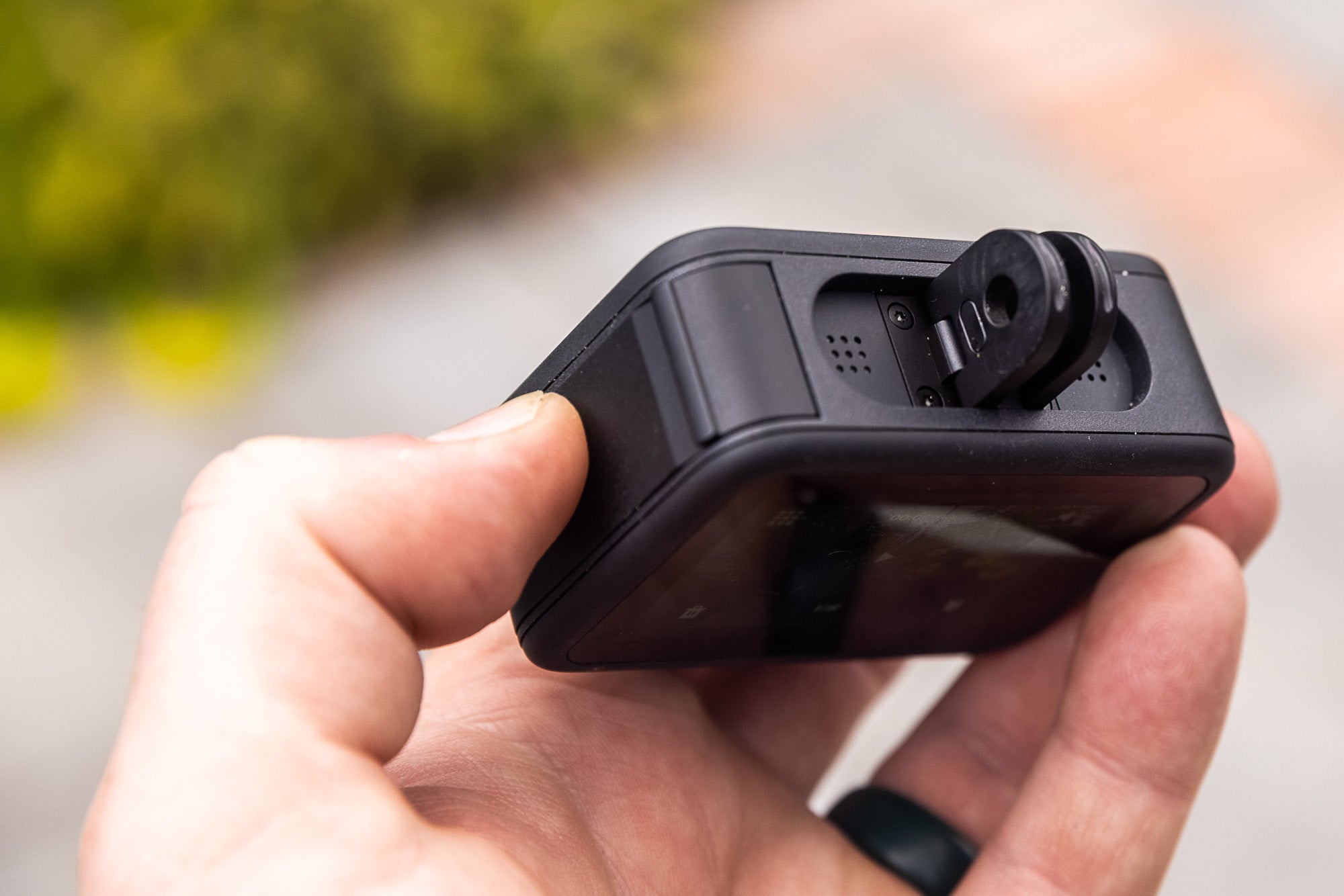
The swappable lens “mods,” probably represent the biggest hardware upgrade. Add the Max Lens Mod and you get a super-wide 155-degree field of view and offers a feature called Max HyperSmooth. It allows you to lock the horizon in place and then rotate the camera 360 degrees while keeping the shot exactly the same. It’s a truly impressive effect to see in action, but it’s likely not super practical for most shooters who don’t plan to take the camera airborne. Still, the prospect of swappable lens modules is exciting all on its own.
The modular system also supports a $50 light mod, which adds LED illumination to the camera. If you never want to mess with mods, you certainly don’t have to. But, it does give you options if you want to expand your gadget stockpile down the road.
Shooting video with the GoPro Hero 9 Black
Obviously, video capture represents GoPro’s bread-and-butter functionality. As stated above, the resolution caps out at 5K at 30 fps. Step down to 4K and you can go up to a smooth 60 fps. 2.7K enables up to 120 fps for 4x slow-motion. And you get a full 240 fps (8x slow motion) if you step down to 1080p HD.
Even when you get down into the lower resolutions, the Hero 9 still maintains a high bitrate, which means the footage looks good, even cut up against higher-res shots. That’s especially true if you’re shooting in slow-motion. The impressive nature of the slow footage often compensates for any subtle quality loss.
From a photographer’s perspective, the constant 5K capture can come in handy because that puts each frame in the roughly 15-megapixel realm. If you’re covering a sport or some other kind of event, it’s possible to stick the GoPro somewhere, let it record, then pull high-res screens later that are big enough to print if you really want to.
You can control the camera through an app–it connects via Bluetooth. But, the GoPro Hero 9 Black now also follows voice commands and allows for scheduled recordings. You can stick the GoPro above the hoop at a basketball game to get a unique perspective, then schedule it to start shooting when the game begins and go until the card is full. And that’s all without having to worry that the Bluetooth won’t connect when it’s go time.
Automated editing with the GoPro App
Shooting pretty video is a skill that translates fairly simply from photography. Editing is another story. The GoPro app can automatically stitch together your footage and try to put together customizable arrangements of your shots to create videos. I typically avoid auto-editing of any kind when it comes to creative work, but the GoPro app does a surprisingly good job. Even if you have zero skills, it can make something watchable from a random collection of shots.
The app has been getting better over time, too. It used to be a lot buggier than it is now. If you haven’t tried it in a while, give it another shot.
HyperSmooth 3.0 really is amazing
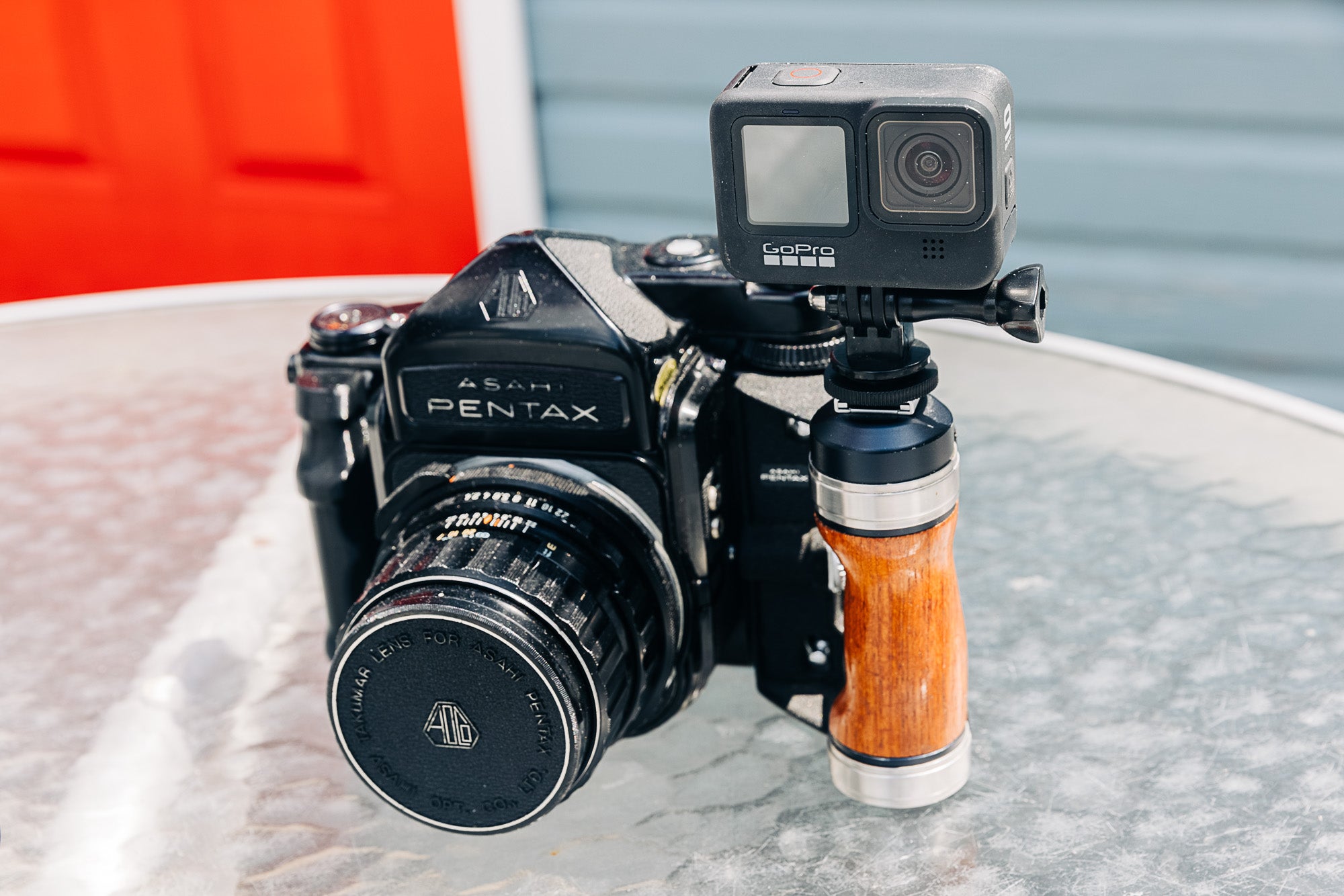
If you haven’t used a GoPro in a couple generations, you might be genuinely surprised at how good the image stabilization has gotten. I’ve been working on a video series in which I mount the GoPro to the hot shoe of an old film camera to get a camera-eye-view while I shoot. HyperSmooth easily takes the wobble out of walking shots and keeps the frame dead still when I’m not moving.
We gave the original version of HyperSmooth a Best of What’s New award over at Popular Science and now the company is into version 3.0. Even compared to the solid image stabilization you’ll get with your smartphone, HyperSmooth is a whole other beast.
In fact, it can actually feel a little too smooth from time to time. You’ll never get shaky footage that will make you nauseous (which actually used to be a thing), but it can look a little unnatural. After spending some time with the camera, I can almost immediately recognize footage shot with HyperSmooth.
Photography modes


The new 20-megapixel resolution offers another advantage over shooting with a smartphone. Some high-end models eclipse that number, but iPhones cap out at 12-megapixels no matter how far up the Pro Max chain you climb.
The Hero 9 can capture raw photos and now offers improved HDR performance to put it closer to the quality you expect from a high-end smartphone. Hold the photo button down and you can shoot bursts at up to 30 fps depending on your settings.
From a pure photography standpoint, your high-end smartphone will probably outperform the GoPro if only because companies like Apple, Samsung, and Google have done so much work on the computational photography part of the process. But, the difference is small and the GoPro isn’t afraid to come with you into gnarly situations like swimming in the ocean or cliff diving.
Embrace the time lapse
Shooting time lapses with your main camera can be somewhat stressful. You often have to use a full-sized tripod and babysit the camera so no one messes with it. The GoPro makes it much simpler. You have a bevy of mountain options if you’re willing to buy a cheap accessory (most are well under $10) and you can be a little more cavalier with placement due to its rugged build.
The GoPro Hero 9 Black offers a host of different time-lapse options. The Time Warp feature allows for moving time-lapses. So, if you want to make a time-lapse video of your photo walk, you can do so without the footage coming out jittery and unwatchable. The stabilization features really come in handy here. You can make Time Warp videos at a variety of intervals up to 4K resolution.
It can also do more traditional time-lapse videos in which the camera stays fixed. If you’re shooting at night, it also offers a specific night shot time-lapse mode that opts for longer exposures.
I found the GoPro a really great tool for experimenting with time-lapse photography, especially because the GoPro app makes them so easy to playback and edit. I think it’s worth having one of these in the bag just for this feature.
Why do you need a GoPro if you have a smartphone?
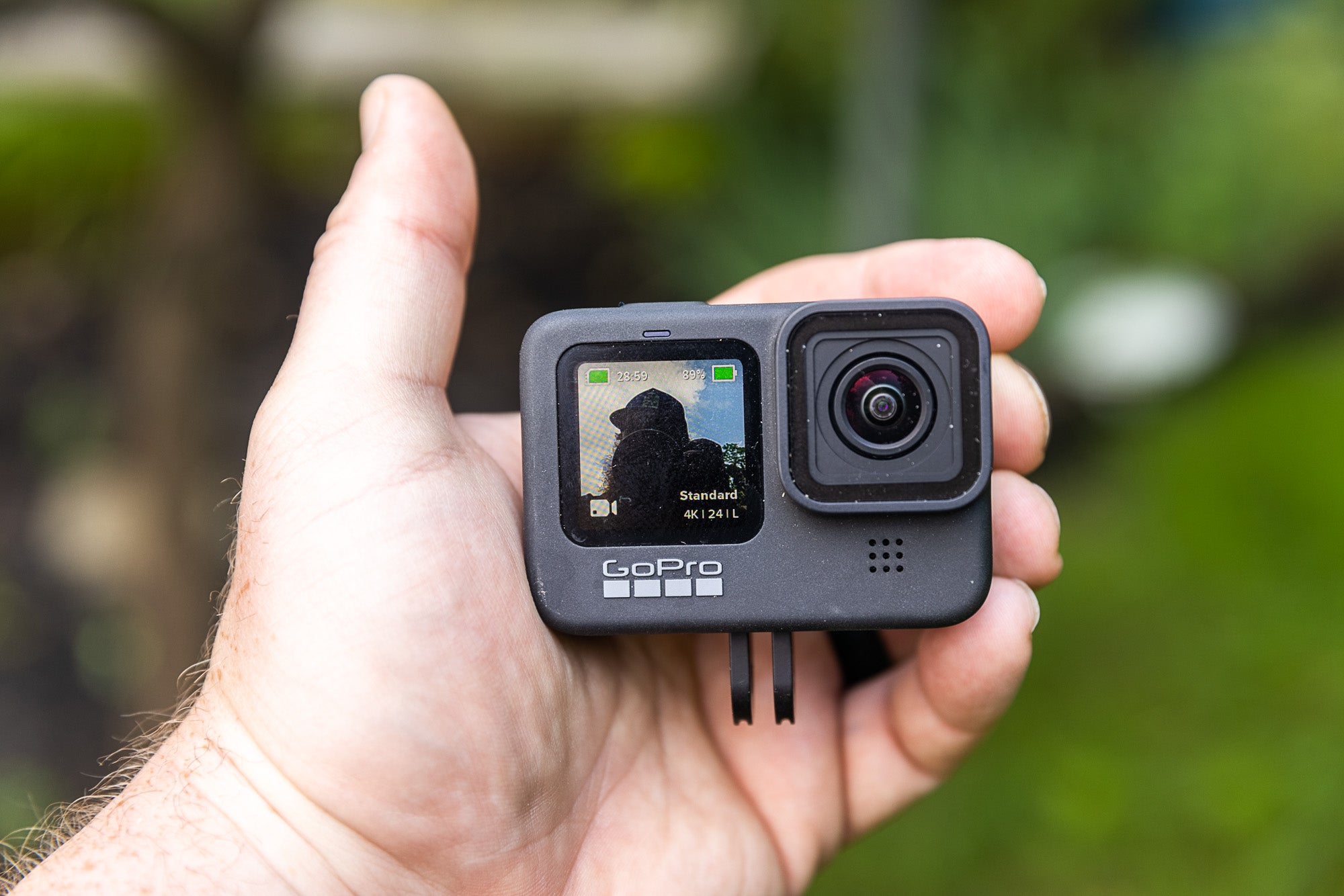
If you just go by the spec sheets, smartphones can do most of what the GoPro can. You get HD video with image stabilization, and apps can provide in-depth time-lapse features. The GoPro Hero 9 Black does win handily in some areas, though.
When it comes to ruggedness, it’s no contest. The GoPro Hero 9 Black is a truly waterproof camera that can work comfortably underwater down depths of 33 feet. Even if you can use your smartphone under small amounts of water, the touchscreen balks at your commands when it’s wet. If you want to shoot underwater, get a GoPro.
The same goes for dangerous situations. The entire GoPro housing is bash-proof. You could roll it down a mountain and reasonably expect it to work when you pick it up on the other end.
Image stabilization also gives the GoPro a serious advantage. Whether you’re shooting fast action sports POVs or just doing walk-and-talk videos, the HyperSmooth 3.0 tech is truly impressive. It may just inspire you to become a YouTuber. And even if your opinions and personality are bad, at least your footage will be steady.
You should also consider the sheer volume of GoPro accessories offered on the market. Whether you buy official first-party GoPro accessories or cheap stuff from Amazon, there’s a mount to put a GoPro basically anywhere and it will probably cost you less than $8.
Who should buy a GoPro Hero 9 Black
While I think this is a great tool for pretty much any camera bag, it doesn’t come without drawbacks. You can expect to pay $350 to $399 on-sale at this point, which isn’t an insubstantial investment.
There’s also a learning curve. For instance, the video resolution and frame rates you choose sometimes limit the amount of zoom you can apply to the image. You can’t always go super-wide if you want to get maximum resolution and fps. The menu system can also be clunky as you’re getting used to it.
Once you’re past all of that, though, it really does open up a number of really cool creative opportunities. You can shoot underwater, make Time Warp videos of your photo walks, create time lapses of your shoot setups, and just shoot fun video. You can still get older models for even cheaper, but the Hero 9’s front-facing screen and extra battery life are worth the extra cash. I also suggest getting a few extra batteries if you take the plunge because you’ll only get a few hours on each one.
The post GoPro Hero 9 Black camera Review: An underrated tool for photographers appeared first on Popular Photography.
Articles may contain affiliate links which enable us to share in the revenue of any purchases made.
]]>